
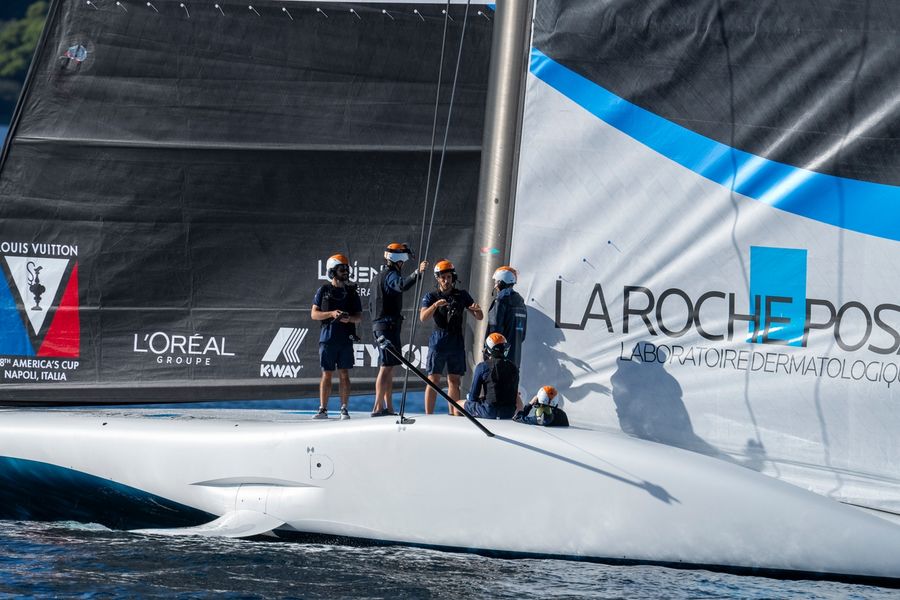
Briggs Cunningham won the 1958 America's Cup 4-0 aboard Columbia against the British challenger Sceptre. Years earlier, sailing a 6-Metre in the 1930s, he grew frustrated with mainsail shape after noticing stretch along the leading edge. With no time to send the sail back to the loft before a weekend's racing, he had a cringle eye fitted to the luff and rigged a pulley to tension it.
That improvised fix became known as the cunningham, and it has remained on racing boats ever since, from club dinghies right up to the America's Cup. On an AC75, the simple idea has been taken much further and has become one of the most important controls on the boat.
On a conventional yacht, the cunningham still does roughly what Cunningham intended. Pull it on and luff tension increases, dragging the draft forward. Ease it and the sail fills out again. Simple stuff.
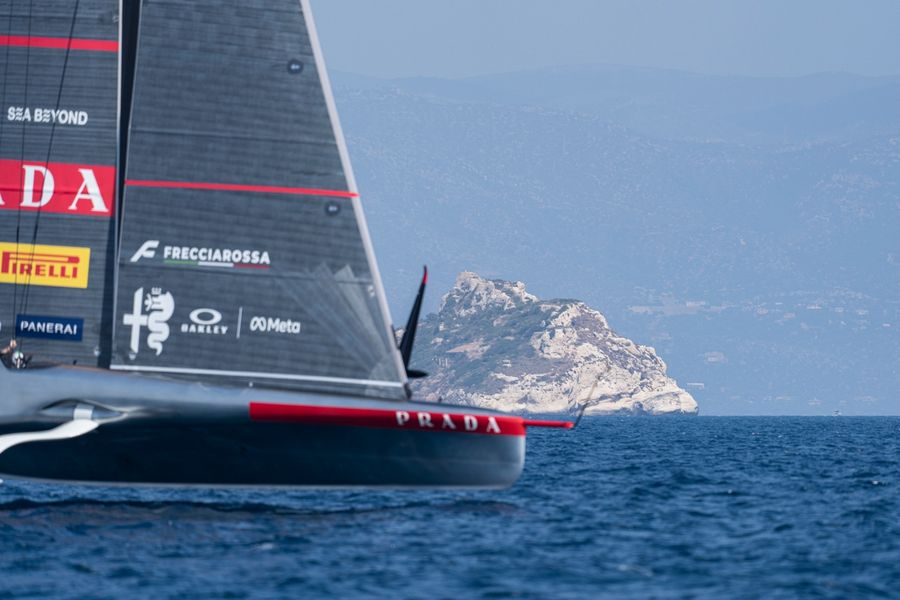
On an AC75, it is a hydraulic, highly engineered control capable of reshaping both mainsail and jib as the boat accelerates from a standing start to speeds beyond 50 knots.
That range is the whole problem. An AC75 needs maximum aerodynamic power just to get moving, labouring through the high-drag displacement phase until the foils generate enough lift to get the hull out of the water. Moments later, once flying, apparent wind builds rapidly and the same sail shape that was essential for take-off becomes a source of unwanted drag.
It is not unlike an aircraft wing. Flaps extend for take-off to create a deep, high-lift section, then retract once cruising speed is reached so the wing runs cleaner and lower-drag. An AC75 needs a similar gear change, and cunningham load is one of the main ways the sailors get there.
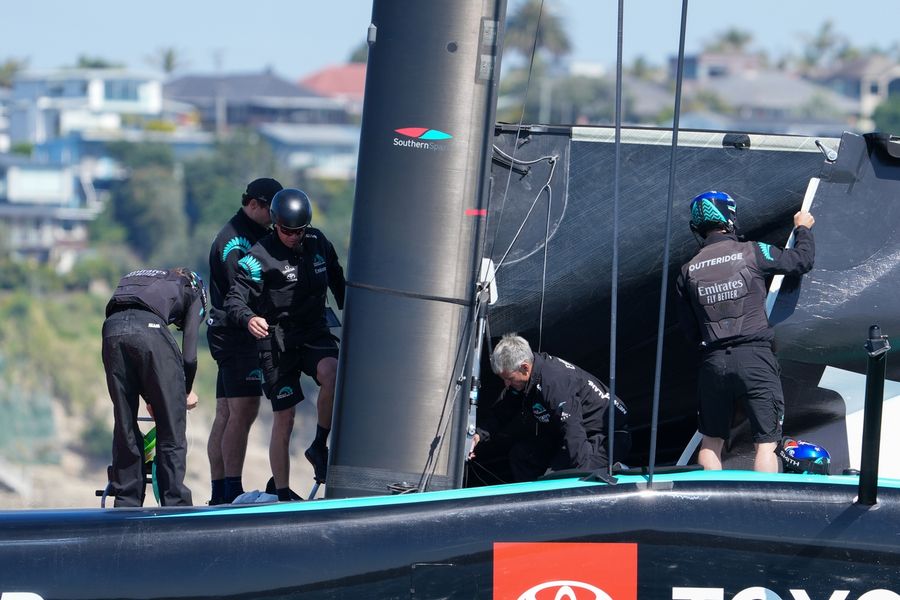
The mainsail makes this especially complicated. It is a double-skinned structure, two skins running on tracks up the mast to form a soft wing, and the AC75 Class Rule heavily restricts where that sail can be controlled. With upper control lines removed from the top third of the sail, the cunningham, mainsheet and traveller are left carrying the load as the primary controls.
So the bottom of the sail matters enormously. Pulling cunningham tension into the structured luff flattens the mainsail, but it also shifts draft depth, draft position and mast bend all at once. Recent Recon reports on AC75 systems describe twin hydraulic cunningham rams applying heavy loads down the mainsail luff, flattening the sail while simultaneously repositioning the draft and inducing mast pre-bend.
Change the luff load and you are not just changing the sail. You are changing the relationship between sail and mast, and because the forestay connects to that same rig, the jib feels it too. Everything is linked.
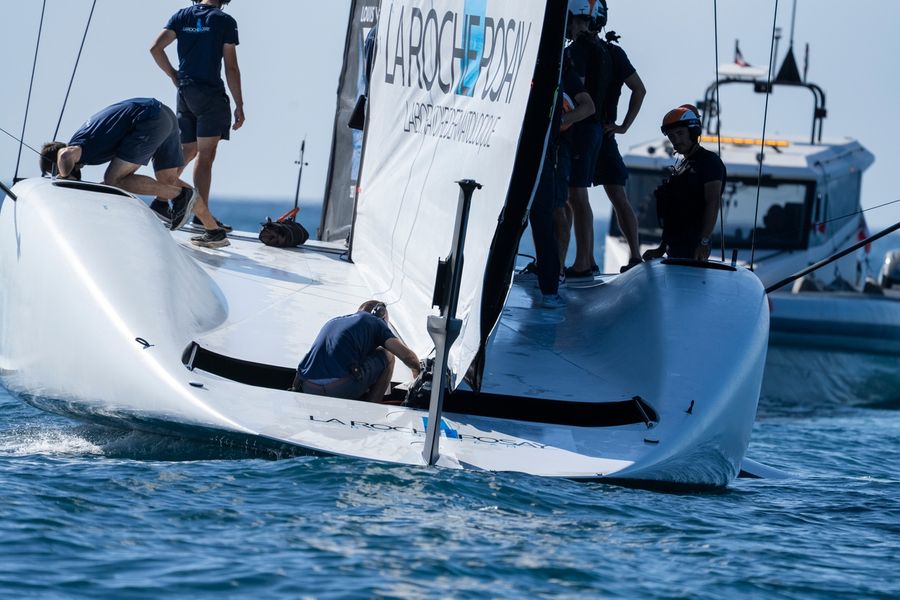
The jib cunningham works on the same principle but with different geometry and different consequences. The current Class Rule specifically allows a cunningham system near the jib tack, and increasing tension there reshapes the draft running down the luff. Again, it is not just about pulling the sail tighter.
Low in the speed range, trimmers often want a deeper, more powerful jib, particularly coming off a touchdown or trying to get the boat moving again. Once fully foiling, that same depth gets expensive fast.
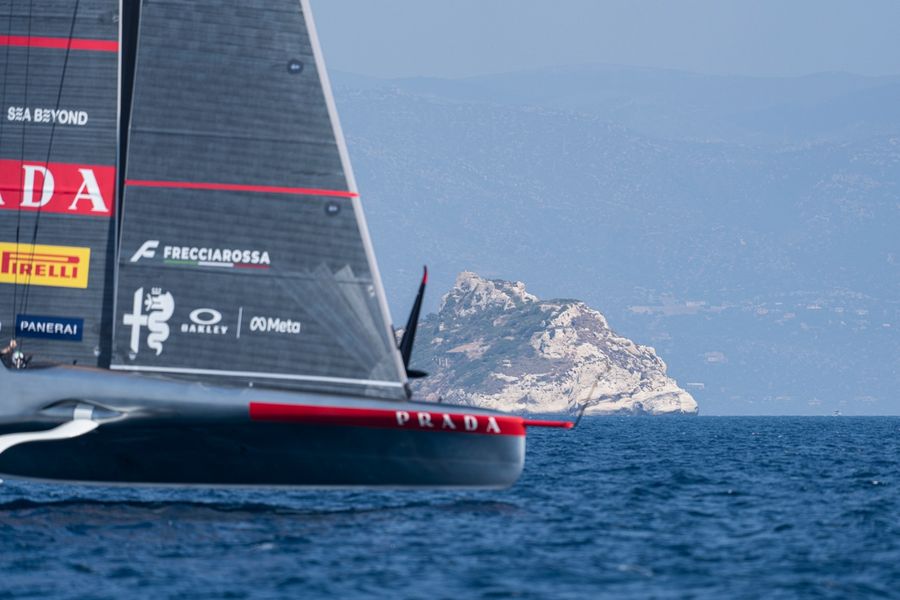
More cunningham flattens and cleans up the jib. But the jib is the first sail the airflow meets, and its wake feeds straight into the mainsail behind it. Change one and you change the other. Teams spend hours on the water simply trying to understand how the two interact.
That interaction has a name: the slot. The airflow passing between jib and main is shaped by the camber and angle of attack of both sails, and get it wrong in either direction and the boat pays for it. Too deep and drag climbs. Too flat and there is not enough aerodynamic force left to use. Designers already have target shapes in mind, and the control systems exist to let sailors reproduce them precisely, not just trim by eye and feel.
Speed is what makes all of this urgent. A conventional yacht sees a fairly gentle shift in apparent wind as it speeds up. An AC75 does not. It rips through a huge apparent-wind range in seconds, which means the optimum sail shape is constantly moving.
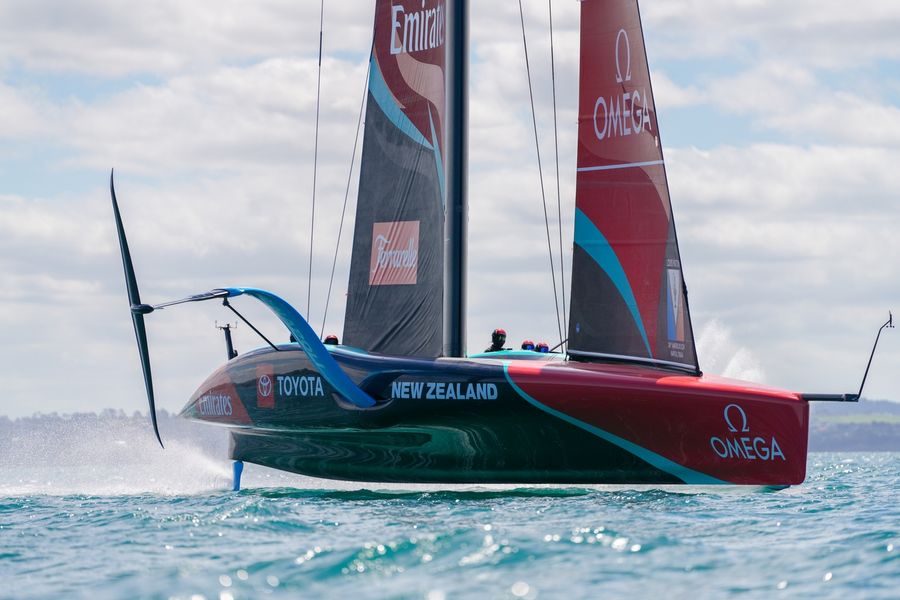
Take a tack. The boat enters fast, sails cross, foil loading transfers, speed drops, apparent wind swings around, then the boat accelerates hard out the other side. The ideal shape going into that tack is not the ideal shape mid-manoeuvre, and it is certainly not the ideal shape five seconds after the exit. Cunningham load gets adjusted right through that sequence, flattening when drag reduction matters most, then changing again as the boat winds back up to speed. Mechatronic control makes it fast and repeatable.
What started as Briggs Cunningham's weekend fix for a stretched luff has ended up as one of the most tightly engineered systems on the boat. It controls depth, draft position and mast behaviour on the main, and reshapes the jib across a speed range no conventional yacht ever faces.
Together, the two turn the rig into something closer to a variable aerodynamic surface than a fixed set of sails, adjusted constantly rather than set once and left alone. A simple downhaul, in effect, became one of the AC75's most important gear levers.