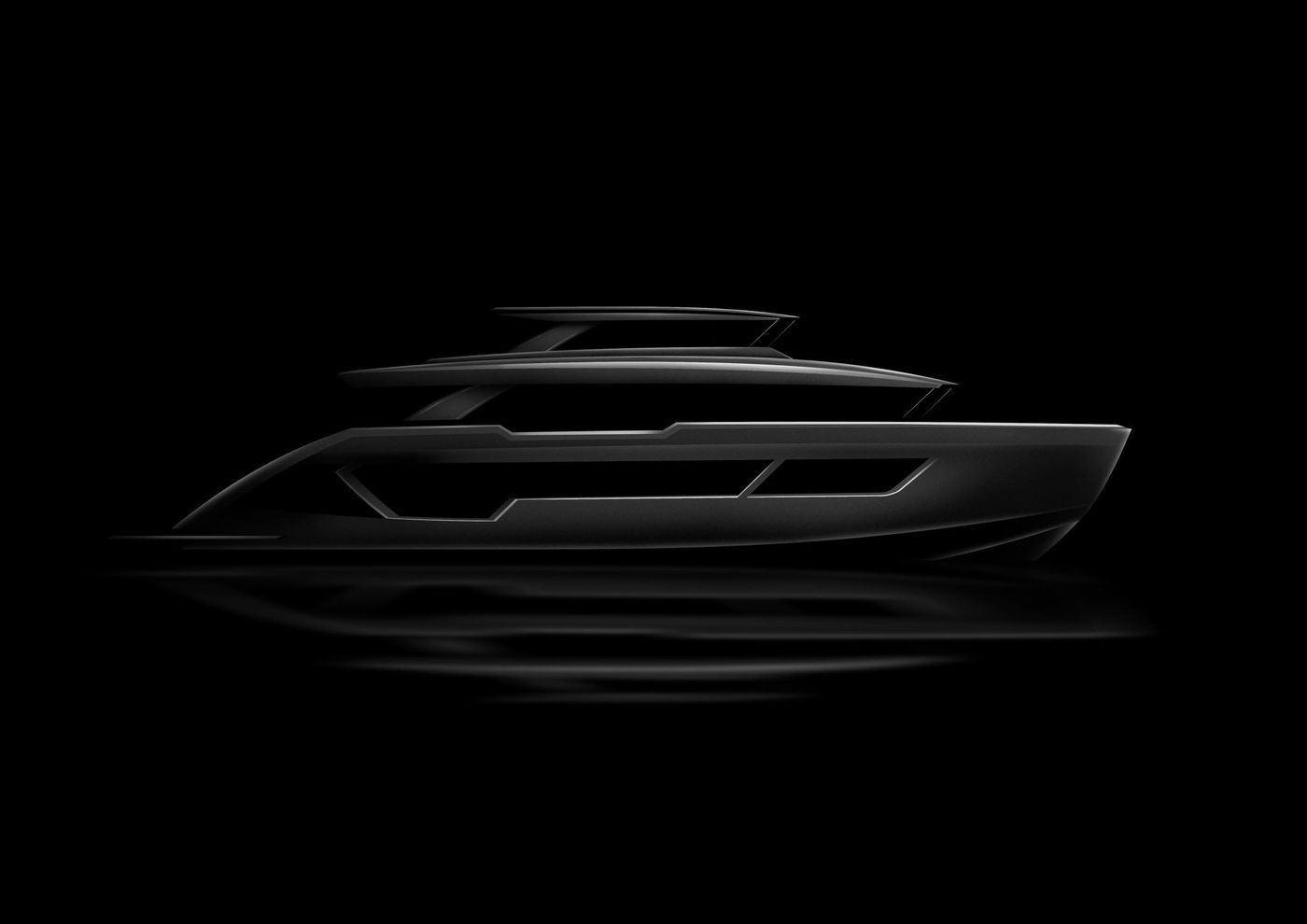
A single social media post was all it took to set the boat world buzzing. "Something extraordinary is taking shape," Voodoo Yachts wrote on Facebook, pulling back the curtain just enough to reveal a name, Voodoo XF450, and a promise: the largest, most advanced adventure yacht the New Zealand yard has ever conceived. At 36 metres and 450GT, it represents a step change rather than an incremental move, and the Beach Club positioned at the heart of the design signals exactly what kind of yacht this is intended to be.
For a yard that built its reputation in the sub 24 metre sector, the leap to superyacht scale deserves scrutiny. The good news is that Voodoo arrives at this moment carrying genuine offshore credentials, not just renderings.
The first substantive details have emerged through Boat International, which reports that the XF450 will measure 36.3 metres on a 10.5 metre beam, with interior volume of 450GT. Performance targets put cruise speed at around 30 knots, with range suited to global itineraries, numbers that echo the published figures already achieved by smaller boats in the Voodoo fleet. Two flybridge configurations are on the table: open or enclosed, with the Beach Club retained as a defining feature in both.
That Beach Club deserves attention. Spanning the full beam and opening on three sides, it pairs a lounge and bar with a wellness studio configurable for fitness, yoga, massage, or spa use. Direct access to a sauna or hammam, cold plunge, shower, and dayhead completes what amounts to a proper waterside retreat. An expanded aft deck provides room for toys and tenders, and an optional helipad with refuelling capacity makes clear that Voodoo is pitching the XF450 squarely at the expedition and adventure yacht market.
Interiors carry the signature of American studio Christian Oliver Design, with early descriptions pointing to light woods, neutral fabrics, and sculpted surfaces. The centrepiece is a three deck lightwell rising from the Beach Club through to the upper deck bar, lending vertical drama to a layout that otherwise emphasises horizontal openness. Five cabins are planned, anchored by a full beam owner's suite offering 180 degree views, with crew accommodation for up to eight.
{{TABLE_1}}
These details remain design intentions rather than confirmed specifications. Power package, fuel load, and build schedule have not yet been announced, and performance numbers are targets. What gives the XF450 its credibility is not the renderings but the platform beneath them.
The Xpedition Foiler concept centres on the Xpedition Wing, a foil and wingdeck arrangement that, on the smaller models, lifts roughly half the vessel's displacement at speed. That reduction in wetted surface allows the hulls to run efficiently in the 30 to 40 knot range while preserving meaningful range at lower speeds. The XF75, for example, carries published range figures of 600 to 1,200 nautical miles at 30 knots and up to 3,000 nautical miles at 8 knots, unusually strong numbers for a catamaran of that size.
Those figures have been tested well beyond computer models. The XF60 Phoebe has completed extended Pacific passages at sustained high speeds, including routes from Auckland to New Caledonia and onward to Australia. In May 2025, the XF75 Mach4 crossed the Tasman Sea in 36 hours of travel, covering more than 1,100 nautical miles at average speeds in the mid 30 knot range and touching a peak above 50 knots. The run was recognised as a Trans Tasman speed record, and it demonstrated just how mature the underlying engineering has become.
Passages like Mach4's Tasman crossing carry a straightforward point: the XF450 is not emerging from a vacuum. It inherits a platform tested on open ocean routes by real boats in real conditions, not just validated in simulation. Scaling that architecture to 36 metres is ambitious, but it reads as a confident engineering progression rather than a speculative reach.
The Beach Club concept also fits neatly into broader superyacht trends. Owners increasingly seek yachts where the boundary between interior and exterior dissolves at the waterline, with spaces that feel purposeful rather than decorative. On a foil assisted catamaran, machinery positioned forward and outboard frees the aft platform to become an exceptionally wide, low, and versatile retreat. For a vessel intended to anchor in remote locations and then cover serious ocean miles between them, that arrangement makes obvious sense.
New Zealand's marine industry has a well-established habit of delivering high performance design at a scale that surprises the wider market. Voodoo's move from 75 feet to 450GT fits that tradition. The yard tested its ideas at pace on the Tasman and the Pacific, earned a speed record in the process, and is now applying those lessons to a vessel with full superyacht volume and the wellness amenities to match.
Key technical details are still to come, and the real proof will arrive when a production XF450 lifts onto its foils and stretches out across open water. For now, Voodoo has offered the world a teaser, a silhouette, and a Beach Club. The next chapter begins whenever that bright red hull commits to its first horizon.