
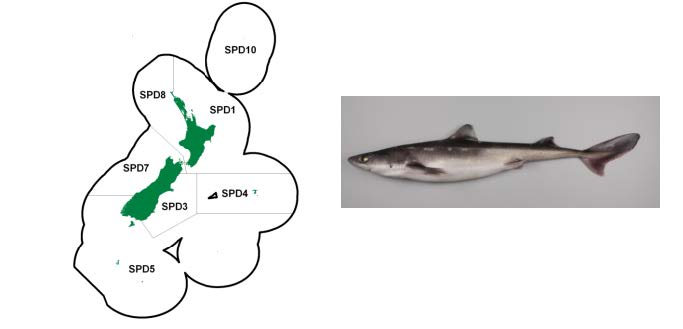
Fisheries New Zealand (FNZ) is reviewing whether commercial fishers should continue to be permitted to release spiny dogfish, also known as pioke, makohuarau or kāraerae, back into the sea after capture. A frequent bycatch species across inshore and mid-depth fisheries throughout the country, the small shark typically measures just over a metre in length. The review forms part of a broader reassessment of landing and discard rules following changes introduced by the Fisheries Amendment Act 2022, with submissions closing at 5 pm on 18 December 2025.
Under current rules, commercial operators may return spiny dogfish to the sea whether the fish are alive or dead, and any quantity released still counts against their Annual Catch Entitlement (ACE). FNZ's position is that this arrangement should remain in place. The agency argues the exemption meets the updated legal criteria applying to species capable of damaging other retained catch onboard.
The case for maintaining the exemption rests largely on the practical difficulties the species creates at sea. Spiny dogfish carry sharp dorsal spines capable of puncturing other fish stored in the hold and posing a genuine injury risk to crew. Their flesh also ammoniates rapidly after death, a process driven by the unusually high urea levels in dogfish tissue. As that urea breaks down, it releases ammonia that contaminates fish stored nearby. Proper handling demands immediate gutting, bleeding, and chilling, steps that become unworkable when a large school is taken in a single haul. Smaller vessels face an additional constraint, as many lack the space or equipment required to keep dogfish segregated and properly chilled.
FNZ's discussion paper puts it directly: "Given the large quantities that can be bycaught and the species' physical characteristics, it's impractical for fishers to separate and manage catches before they ammoniate."
Under the proposal, the return exemption would apply across all fishing methods. Fishers would still be expected to take reasonable steps to avoid harming or killing any dogfish retrieved alive, and every release would need to be recorded and balanced against ACE. That requirement keeps fishing mortality within the catch limits already established for each quota management area.
FNZ maintains that sustainability is not at risk under this approach. Spiny dogfish are seldom actively targeted, and the average annual commercial catch sits at 5,486 tonnes, less than half of the total allowable commercial catch across all quota management areas.
From a recreational standpoint, spiny dogfish attract little interest. Most anglers regard them as a nuisance rather than a target. Their customary significance is more nuanced: historically, Māori fishers took species broadly referred to as "dogfish," a category that included rig, school shark, and spiny dogfish, though contemporary customary take is understood to be low. Earlier iwi input into the wider landing and discard review highlighted the principle of kaua e moumou, avoiding waste, alongside a preference for returning unwanted catch as close as possible to where it was taken. FNZ notes that releasing live dogfish at sea aligns with that approach.
Stakeholders may lodge submissions ahead of the 18 December 2025 deadline. The consultation invites comment on whether the return exemption should be maintained, how ammoniation affects the quality of other catch, and what practical measures might reduce harm to dogfish when they are released alive.