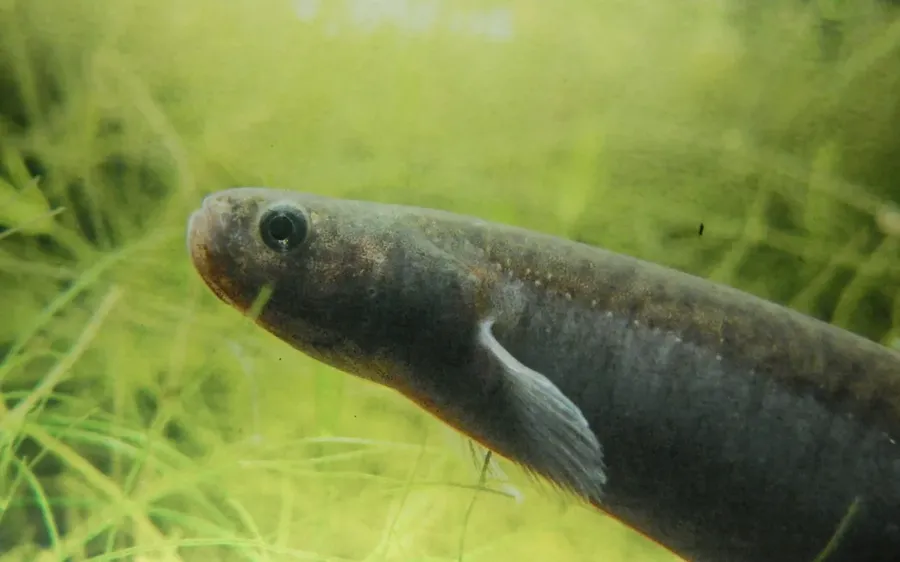
A decade of searching and two new populations found in a single year made 2025 a standout one for those working to protect New Zealand's black mudfish. Matt Bloxham, Auckland Council's senior regional freshwater advisor, described the October discoveries as genuinely surprising, given how long and how broadly the search had been running.
"We've been looking since 2014, spreading the net as it were to other areas... mudfish have really specific requirements in terms of habitat, so not every wetland is going to hold habitat useful to mudfish, but finding them has proven harder than we expected," he said. "It was this year that we found two new populations, so it's been quite an amazing year for us."
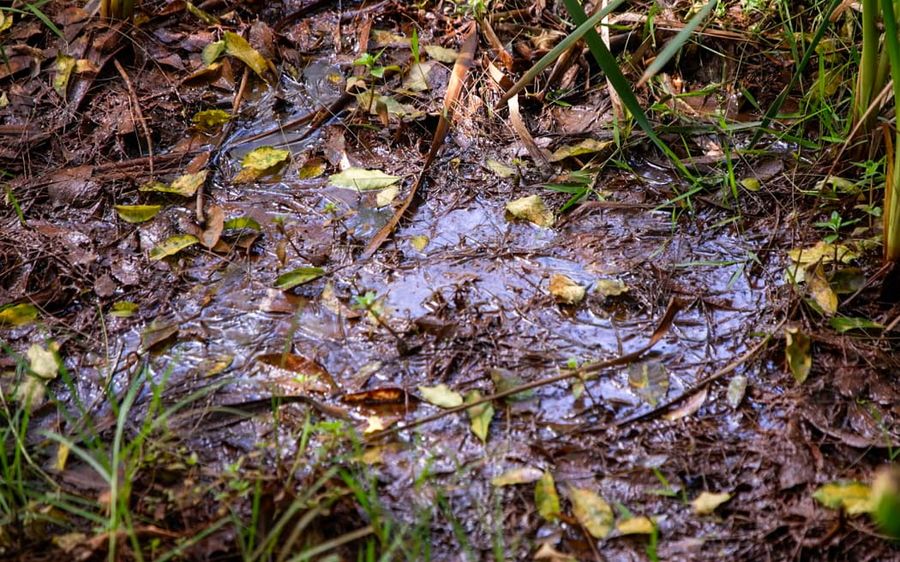
The most recent find was in a small body of water just a few metres across, most likely formed by the movement of deer through the area. The fragility of that discovery became plain almost immediately. By the time Bloxham spoke about it, the water had largely evaporated.
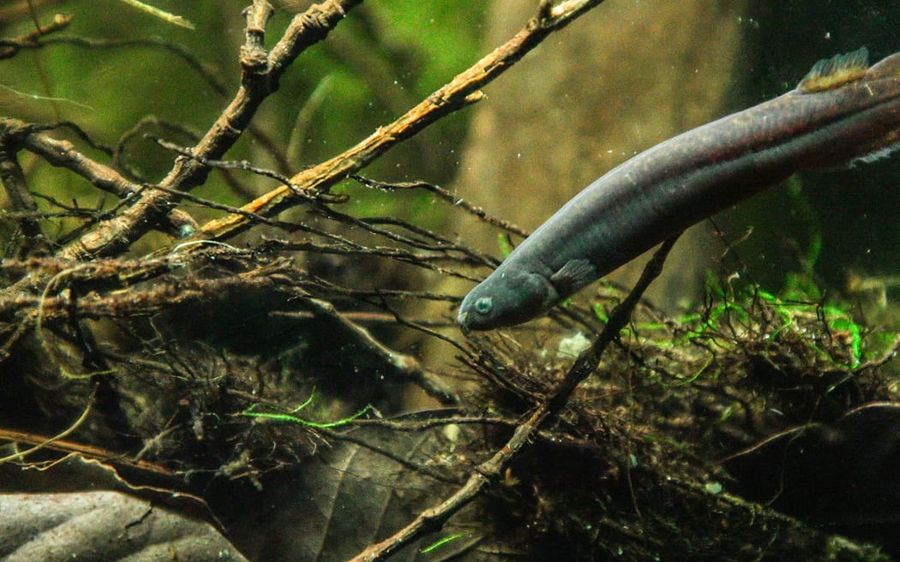
Auckland Zoo ectotherm keeper Julie Underwood explained that the fish would not have perished as a result. Black mudfish can endure conditions that would be lethal to most other freshwater species.
"They have abilities like surviving out of water, so they don't have scales; they have leathery skin with a mucus layer, and they can actually absorb oxygen through that as long as they're damp," she said. "So when the wetland dries out they can hunker into the mud and kind of survive that dry period when all the other fish have to leave the area so it's a good survival technique."
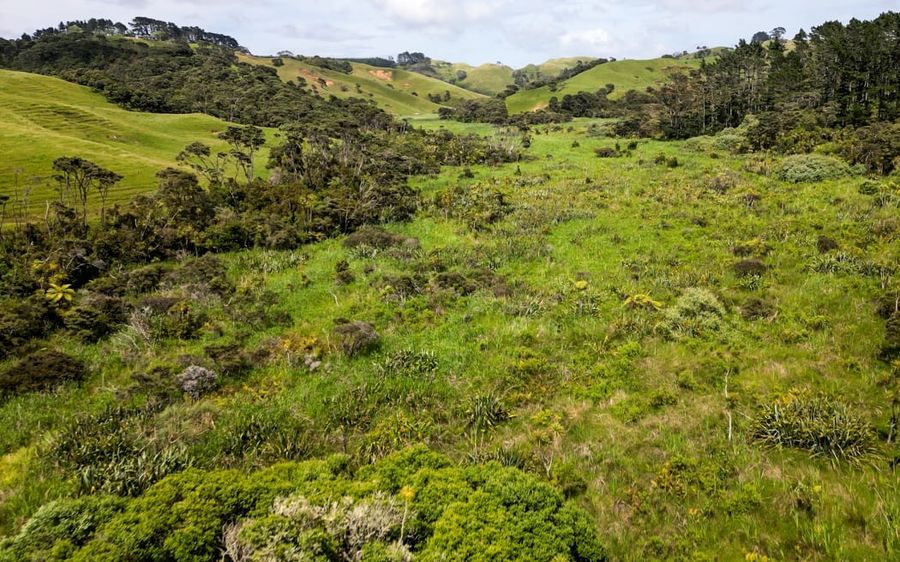
Bloxham outlined the pressures that have reduced black mudfish to scattered pockets between Waikato and Northland. Introduced plant species, pest fish, and nutrient and sediment pollution all play a role. The dominant factor, though, is staggering in scale: roughly 90 percent of New Zealand's wetlands have been lost.
"Unfortunately, you know, they are wholly reliant on their habitat remaining good in order to make a living," he said. "Wetlands are slowly becoming modified by nutrients and sediment and the encroachment of the smothering vegetation."
Underwood has been part of Auckland Zoo's captive breeding programme for black mudfish (Neochanna diversus), which began in 2015 after the fish were brought to the zoo from mana whenua in Hikurangi, Northland. The programme has operated in collaboration with local iwi and Ngā Kaitiaki o Ngā Wai Māori, a collective of hapū kaitiaki from the North Island.
The numbers speak for themselves. "So we're 350 fish later and we've run out of room so we've actually stopped active breeding and now we're just sort of gearing up and looking for places to release them back to the wild," Underwood said.
The approach was deliberately low-tech. "The idea was to basically create tiny wetlands a really naturalistic habitat step back and try and let the fish do their thing and then we more step in with looking after the eggs and raising the fry so that's the trickier bit. For us, luckily, if we put the fish in together, we generally get eggs, but it's kind of following that through and raising those fry to adulthood that's a little bit more technical."
Underwood noted that the programme showed what conservation effort can achieve without significant financial outlay or sophisticated equipment.
The challenge now, according to Auckland Zoo ectotherm team leader Don McFarlane, is far harder than raising the fish. Finding them a safe and permanent home is proving elusive. Members of Ngā Kaitiaki o Ngā Wai Māori have been learning to care for the fish at the zoo, with the intention of returning the zoo's Waikaka to where the original animals came from.
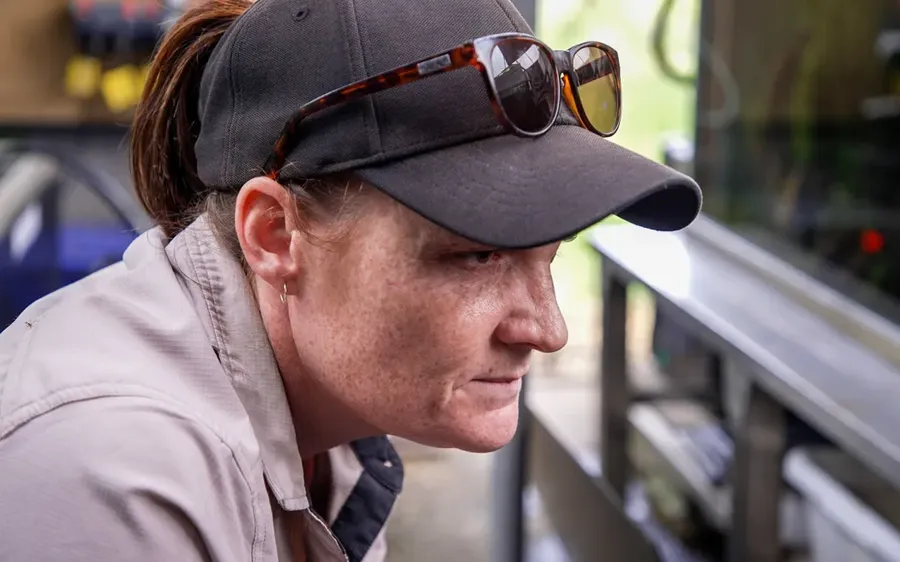
"What we're looking for is, first and foremost, is the hapu from Hikurangi, Ngā Kaitiaki o Ngā Wai Māori, to choose that site and that it's a site that is in their rohe and a site that they can protect and have guardianship over," McFarlane said. "Because the site needs to be protected, but not just a few months or a few years, but in perpetuity. That's quite an ask."
The difficulty of meeting that ask reveals something damning about the state of New Zealand's wetlands. "We are struggling with the council and our hapū friends in Hikurangi to find a suitable place to put them," McFarlane said. "And that tells you everything about the state of the wetlands in New Zealand. We're a little bit restricted further because we want them to go back from whence they came."
Less than ten percent of New Zealand's wetlands remain, and McFarlane was direct about what that means. "Where on earth do we find a pristine wetland that we can protect, that has long-term oversight to protect? It's less than 10% of wetlands left. That is the answer to our problem. We've got to protect what's left, basically, and that's with the government."
If no suitable site within the fish's original range can be secured, the team may be forced to look at options more commonly associated with international conservation work. "We may have to consider, like many other international conservation organisations are starting to look at, sites that are still protected that are actually not from where the animal originally came from, simply because you have no choice," McFarlane said. "They can't live in zoo situations or captive situations forever."
McFarlane pointed to the historical abundance of black mudfish to underscore just how significant their decline has been. Once among the most common freshwater fish in the country, they were also a food source for Māori, carrying deep cultural meaning that he argued remains poorly recognised.
"They were a source of food for Māori once, so there's a cultural heritage loss here as well, which is undervalued and underappreciated," he said. "There are deep cultural associations with this fish for many Māori, many Iwi, and it's disappearing. How do you value these things? It is very difficult. Uniqueness is important, I think it's fair to say, and it is fast disappearing."
Beyond their cultural significance, McFarlane argued that the fish serve as an ecological warning sign. "The world is becoming a very bland place when diversity is lost, and the thing is they are the canary in the mine for the habitats in which they're associated."
The new discoveries were cause for celebration, he said, but they also underlined the diminished circumstances to which these fish have been confined. "We must do what we can to take action to save what's left."