Few milestones in offshore racing match the moment a new boat first tastes the open water, and on the morning of 10 March, the Maxi Edmond de Rothschild made exactly that step. The 32-metre giant had been launched on 14 February, after which the technical team worked through an intensive programme of static testing, mechanical fine-tuning, and the commissioning of on-board hydraulics and electronics. When the sails were finally hoisted for the very first time, the crew's anticipation, building since the project began in 2022, was impossible to miss.
For skipper Charles Caudrelier, the significance of the day reached well beyond the nautical. "Our first impressions are very good! It's a real pleasure for all the team to head out to sea after the many hours spent in the office and the shipyard," he said after returning to land.
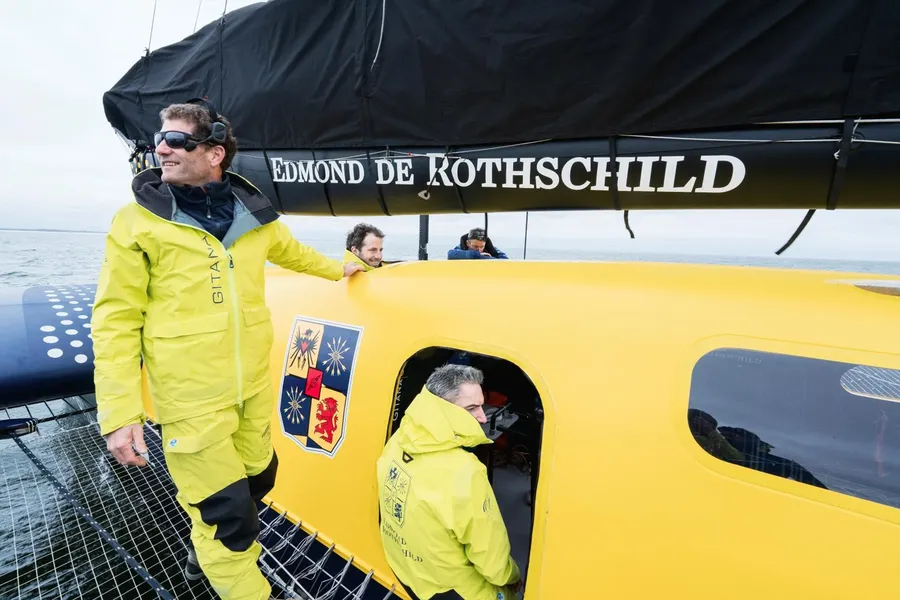
The shakedown unfolded in light conditions in the waters lying between the islands of Groix and Belle-Ile-en-mer. Speed was never the objective. The team's focus was on meeting the boat's highly innovative systems in their natural environment and developing familiarity with them in a measured, deliberate way. Caudrelier, the reigning champion of the Route du Rhum - Destination Guadeloupe, was candid about the philosophy shaping this phase: "Everything's different so it's a whole new learning experience, which is another exciting aspect of this phase we're beginning. We need to pace ourselves in a controlled manner as we get her up to speed, and our technical schedule has been devised with this in mind."
The hours spent offshore returned genuinely promising results. Caudrelier offered a frank account of what the day had delivered and what it pointed to for the programme ahead: "Inevitably, these first sea trials were momentous for the whole team and they reward a long collective effort, though we're still only at the beginning of the story. Naturally there is a great deal of expectation surrounding this new boat and we too are eager to see her flying and fulfilling her true potential. That said, this new Maxi Edmond de Rothschild is so innovative that it is vital we don't rush things.
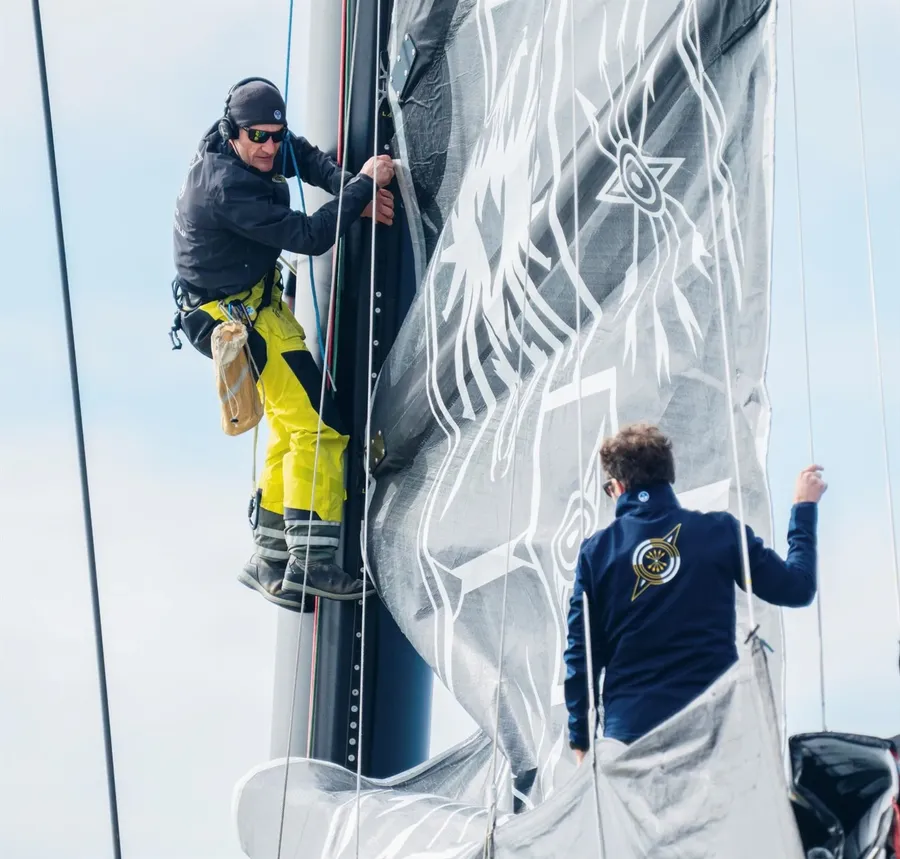
We need to be patient and complete all our test phases in order. As planned, the foils will be integrated a little further down the line. These first legs offshore will enable us to get our initial bearings and get our first feel for the boat. Having a few hours on the water has been very positive: we've managed to hoist the sails, test the major new features on the mast and spreaders, and also the entire steering system on the boat, including the rudders, which are attracting a lot of attention. The work that lies ahead promises to be both demanding and exciting. There is a lot to get our heads around and we need to take our time and address each element in turn."
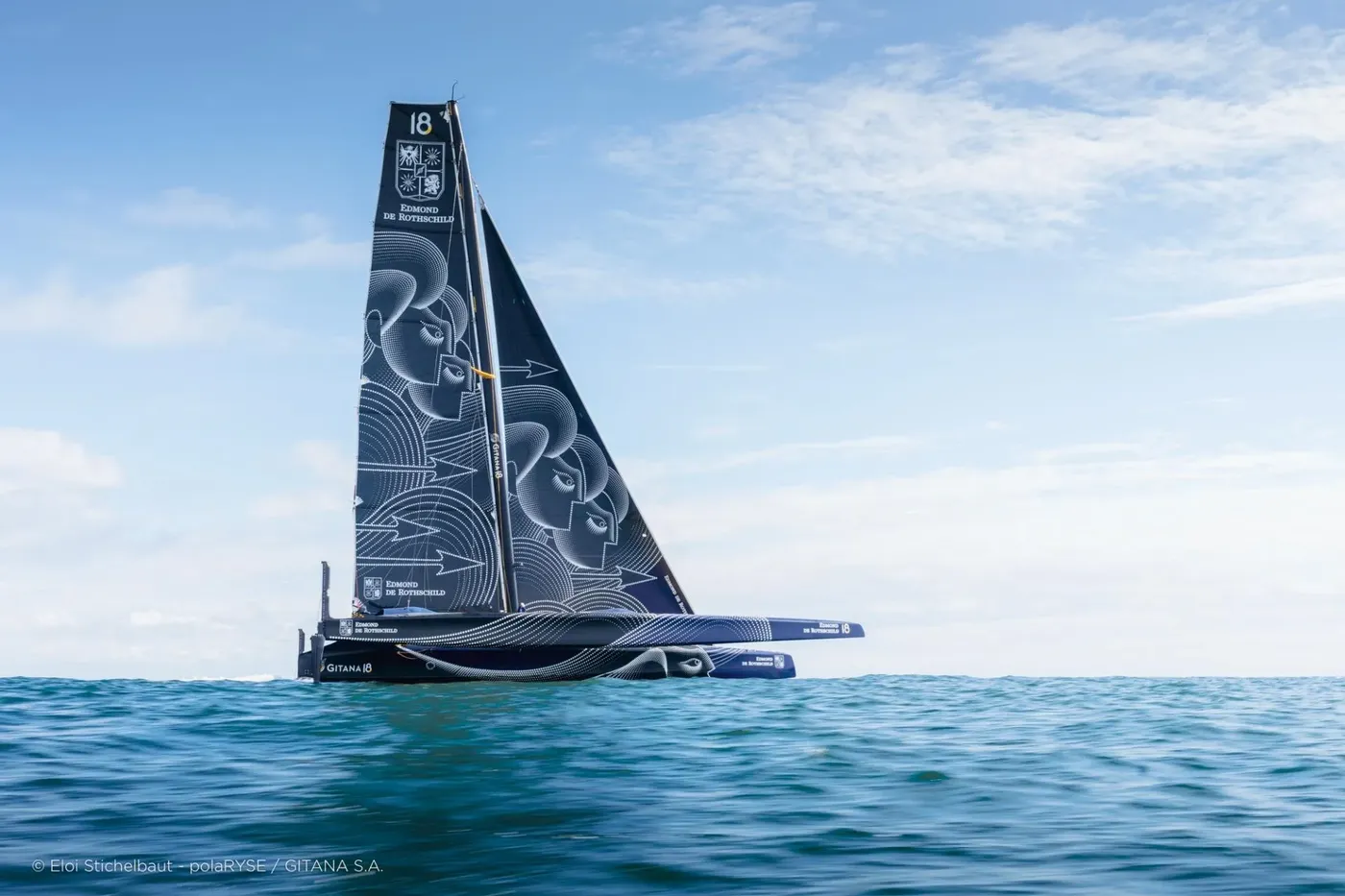
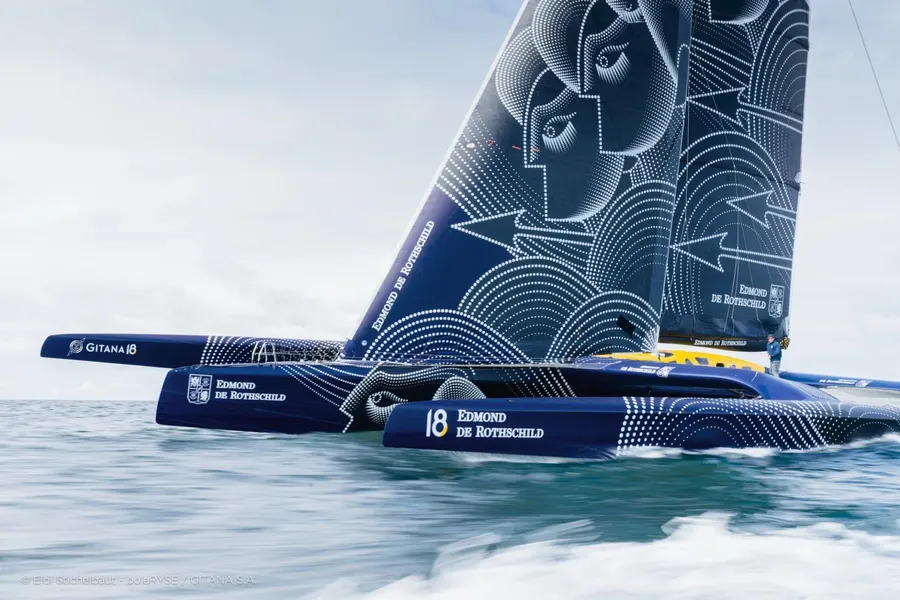
That first outing off Lorient also gave onlookers their first proper look at the visual identity of Gitana 18, and it is a striking one. The boat's graphics continue a tradition established in 2017 at Ariane de Rothschild's request, when the team began working with the Palais de Tokyo in Paris to transform each racing trimaran into an off-site artwork for the famous European art centre. On Gitana 17, the hulls and sails carried the work of American street artist Cleon Peterson, including an iconic stylised mermaid created specifically for Gitana, a design that has since circumnavigated the globe.
For Gitana 18, the Palais de Tokyo collaboration has brought French artists Florian and Michaël Quistrebert to the project. Working alongside graphic artist Jean-Baptiste Epron, who contributed maritime expertise to the design and its layout, the Quistreberts have produced what the team describes as a powerful and modern composition, imagined as a female epic, combining art and technological prowess. Spread across the hulls and sails at sea for the first time, the composition finally came into its full effect.
Gitana 18 is a large new-generation ocean-going multihull conceived for offshore foiling and extreme high performance, sitting at the top of the Gitana line. She is also the twenty-eighth vessel in a legendary maritime saga that will reach its 150th anniversary within the coming weeks.
The technical specifications alone give a sense of the undertaking's scale. At 32 metres in length with a 23-metre beam, she displaces 19.5 tonnes and carries a sail area of 450 m² upwind, extending to 630 m² downwind. Her aerial draft reaches 38.4 metres. She has six appendages, float rudders standing 4 metres high, foils spanning 10.4 metres, and foil bulbs 2.4 metres in length. Her nets cover 170 m², her aerodynamic covers 73 m², and the cockpit floor surface available for manoeuvring measures 9 m², with 4.8 m² of living area below. Running through the vessel are 8 kilometres of electrical cables connecting some 500 sensors, and the total decorated surface across hulls and sails amounts to 2,000 m².