The Waikato River is one of the country's most hazardous waterways, claiming lives with grim regularity. For years, local volunteer fire brigades in Huntly and Ngāruawāhia positioned themselves as part of the solution, investing in watercraft and training their crews accordingly. Now a nationwide Fire and Emergency New Zealand ruling has stripped those vessels from active service, and communities along the river are asking why.
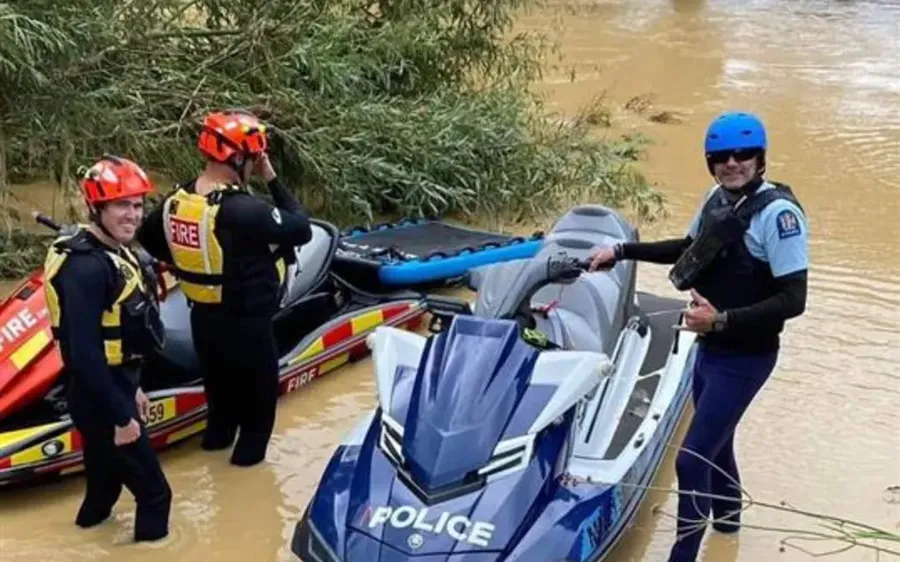
Ngāruawāhia's volunteer fire station has operated two jet skis as rescue equipment since 2018. Huntly has had a boat in service since 1998. Together, those vessels have been used in 81 rescues since 2019, including a response to Cyclone Hale in 2023. Both brigades discovered, almost by accident, in May that the watercraft had quietly been rendered inactive. FENZ had assigned them "K0" status, a designation that means a vessel will not be dispatched to an emergency, the same classification applied when a truck breaks down. The brigades learned this by chance rather than through any formal communication from FENZ.
In a joint statement, the Huntly and Ngāruawāhia brigades described the shock of that discovery. FENZ deputy national commander Megan Stiffler confirmed the decision was deliberate. "Fire and Emergency does not have the capability to operate powered watercraft safely or in a compliant manner with the Maritime Transport Act 1994 or Health and Safety at Work Act. We also don't have the capacity to stand up this capability," she said.
The ruling applies to all motorised watercraft owned by brigades across New Zealand, both professional and volunteer, though FENZ noted that career brigades do not own motorised watercraft. Following a meeting held on 30 July involving FENZ, several local Waikato fire chiefs, and other community representatives, the brigades understood that police had been directed not to request any FENZ rescue vessels for water emergency callouts. FENZ's broader position, when asked about the K0 decision, was that it is simply not the most appropriate agency to respond to water emergencies.
"We cannot support the brigades operating their [powered] watercraft because we don't as an organisation have the capacity or capability to support motorised watercraft being deployed safely," said Stiffler.
Roy Breeze served as Waikato area commander for 20 years and was present at the 30 July meeting. He said he wanted to understand the reasoning behind a decision that ended something he had actively supported during his time in the role. Breeze expressed sympathy for both FENZ and for communities that have long held expectations of frontline services being there when needed.
He pointed to Section 12 of the FENZ Act 2017 as the mechanism that had allowed local brigades to identify gaps in their communities and step in to fill them. "They all have their own community needs and they just get called to everything that's an emergency in the area, and that's life in the front row for them," he said. Functions performed under Section 12 are not funded.

The range of work carried out under that provision is wide, covering animal rescue, medical emergencies, traffic accidents, severe weather events, and swift water rescue of the kind the Waikato brigades had been performing. "Pretty well any other emergency that no one else is doing," Breeze said. He believed the pressure that Section 12 had placed on everyone made it time to re-clarify exactly what the provision was intended to allow.
The compliance question at the heart of the matter is not straightforward. FENZ had been asked by Maritime NZ to obtain a Maritime Transport Operator Plan, known as an MTOP, but chose not to pursue that path. The Huntly and Ngāruawāhia brigades took a different view. They decided to bring their own vessels into compliance with Maritime New Zealand requirements, at no cost or impact to FENZ. Huntly gathered all the necessary information, submitted an application, and worked through the process over a couple of months, with the MTOP ultimately issued to the brigade. "The process was very thorough but the MTOP plan was issued to the Huntly Brigade. This took a couple of months to go through the process but was very achievable," the joint brigade statement said.
WaterSafety New Zealand has drawn attention to a striking statistic: one in seven river deaths in the country occurs on the Waikato River. That recognition prompted the organisation to launch a river-based education programme this year, beginning in Hamilton and Ngāruawāhia. Acting chief executive Gavin Walker said the loss of rescue capability was a significant concern. "I'd be really concerned if we hadn't thought through the consequences of withdrawing support from an organisation like FENZ. Our response capability is an important part of supporting Kiwis to love and be safe around the water," he said. His message to the public was not to assume that a rescue organisation would arrive in time if something went wrong, and to make smart choices around any water.
With summer approaching, the local brigades have made clear they believe the decision will have serious consequences for their communities.
"It will only be a matter of time before another life is lost in the river, what Huntly and Ngāruawāhia fire brigade rescue vessels offered was a response capablity that met the needs of our community," the brigades said.
Both Huntly and Ngāruawāhia sit within the Waikato District. Mayor-elect Askel Bech said that as incoming mayor he was keen to understand what had happened. "I've not studied the FENZ decision, but I would certainly be concerned that a really valuable tool has been taken out of the tool kit of those local brigades," he said. He acknowledged the Waikato River's reputation as one of the country's top drowning spots, and noted that the brigades had clearly recognised that risk themselves. "The local fire brigades have identified that risk in their community," he said, which is why they had invested in the equipment.
Police in Waikato confirmed that the force currently holds one watercraft, making it the only vessel able to respond to river emergencies across the stretch from Bombay to Karāpiro.
Breeze believes the situation points toward a larger conversation about how inland water rescue should be organised and funded. "The water rescue, inland, is a possibility that we need to look at, is this potentially that FENZ should be the financed, legislated organisation to do river rescue," he said. In the meantime, he expressed disappointment that FENZ had chosen to resolve the issue by preventing the watercraft from being used. "Because the public and the other emergency services are relying on those boats because they have been around for years and years and have done some good work," he said.
Both ministers with responsibility for relevant agencies were contacted. Brooke van Velden, the minister in charge of FENZ, described it as an operational matter and said, "I will raise it in my next meeting with FENZ for further context on their decision making." Police and Emergency Management Minister Mark Mitchell also characterised the issue as operational, adding, "Concerns have been raised with me, and I have raised those concerns directly with the Chief Executive of FENZ."
The ruling's reach extends beyond the two brigades at the centre of the dispute. The Cambridge volunteer fire brigade had been offered two jet skis following a $320,000 donation to local emergency services made in memory of Jimmy Schick, who died earlier this year. Those plans are now on hold as a result of the FENZ decision.