Picton's Edwin Fox has never been merely a weathered hull sitting idle in a graving dock. At 168 years old, she carries a biography that almost no other vessel on earth can equal. Lawrence Schäffler explored that biography for Boating New Zealand in 2021, tracing her career across continents and centuries, from the battlefields of the Crimean War to convict transport, from the immigrant voyages of Julius Vogel's assisted migration scheme to the frozen meat trade that would help define New Zealand's early economy, and finally to the quiet waters of Picton where she rests today.
What sets the Edwin Fox apart from every other surviving vessel is not simply longevity, though she is the world's oldest surviving merchant ship, predating even the Cutty Sark. It is the way her story intersects so precisely with the larger sweep of New Zealand's own history. She carried early settlers to these shores, transported convicts to Australia, and later played a role in a refrigerated cargo trade that changed what New Zealand could offer the world.
Her survival into the present day was never a foregone conclusion. During the 1960s she lay abandoned and derelict in Shakespeare Bay, stripped of teak by vandals and at serious risk of being scuttled as a naval target. That she escaped that fate is owed to the stubborn determination of people like Chris Brown and the wider Edwin Fox Restoration Society, who fought to keep her afloat and relevant. Against considerable odds she was refloated, and in 1999 she was secured in her present dock, becoming a living maritime museum. Schäffler's 2021 piece urged readers to "catch the Fox" whenever they passed through Picton, describing her as a treasure trove of maritime history hiding in plain sight.
The question now is what her future looks like in a changing cultural landscape.
The ship has also attracted serious literary attention over the years. In December 2014, Nelson author Nigel Costley published a book through Nikau Press, drawing on a concept developed by Marlborough historian Don Grady and built from manuscripts and research accumulated since 2010. The book brought the Edwin Fox's colourful career vividly to life and was launched at Picton Library by then-mayor Alistair Sowman.
A decade on, scholarly interest in the vessel showed no sign of dimming. Canadian historians Dr Boyd Cothran and Dr Adrian Shubert of York University published The Edwin Fox: How an Ordinary Sailing Ship Connected the World in the Age of Globalization, 1850–1914 through the University of North Carolina Press in October 2023. Their work placed the ship within a global frame, arguing that this "remarkably ordinary" merchant vessel had functioned as a microcosm of nineteenth-century empire, migration, and commerce. Picton celebrated the New Zealand launch of their book in April 2024, giving both locals and visitors the chance to see the Edwin Fox's international story honoured just a short walk from where the ship herself continues to rest.
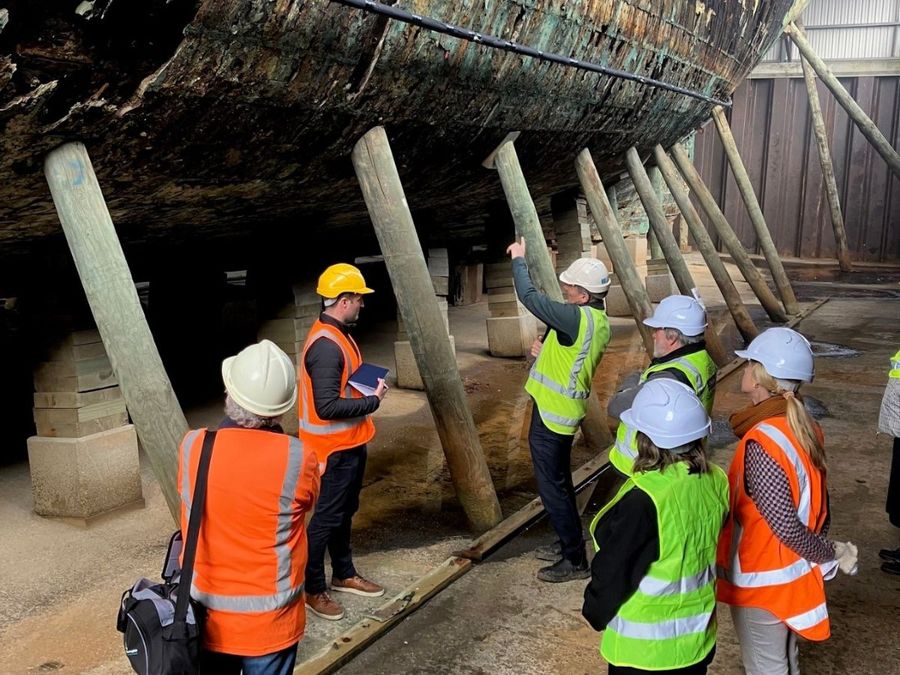
Alongside these publications, a significant shift in the Edwin Fox's stewardship has been taking shape. In mid-2023, responsibility for the vessel transferred from the Edwin Fox Society to Marlborough District Council, marking the beginning of a new phase of preservation planning. More recently, a specialist panel drawn from the fields of naval architecture, coastal engineering, ship conservation, and maritime heritage convened in Picton to assess what long-term care of the ship should look like. Their brief was straightforward: keep the Edwin Fox intact and accessible for at least another fifty years.
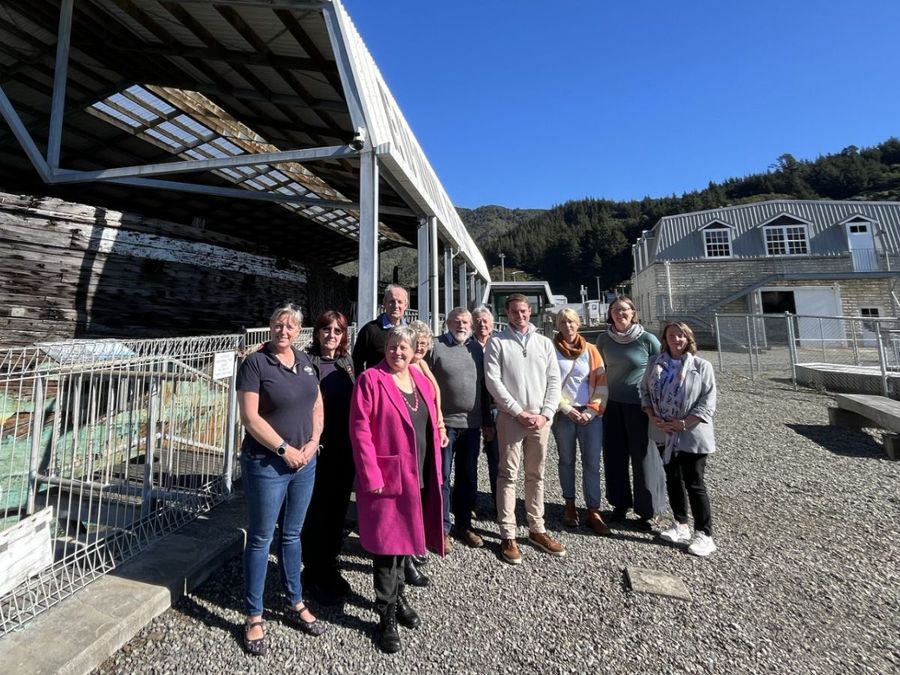
Heritage Marlborough's Liz Ward described the workshop as a genuine turning point, one that established a framework for the Council's redevelopment ambitions and brought the Edwin Fox Preservation Trust formally into the process. The trust itself was established through a bequest from Dr John Hunt, a descendant of a doctor who had once sailed aboard the ship, and will contribute funding to the work ahead.
For archaeologist Dr Kurt Bennett, the priorities are clear. "The primary goal of this preservation project is to house and support the vessel in line with global best practice, ensuring its preservation for at least 50 years while maintaining a unique and interactive visitor experience."
From her launch in Calcutta in 1853 through to the preservation planning of 2025, the Edwin Fox continues to bridge past and present. She is at once a relic of empire and of migration, a case study in the mechanics of globalisation, a long-running community endeavour, and a museum unlike any other. Above all, she is a survivor.
As the Fox closes in on her 175th birthday, her story is far from finished. It is being written not only in books and archives but in the very timbers that remain, tended by people determined that her legacy will endure.