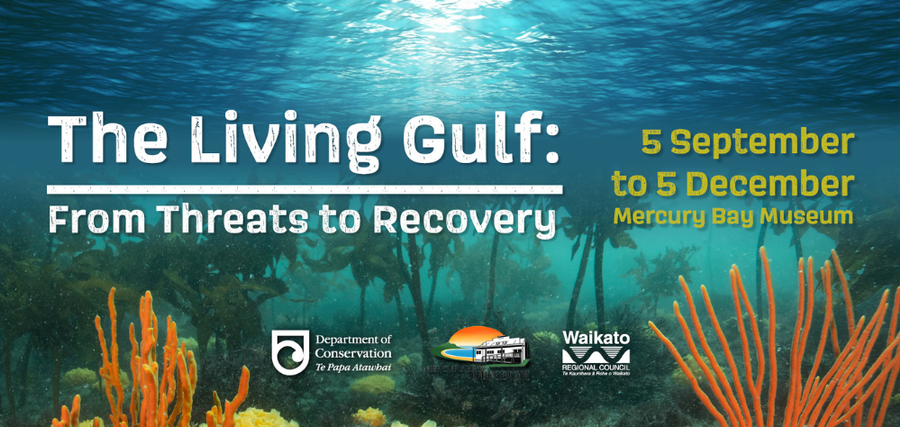
A new exhibition at Mercury Bay Museum in Whitianga highlights efforts to protect and restore the Hauraki Gulf/Tīkapa Moana, with a focus on marine biosecurity and protected areas.
The Living Gulf: From Threats to Recovery runs until 5 December 2026 and features information boards, video, interactive touchscreen displays and marine biosecurity specimens. It is presented by the museum in partnership with the Department of Conservation and Waikato Regional Council.
The Hauraki Gulf Marine Park covers more than 1.2 million hectares and supports kelp forests, shellfish beds, seagrass meadows, fish species, marine mammals and internationally significant seabird populations. The ecosystem also underpins recreation, tourism, fisheries, aquaculture and the wellbeing of tangata whenua and coastal communities.
DOC Marine Community Ranger Rosa Hunt says the Gulf remains under strain from land and sea-based pressures but shows signs of recovery in some areas. "In some areas large predators such as kōura (crayfish) and tāmure (snapper) are rebounding and keeping urchin populations down. This is leading to healthier kelp forests which rebalances the ecosystem."
Waikato Regional Council Marine Biosecurity Officer Dave Pickering says preventing invasive marine pests from establishing is one of the most effective ways to protect the Gulf. The council's dive surveillance programme supports early pest detection and timely management responses.
DOC manages marine protected areas within the park and monitors their effectiveness through diving programmes and underwater cameras.
The exhibition's biosecurity message extends to individual boaters. In August 2026 the Royal New Zealand Yacht Squadron published a Guide for Sustainable Boating, setting out practical steps boaters can take to protect the Gulf, including recommended actions like responsible cleaning products and biosecurity protocols. Yachting New Zealand also runs a Clean Club programme supporting club environmental action for clubs around the country.