Ken Lupton's life doesn't follow a predictable rhythm. Some mornings he's out before dawn checking stock on the family's South Taranaki dairy farms near Waverley; a few days later he might be strapped into a methanol-burning hydroplane, skimming across a North American lake at over 250 kilometres per hour. Dirt under his fingernails one week, jet fuel in his veins the next. It's an unlikely combination, but it's entirely his own, and it has made him not just New Zealand's top hydroplane driver but one of the fastest on the planet.
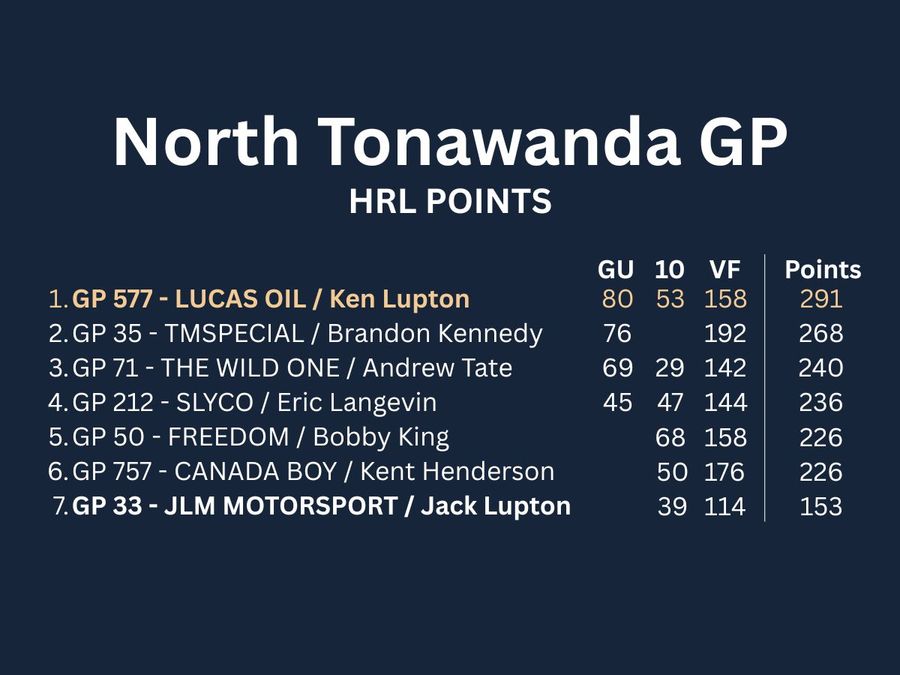
At 38, Lupton has been at this for more than two decades. He has accumulated national championships and international victories in GP-class hydroplane racing, a discipline that demands equal measures of mechanical precision, raw power, and the kind of nerve most people are happy never to test. In 2025 he is running a full campaign on the Hydroplane Racing League (HRL) circuit across the United States and Canada. After finishing third in the GP Challenge series, with heats contested at Guntersville, Madison, and Valleyfield, he heads into the penultimate round in early August holding the lead in the overall HRL standings.
The story of how a Kiwi farmer's son from a small South Taranaki town built a reputation for speed that now resonates on both sides of the Pacific.
The racing life was never really a choice for Lupton, at least not in any meaningful sense. His father Warwick is a two-time World Champion, a double Griffith Cup winner, and a five-time Masport Cup victor, a man whose name has long been attached to the upper reaches of the sport. Growing up inside that world, the younger Lupton absorbed it all. At 17 he became the youngest person in the world to pilot a GP-class hydroplane, a record that announced early that this was no casual hobby.
“I started because my father used to race them. He started racing when I was a kid. As I grew up, I jumped straight into hydroplanes—I was the youngest in the world at 17, and I’ve only ever driven GP-class since.”
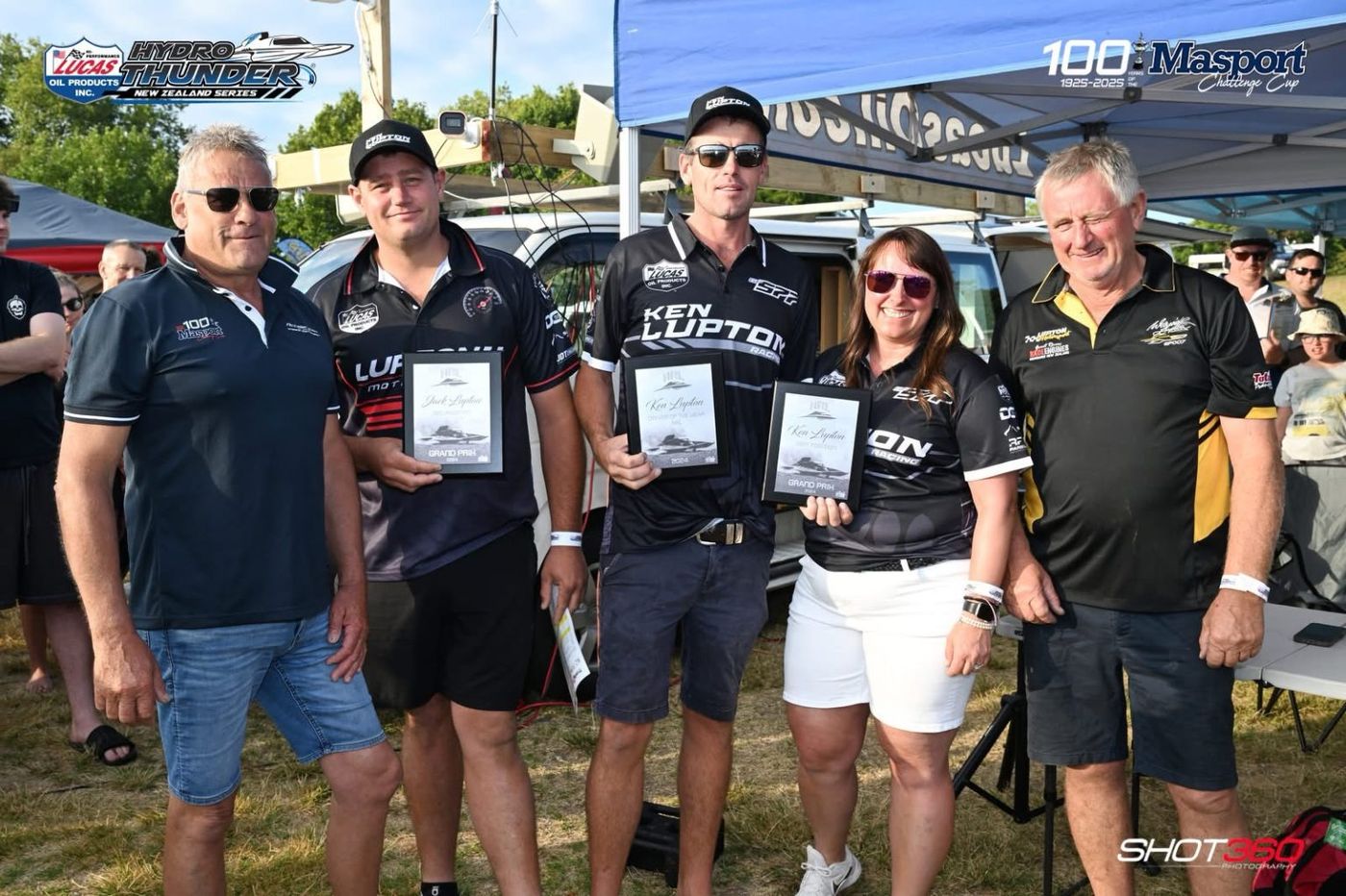
His younger brother Jack has followed the same path and now competes under the Jack Lupton Motorsport banner in the GP class, regularly appearing alongside Ken at HRL events in North America.
“He’s probably seven or eight years behind me,”“But yeah, Jack started early too, and we’ve both been racing a long time now.”
What distinguishes the Luptons is not just pace but consistency. Whether racing at Lake Karāpiro, Taupō, or Twizel in New Zealand, or at prominent regattas across Canada and the United States, they arrive with a mechanical understanding and a depth of preparation that most rival teams struggle to match.
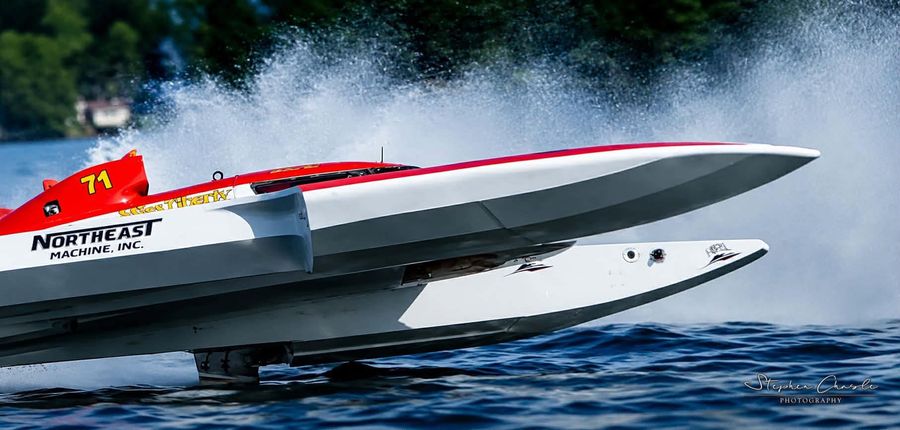
Ken campaigns two identical hydroplanes, one kept in New Zealand and one stationed in North America. Both were built by celebrated Canadian boatbuilders Bert Hines and Jamie Auld, and both carry the same Lucas Oil livery. The arrangement means he can step from one hemisphere to the other without any adjustment period, and it keeps parts interchangeable between the two vessels.
Each boat runs 25'5" in length and 12.5' across, with a total weight of roughly 1300kg once the engine is installed. That engine is a 468 cubic inch V8 fitted with an 871 supercharger, built to GP-class regulations and fuelled entirely by methanol. Output sits between 1500 and 1600 horsepower, and a single five-minute heat can consume up to 120 litres of fuel.
When Lupton competes in New Zealand's unlimited class events, the regulations open up. He can run a larger 510ci engine with a 1471 blower, lifting output past 2500 horsepower. The performance gain is significant, but it comes with a corresponding increase in the consequences of something going wrong.
“That’s when you really get hurt,” he says, bluntly. “You’re going 30 miles an hour faster than with the smaller engine, and there’s no room for mistakes.”
Lupton knows exactly what those consequences look like. In 2023, during a race in Guntersville, Alabama, a rooster tail from another boat caught his hull and launched him into the air. The hydroplane somersaulted, came down on its rear corner, and somehow flipped back upright. Lupton walked away, though not easily. The incident left him with torn knee ligaments and several broken toes.
“I went up a rooster tail and did the same thing—through the air, upside down,”“When I hit the water, it landed on the back corner and tipped itself up the right way. Tore all the tendons in my knees, broke three toes.”
The cockpit offers layers of protection that the sport has refined over many years. A six-point harness holds him in place, and he wears a fighter-pilot-style oxygen mask connected to a system that activates automatically if water enters the capsule. Two escape routes exist should the worst happen: through a floor hatch, or upwards in the event the boat comes to rest inverted.
“I wear a fighter pilot helmet with a mask that’s hooked to the oxygen. If I go upside down and the water touches the mask, the canister goes off and I start breathing air straight away. There’s a hatch under my legs if I’m upside down. Or I can swim out the normal way if the boat’s upright.”
None of it eliminates the danger entirely. In the days before this interview took place, a driver in his twenties died from injuries suffered in a crash in a separate class of boat. The sport's risks are permanent and present. Lupton is aware of them, but they have not changed his approach.
With the 2025 HRL season approaching its conclusion, he finds himself in the position he has worked toward. Heading into the Thunder on the Niagara event on 2 and 3 August, he leads the overall standings. The competition on the Niagara River will be sharp. His brother Jack lines up in GP-33, Brandon Kennedy brings GP-35 TMSpecial, and other serious competitors, including Freedom, Canada Boy, and The Wild One, will all be in contention. At the end of the GP Challenge series, only four points separated first place from second. The margins at Niagara are unlikely to be any wider.
“But if I can win, I’ll pretty much win the series. That’s the goal.”
The format packs a great deal into two days. Multiple heats lead to a final, with a consolation round providing a secondary path into the championship race for boats that fall short in the initial qualifying. Cockpit temperatures regularly climb into the forties. Every heat asks something of both driver and machine.
Back home, the farms don't pause for the racing season. The Lupton family runs three or four dairy operations around Waverley, milking between 2,500 and 3,000 cows and raising several thousand calves each year. It is hard physical work, but Lupton finds it useful. It keeps him fit, and it keeps him connected to something beyond the circuit.
“I’m pretty busy back here with the farms. That’s why I try to fly in and out for races while Dad and the team handle the logistics.”
Warwick remains an active part of the racing operation, towing the boat between regattas and overseeing engine preparation. A Canadian-based crew handles logistics and maintenance on the North American side. The whole arrangement is compact and practical, much like Lupton himself.
A win at Niagara could seal the HRL season championship before the final round is even contested. Lupton has indicated he may not contest that last event if the title is already decided. Either way, 2025 has already produced results worth marking. The New Zealand Power Boat Association has recognised his season with awards that include Driver of the Year, and the standings he currently leads reflect genuine achievement. There is, however, one more race to run first.