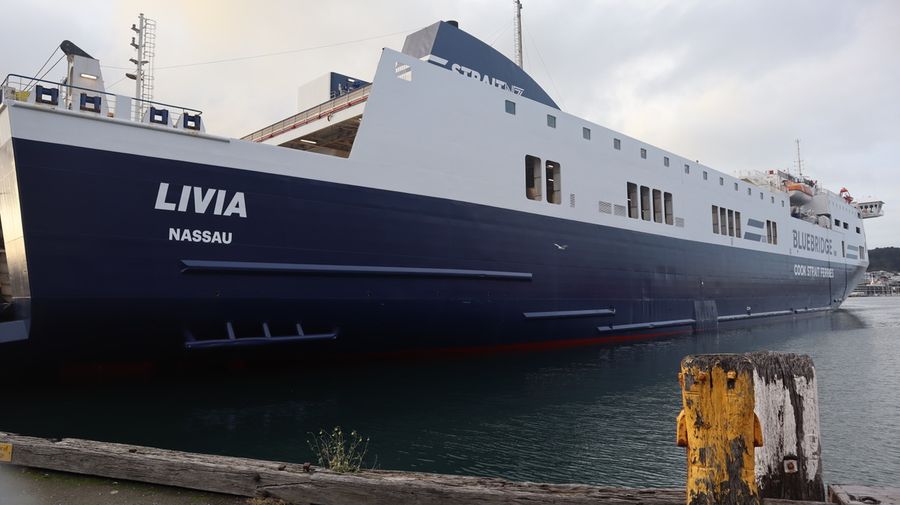
Going below decks on Livia
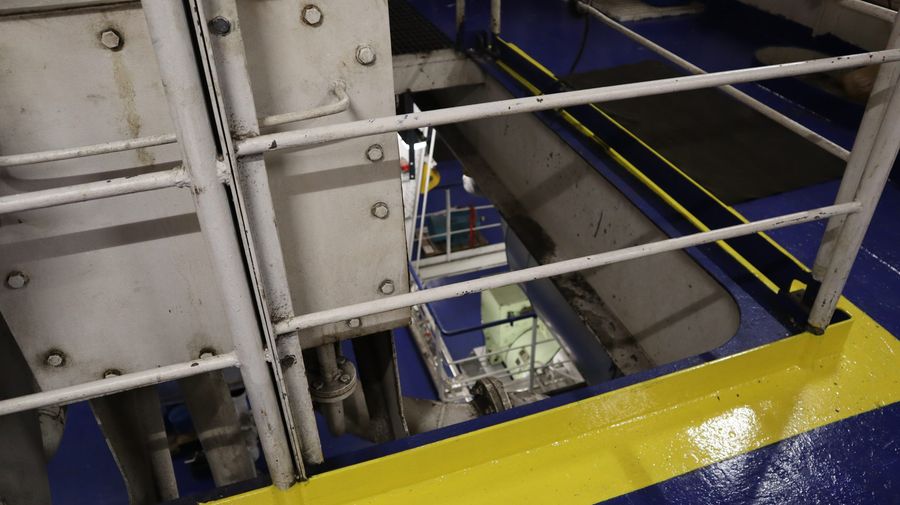
Most of us have made the Cook Strait crossing without giving much thought to what lies beneath our feet. The rumble underfoot, the steady hum through the hull, it all just happens. But when First Officer Joe offered a completely unrestricted tour through the engineering spaces of Bluebridge's newest vessel, Livia, every hatch open and nothing out of bounds, the picture changed entirely.
At 26,000 GT, Livia is an Italian-built vessel and one of the most technically sophisticated ferries to have ever operated in New Zealand waters. What follows is a journey from the control room to the crankshaft.
“She’s a solid ship,” says Joe. “Built for Italian service, ice-class, heavy steel, designed to run hard and run long.”
Propulsion: direct, deliberate, and dependable
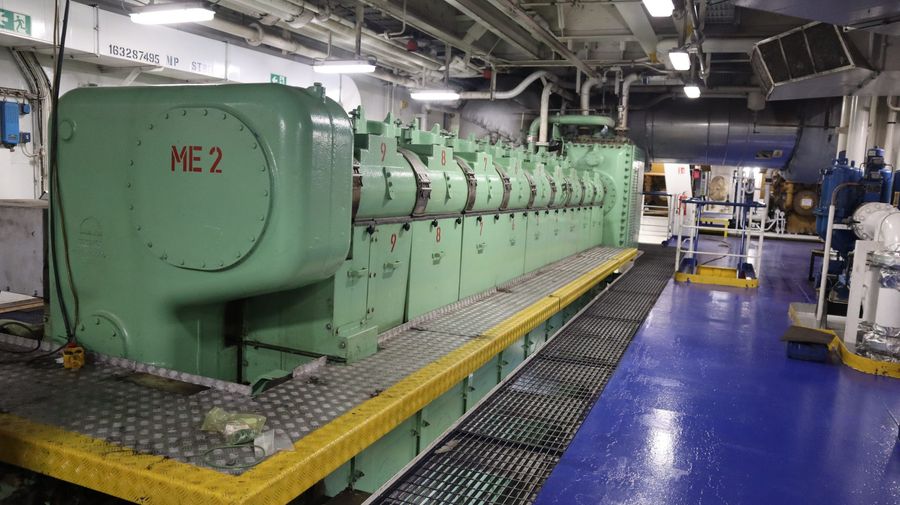
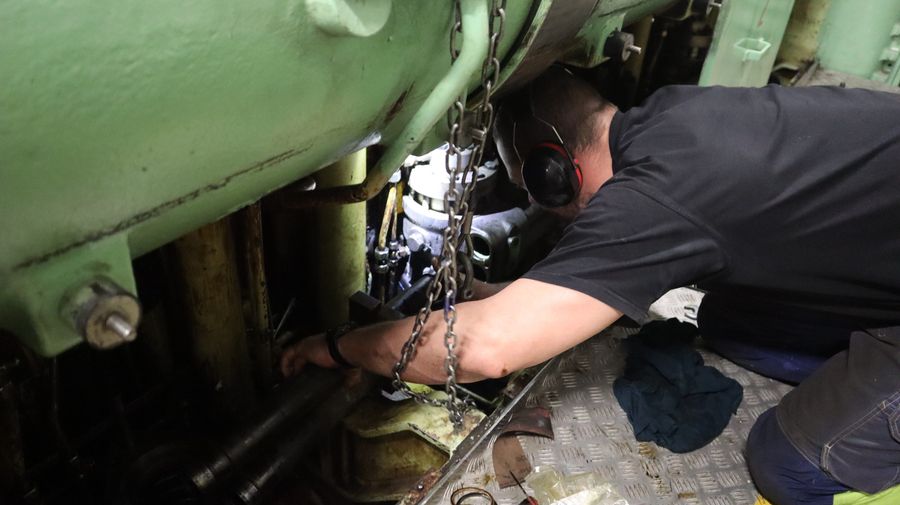
Where some modern ferries rely on diesel-electric drive systems, Livia takes a more direct approach. Two MAN diesel main engines connect through gearboxes to controllable pitch propellers, meaning thrust can be adjusted without altering engine speed. A straightforward arrangement, but a highly effective one.
“You pivot the blades for thrust, just like a turboprop,” Joe explains. “More pitch, more drive. Reverse the pitch, and you go astern.”
The main engines turn at around 500 RPM, with gear reduction bringing the shaft speed down to approximately 160 RPM. Push things to full throttle and Livia is capable of exceeding 23 knots, though typical Cook Strait crossings are completed at a more economical 17 to 18 knots, balancing schedule and fuel consumption.
Generating power, reducing waste
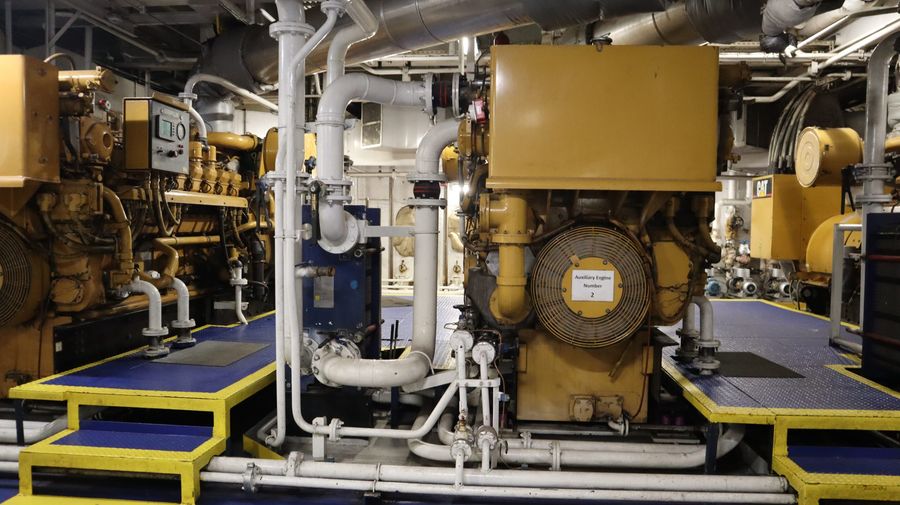
Three Caterpillar 16-cylinder diesel gensets handle electrical generation, supplemented while underway by shaft alternators that draw from the main engines. When Livia is berthed and the crossing is done, a single generator is enough to manage hotel load, around 0.4 megawatts, keeping both emissions and running costs to a minimum.
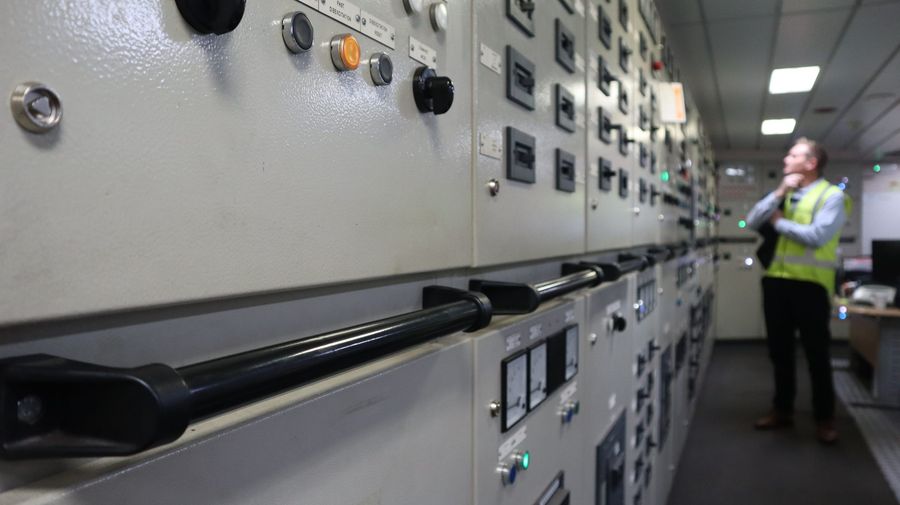
Should something go wrong with bridge-based power management, the ship can revert to manual control through the engine control room. As Joe put it plainly: "One switch. And you've got full backup."
Automation and ballast management
The Kongsberg Vessel Automation System ties much of this together. It oversees ballast, bilge operations, tank management, power distribution, and ventilation throughout the ship. Commands can originate from the engine control room, the bridge, or the vehicle deck control centre, giving the crew genuine flexibility in how they manage the vessel.
Ballast management runs continuously and largely autonomously, shifting water between heeling tanks to keep Livia at acceptable angles of list as freight loads change during port operations. Passengers never notice this quiet, constant work, but it makes a real difference to the crossing.
Livia also carries a UV ballast water treatment system, a requirement under the Ballast Water Management Convention and a meaningful step in preventing the transfer of marine pests between ports. Before ballast water is discharged, it passes through large filters and ultraviolet chambers that neutralise microorganisms. "It's one of the best systems we can use," says Joe. "Efficient, clean, and fully compliant."
Keeping it cool
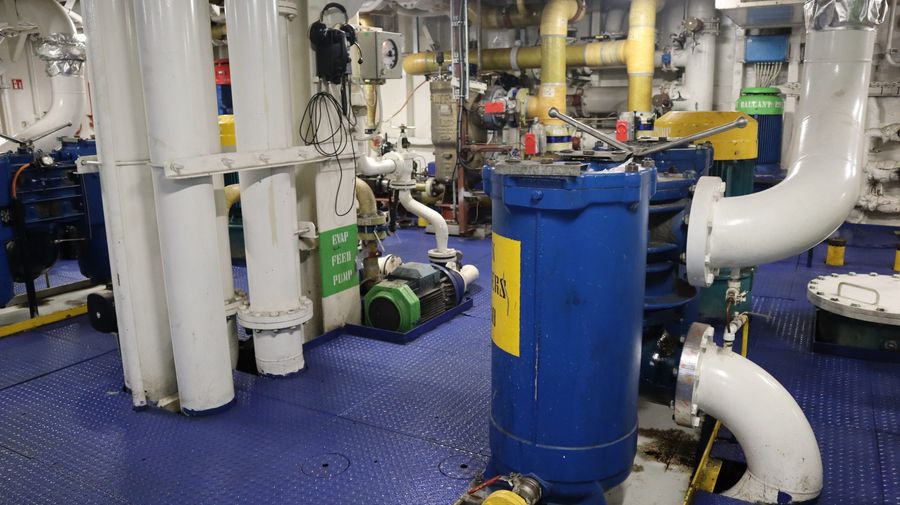
All that engine output produces a substantial amount of heat, and managing it is its own engineering challenge. Jacket water from the engines circulates through a dedicated cooling room, where seawater is pumped through large heat exchangers to carry away the thermal load.
“In winter operations, think Italian, not Wellington, they can blend warm water from a vertical water chest to avoid freezing,” Joe explains. [IMAGE:6]
Cybersecurity below the waterline
The machinery spaces are not the only area where Livia reflects current best practice. The ship is set to be protected by DarkTrace, an AI-driven cybersecurity platform that monitors the vessel's operational technology network for anomalies and can isolate suspicious activity before it causes harm.
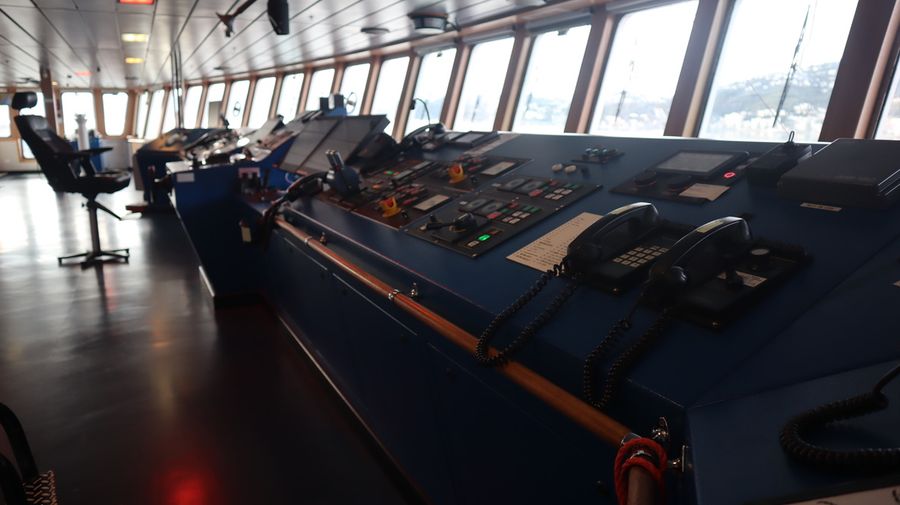
As the maritime industry grows more connected and more dependent on digital systems, this kind of protection is no longer optional. Running a modern vessel safely means having it in place.
“We’ve already seen where the future’s going,” says Joe. “Automation, AI, secure control. But the key is still manual resilience, you’ve got to be able to take over.”
Stability on the strait
Passenger comfort on Cook Strait crossings depends heavily on how well a vessel manages roll, and Livia takes that seriously. Gyro-controlled active stabiliser fins, positioned near midships, work continuously to dampen movement. The principle is the same as on smaller recreational vessels, simply executed on an entirely different scale.
The gyro unit itself is surprisingly modest in size, around 10 centimetres across at the core, suspended in fluid. The fins it commands are another matter, stretching several metres in length, though they move with considerable agility given their scale.
Built to last, built to work
From the boiler room to the crankcase, the engineering aboard Livia is pragmatic and purposeful. No unnecessary complexity, just a series of well-considered systems doing exactly what they need to do, reliably and consistently.
“She’s got enough redundancy, simplicity, and robustness to serve Cook Strait well into the 2030s,” Joe says.
Having walked the full length of the vessel's engineering spaces, it is easy to take Joe at his word. It was among the most thorough and candid vessel tours we have ever been given.
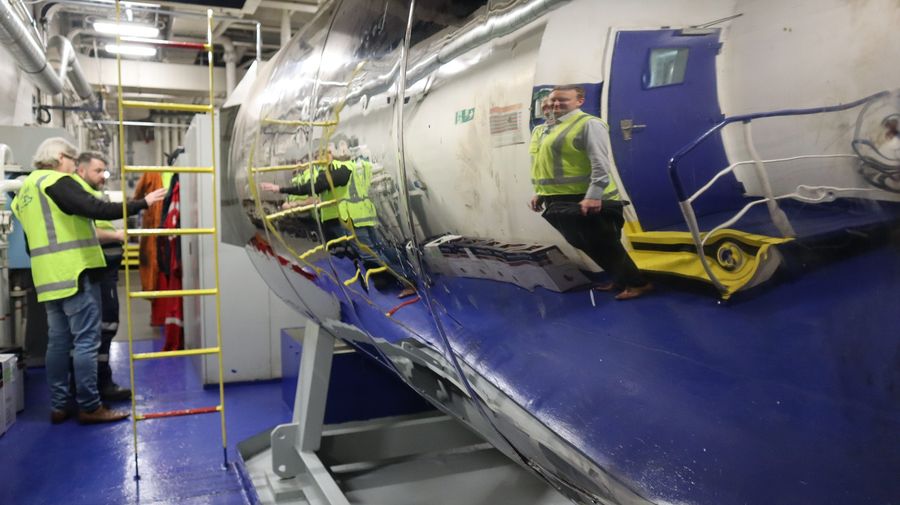
Thanks go to First Officer Joe and to Bluebridge's Chief Operating Officer Will Dady for opening Livia up completely and taking the time to explain what makes her tick.