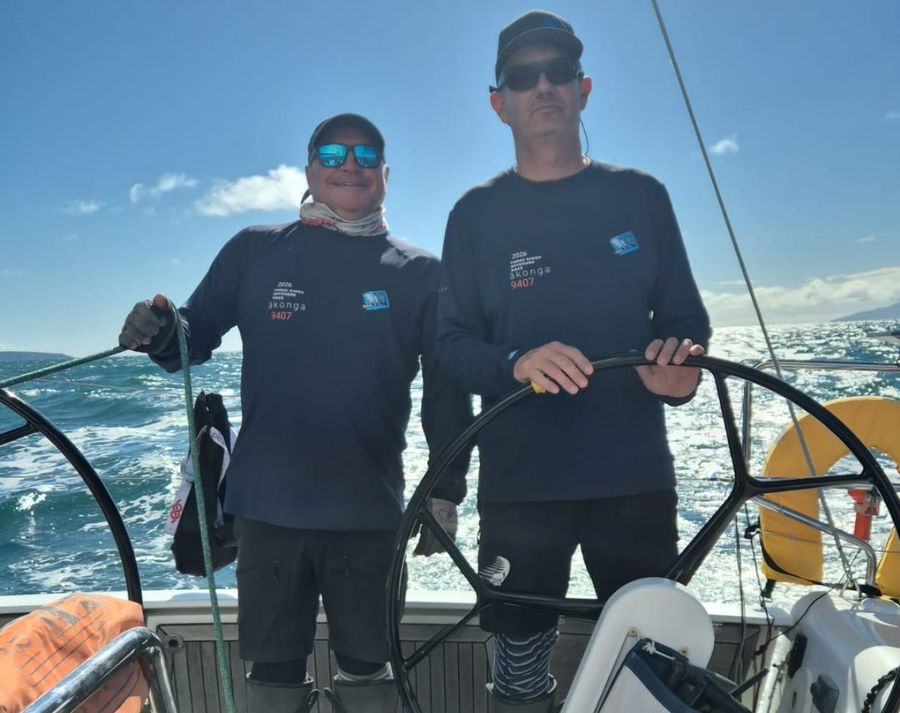
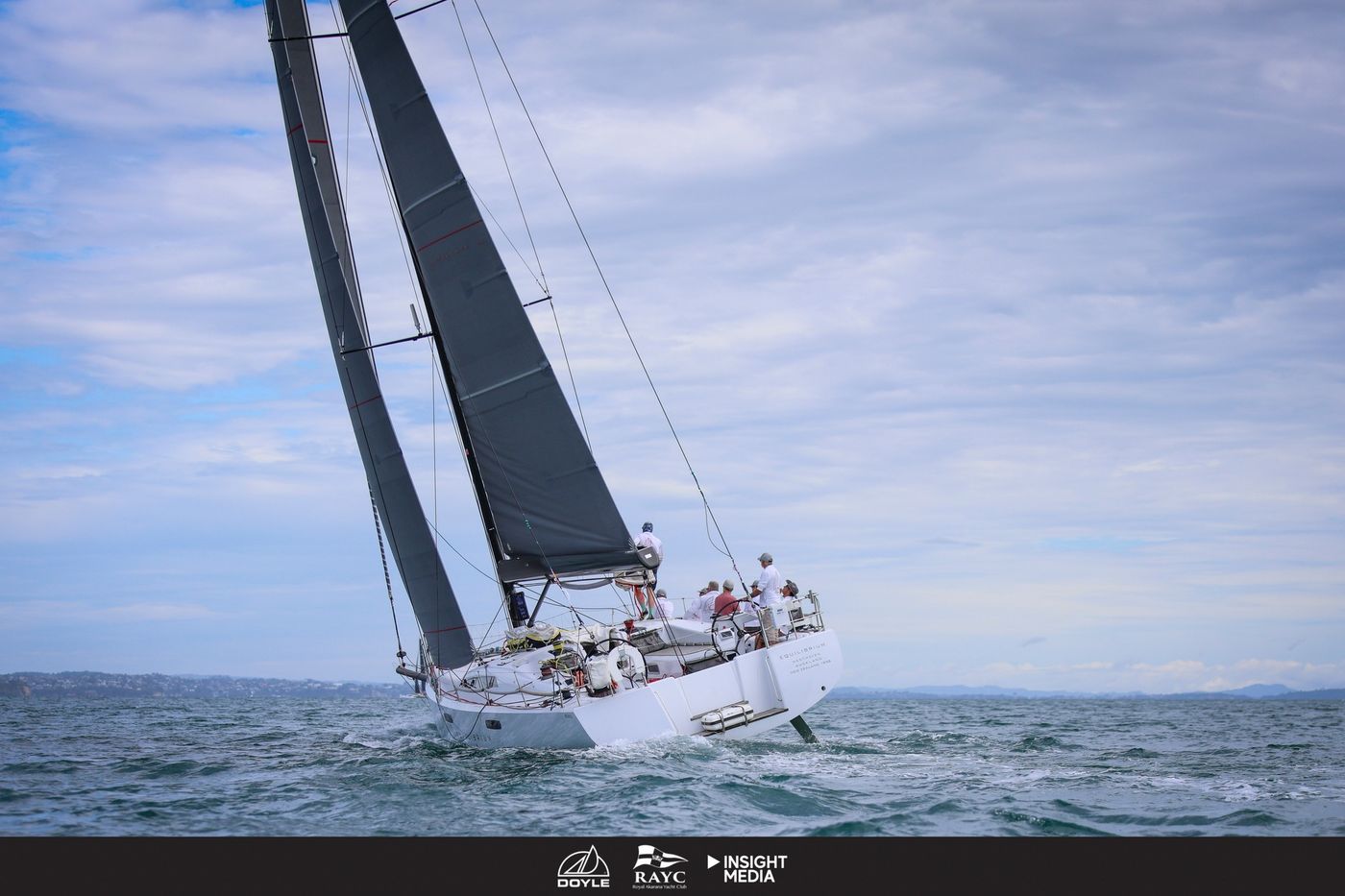
Graham Matthews is not the sort of person who makes a fuss about milestones, but at 74 he will be the oldest skipper on the start line when the 2026 Three Kings Offshore Race gets under way, and his boat, Equilibrium, at 16.7 metres, is the largest in the fleet. Neither fact seems to weigh on him particularly.
What does matter to Matthews is the quality of the sailing. "The measure of success is if we feel we've sailed to our best abilities," he says. "Whether we win on handicap or not, really, that doesn't bother me that much."
His results suggest he is being modest. In 2024, Equilibrium claimed overall honours on fully crewed handicap in the Three Kings, finishing ahead of schedule and backing it up on corrected time. That same year, Matthews took line honours and overall PHRF in the PIC Coastal Classic. He placed third on line in the 2022 Three Kings, claimed line honours in the 2025/26 Gold Cup Series, and in last November's Doyle Sails Cavalli Islands Race, crossed the line just five and a half minutes behind Motorboat III after 46 hours at sea. The Marten 55 is, by any honest assessment, the boat to beat on both line and handicap.
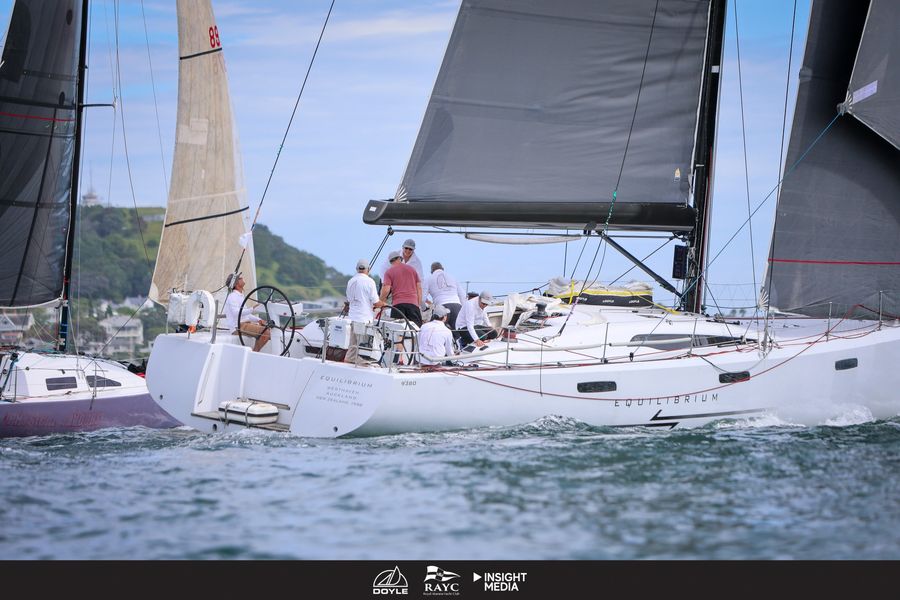
Equilibrium was built in 2011 by Lloyd Stevenson to a Botin Carkeek design and is constructed entirely in carbon. Thirteen tonnes fully loaded, it carries a lifting keel drawing 3.9 metres, hydraulic runners, powered winches, a powered traveller, and a 350 square metre gennaker. The hydraulic runner system auto-trims through tacks and gybes at the push of a button. It is also, without apology, a boat that gets used between races. Matthews had it out with his family over Easter. The anchor and chain, somewhere around 130 to 150 kilograms, come off before a race, and that is broadly where the weight-saving programme ends.
"We're a performance cruiser," Matthews says. "It's fully kitted out."
The pre-race preparation list is not a demanding one. The mainsail is currently with Toby Scoones at Doyles, off the boat for the first time in a couple of years. A rigger will check over the rig before the start. There is a logic glitch in the hydraulic runner system that needs attention, and the powered winch buttons glow so brightly in the dark that the cockpit resembles a Christmas tree at night, something that will be sorted before the fleet heads north.
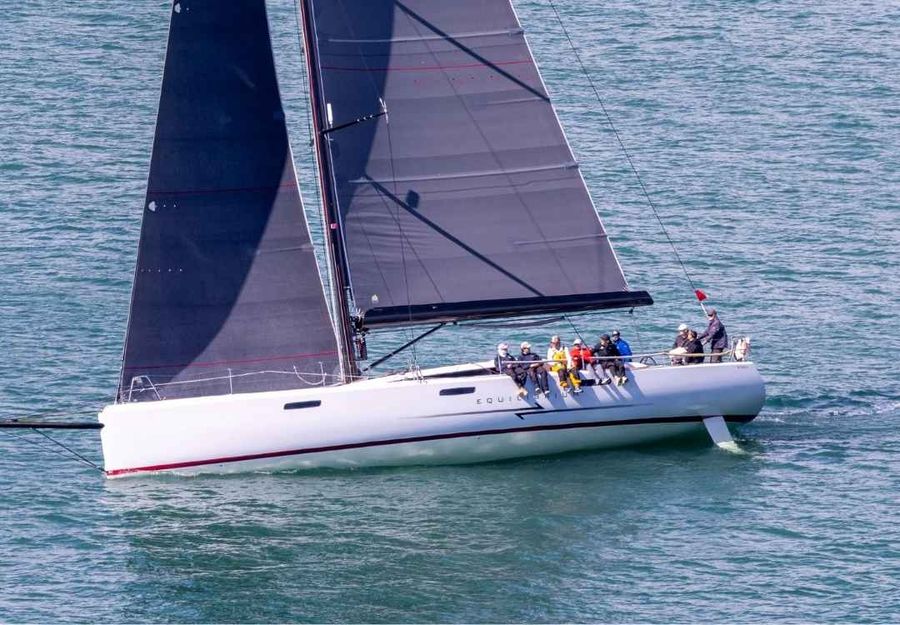
Where Matthews does invest seriously is in his crew. For 2026, he has nine sailors aboard, the most he has ever taken to a race of this kind, and he had more willing volunteers than he had berths to fill. Watch captains are Scoones, who has sailed with Matthews for 25 years, and Pete Geary. Macgregor Jones, an engineer at Emirates Team New Zealand, handles the bow. Graeme "Gus" Cummings, at 75 the oldest person aboard, and John Gibbs, a retired Navy officer with more than 40 years in uniform who once ran the Navy's sailing programme, are on the keyboard. Aimee McMaster is the lone female crew member, and Matthews describes her as more than capable on the foredeck in a seaway. Andrew "Cookie" Cook keeps the rest of the crew entertained with one-liners and amusing anecdotes. Andrew "Tiny" Duff, ordinarily the boat captain on Wired, rounds out the crew for this race.
Matthews has come to understand the particular value that younger, fitter sailors bring to offshore campaigning. A couple of seasons back he raced with young sailors aboard, and the experience stayed with him.
"It was a revelation. They could race around the boat and drag in sails and do stuff we don't normally do, because we're too old and ancient. When it's blowing 20-odd knots and you're trying to get that gennaker down, 350 square metres of it, you need to be on your game."
The Three Kings passage is one of the more demanding stretches of ocean a New Zealand offshore racer will encounter, and Matthews does not need many words to explain why.
"When you race out to the Pacific and come back, the worst bit is always the last 200 miles coming into New Zealand. Everywhere else is benign compared to getting around the New Zealand coast."
He has sailed through six-metre seas on the run north to the Three Kings. He broke his arm during a passage from Mackay back to New Zealand. There is little about the offshore environment that rattles him.
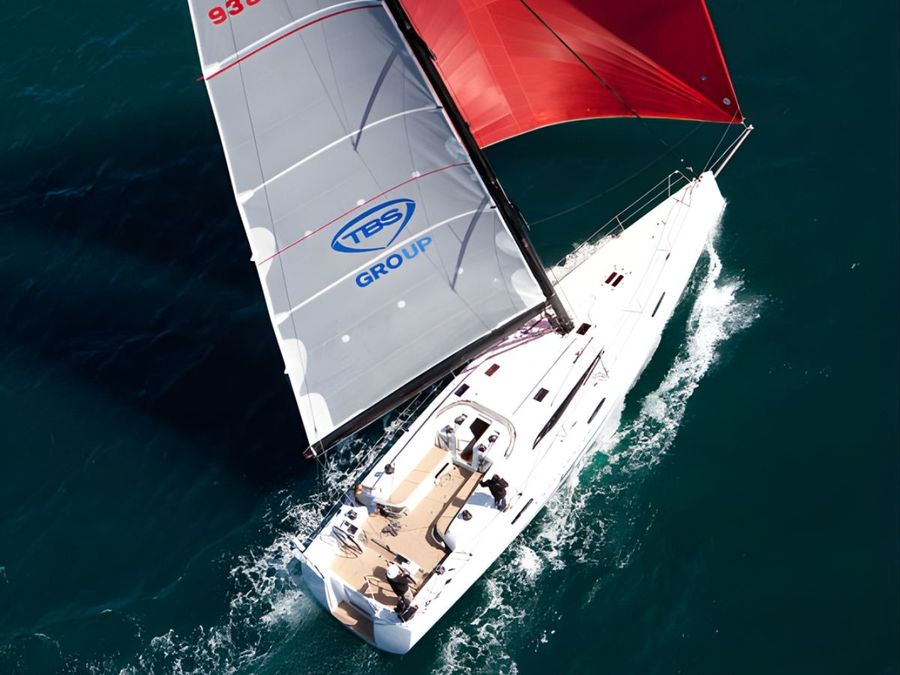
A boat of Equilibrium's size and displacement needs wind to be competitive. In Matthews' view, the lighter boats in the fleet, the Shaw 12s and the quicker sleds, open a gap in anything below 20 knots, planing away while the Marten 55 is still pushing through the water. The equation shifts when the breeze builds to 25 knots upwind.
"If there's a fair amount of upwind, we'll do a horizon job on the other boats. And if it's blowing hard enough, the light boats run out of ability. They start smashing into waves and have to slow down anyway."
When Matthews spoke to us a few days before the start, he had not yet consulted a forecast. The window was too far out to be useful. When conditions become readable, he will use PredictWind for routing. Asked about the platform's AI feature, he was cheerfully direct.
"I'm too old for it. I'm 74."
The race starts at 1100 on Thursday 16 April off Westhaven, with seven boats heading north. It is a small fleet, but not a soft one, and the run to the Three Kings will separate the contenders quickly enough. For the crew aboard Equilibrium, the approach is straightforward: sail clean, sail well, and back themselves to get the result if they do those things right.