Seventy-four teams from 28 nations spent a week racing at Enoshima in August, but the real story from the 2026 470 World Championship isn't just who won on the water. It's what the class did off it.
The regatta ran from 10 to 17 August at the Tokyo 2020 Olympic sailing venue, drawing one of the biggest 470 fleets assembled all season. With that scale came an obvious question: how do you run an event of that size without the environmental cost blowing out along with it? The class decided not to wait and offset the damage afterwards. Instead, it built reduction into the plan from day one.
Four pillars underpinned the approach: Planet, Partners, People, and Performance.
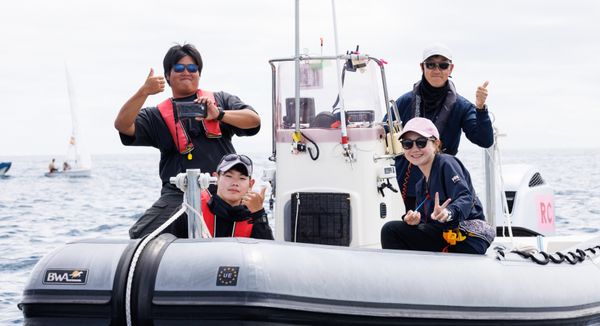
Transport is the elephant in the room at any international sailing event. Gear and people travel from all over the globe, support boats run back and forth, freight stacks up. Organisers tackled it head-on by pooling equipment into shared class containers rather than shipping separately, and by sharing coach motorboats between nations. Fewer boats on the water meant fewer costs for teams and fewer emissions in the air.
Robotic marks at the leeward gate cut down on additional motorboat trips too. A small detail, but it adds up over a week of racing.
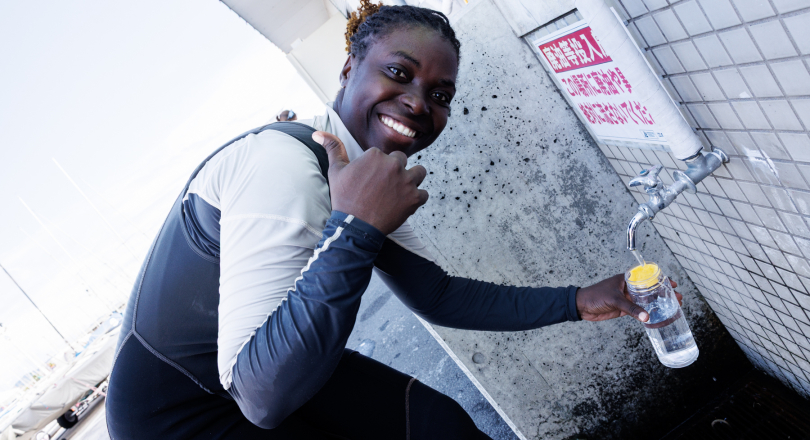
On shore, the changes were just as deliberate. Refill stations replaced single-use plastic bottles. Waste was split into separate streams around the harbour and weighed daily by the event team, a discipline that turns good intentions into actual data.
Rather than trucking in new infrastructure, organisers leaned on what Enoshima already had. The harbour's existing waste separation system, its fresh-water refill points, and its shore-based fuelling setup were simply put to use rather than replaced.
That's arguably the most useful takeaway from the whole event. You don't always need to spend big or build new. Working with what's already there, and with local partners who know the venue, can get you further than importing a solution from somewhere else.
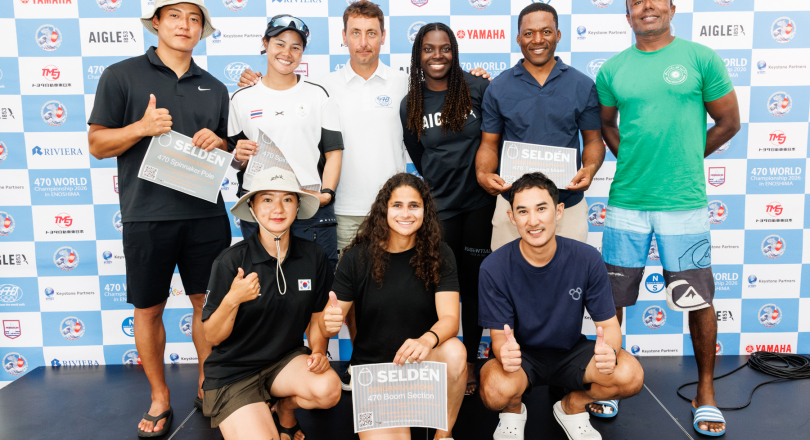
Sailors were pulled into it as well. At registration, all 74 teams sat through a sustainability presentation and signed up to six commitments: sorting waste correctly, weighing waste daily, never refuelling on the water, using refillable bottles, taking their own rubbish home, and joining clean-up efforts if racing was postponed or finished early. These weren't just suggestions. They were written into the Sailing Instructions as an environmental responsibility clause, making them part of the rules rather than a nice-to-have.
Haruna Egawa served as sustainability manager on site throughout, logging waste by type and location every day.
The numbers threw up some clear problems. Burnable waste made up 63 percent of all waste bags, the standout area for improvement. Pack-up day on 17 August saw waste spike to 7.2 bags as boats were de-rigged and containers packed. Coloured ribbons used to mark fleet groups were single-use and generated needless waste. Plastic bottles sold by independent vendors around the harbour couldn't be eliminated entirely, a reminder that not every fix sits within an event organiser's control.
None of it was perfect. That seems to be the point.
The sustainability programme across the 470 class sits under Afrodite Zegers-de Kleine, herself a sustainability manager and an elite competitor at the top level of the sport. That dual role, professional and athlete, means the measures being pushed are grounded in what's actually workable for sailors training, travelling and racing at that level.
The class follows the Clean Regattas Best Practices, built on the World Sailing Sustainability Agenda of 2030, with the Enoshima dataset submitted to Sailors For the Sea for certification.
Sustainability, as the class puts it, isn't a box ticked once and forgotten. It's ongoing, measured, and imperfect, one championship at a time.