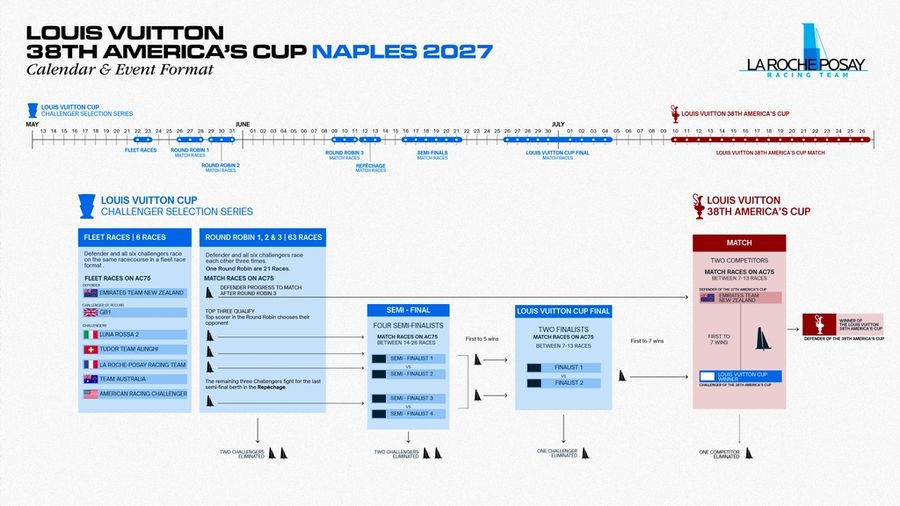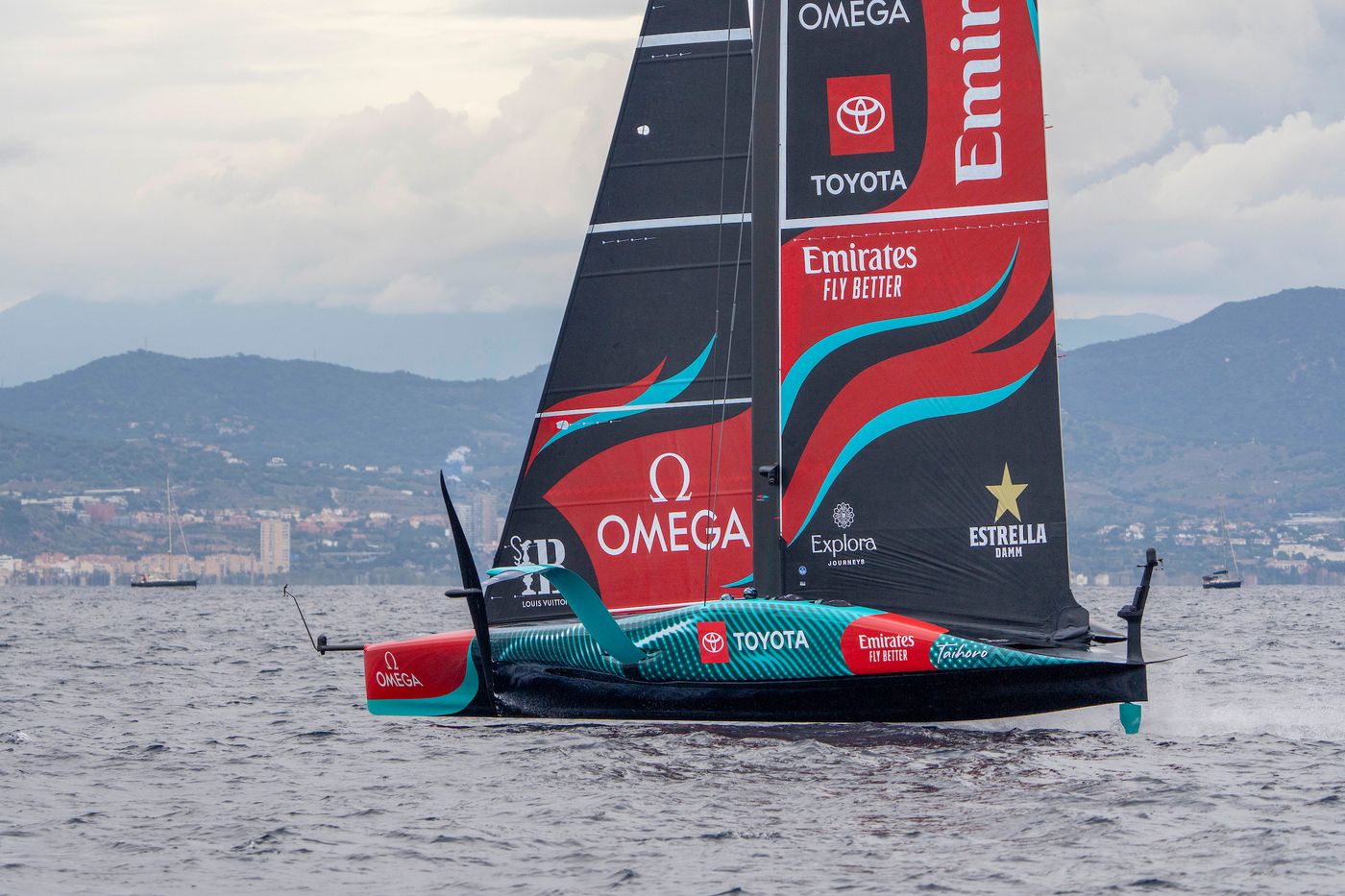
Few sights stir Auckland's sailing community quite like an AC75 cutting across the Hauraki Gulf on its foils, and this afternoon that sight returns. Emirates Team New Zealand's Cup-winning AC75 is being lifted back into the water today, marking the start of a new phase of preparation for the 38th America's Cup in Naples in 2027.
For many sailing fans, this will be the first chance to see the AC75 back on the gulf since the Barcelona defence. It also brings the first look at a significant mechanical change: the cyclors are gone, replaced by battery-powered hydraulics.
The boat heading into the water this afternoon is the same AC75 that carried Emirates Team New Zealand to victory in Barcelona. Since that campaign ended, the yacht has stayed ashore while the sailing team maintained fitness and sharpness aboard the AC40, the smaller foiling class used throughout the America's Cup programme.
The AC40 serves a genuine purpose. It keeps sailors current on foiling technique and manoeuvre timing, and training time on it is far easier to organise than sessions on the larger boat. But it is not a like-for-like replacement. The AC75 generates loads, speeds and coordination demands of a different order entirely. The helms, flight controllers and grinding team all face challenges on the big boat that the AC40 simply cannot replicate. Getting the AC75 sailing again is a meaningful step, not a symbolic one.
The timing of today's relaunch is no coincidence. The protocol governing the 38th America's Cup required all teams to observe a mandatory sailing blackout on their AC75s until 15 January 2026. With that deadline now passed, Emirates Team New Zealand can begin putting hours on the boat again, though the protocol keeps those hours tightly rationed. From this point, teams are permitted no more than 50 AC75 sailing days per year. Every session carries real weight.
The AC40 is similarly controlled, with training capped at 35 days per year from mid-2025. Also stripped from the rulebook is the development loophole that previously allowed teams to construct prototype training yachts. Those experimental boats are no longer permitted, leaving the AC75 itself as the only full-sized platform available. The programme is considerably more constrained than previous Cup cycles.
The AC75 remains one of the fastest monohulls ever built, capable of flying clear of the water on its foils at speeds well above 40 knots.
The cranes will do their work this afternoon, the AC75 will meet the harbour, and the team will step aboard for the first sailing period of the new campaign cycle. Boating New Zealand will be at the launch site bringing readers video, photos and interviews from the dock as the afternoon unfolds.