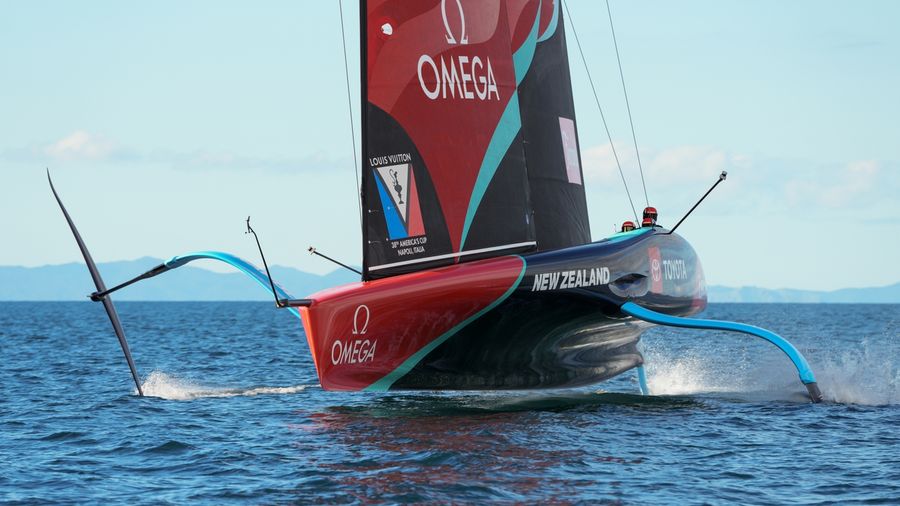
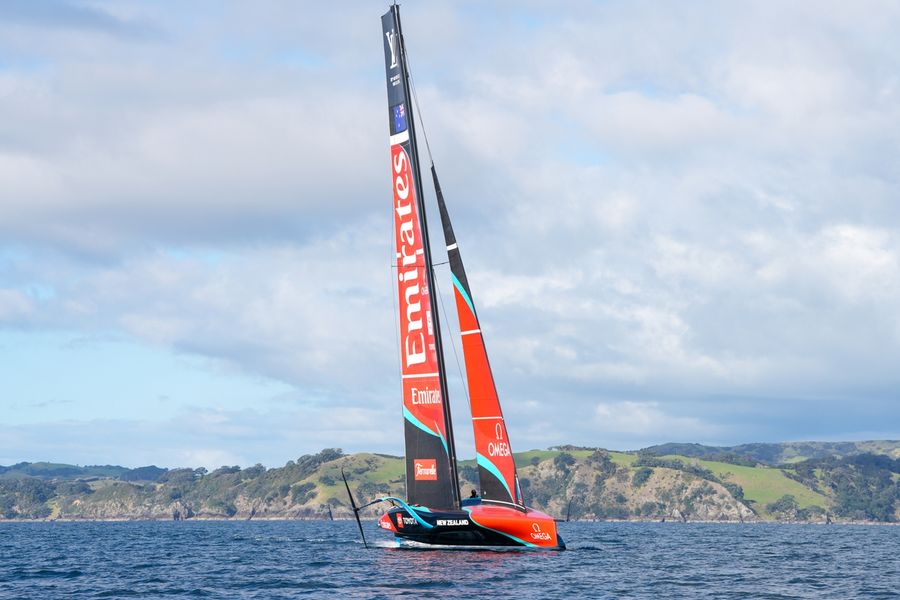
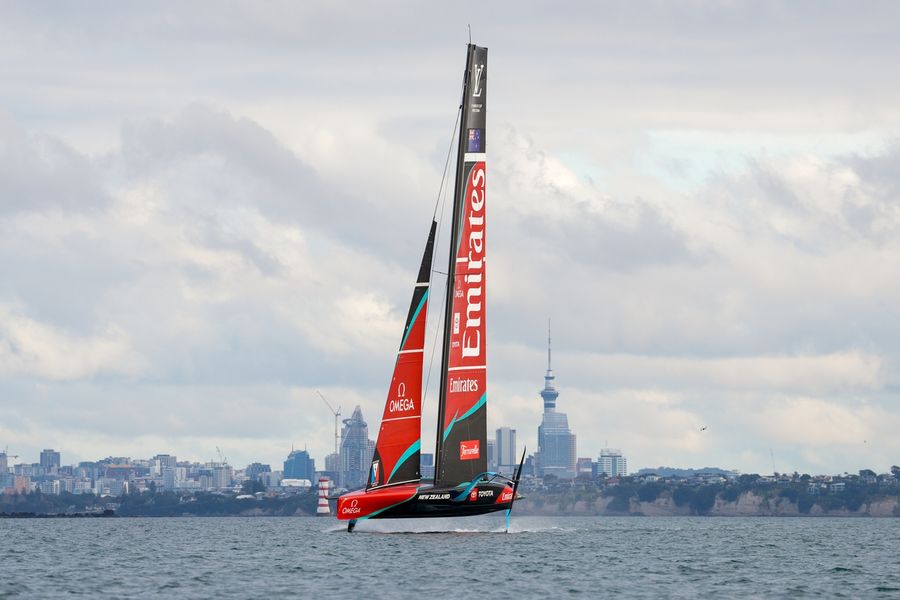
Emirates Team New Zealand closed out their June training block on a high note, wrapping up eleven days of preparation with four substantial days on the water and a standout display of light-air foiling. The central objective throughout has been honing their capabilities at the lower end of the wind range, with the conditions expected when racing gets underway in Naples from 10 July 2027 firmly in mind.
Auckland's winter weather occasionally pushed toward the upper limits during the camp, but the dominant theme was precision in marginal foiling territory. On the final day, the breeze started below the 6.5-knot minimum wind threshold for Naples racing, yet the crew moved through their manoeuvres and kept the boat flying with a composure that made it look deceptively routine. First to launch an AC75 and entering the campaign cycle as early favourites, the team's performance was a quiet reminder of why that status exists, even as development work continues regardless.
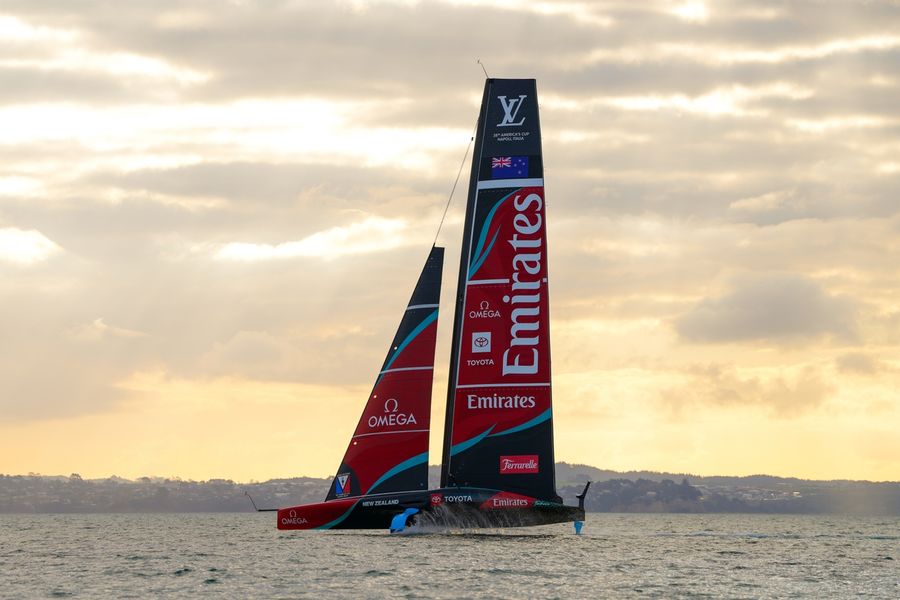
Nathan Outteridge spoke to the nature of the testing underway, describing the crossover work between different sail configurations. "We were back on the M1 (today) and using the larger codes of the jibs and just sort of seeing the crossovers there. Last time we were out, we were on the M2, and we got some light air on that as well. So, it's just always just trying to work out what we're going to build in the future. So these days are really critical for us to get out there and just get a feel for the range the sails go through and how the boat performs right in that bottom end."
Managing the balance between the sailors' own development and the broader engineering programme is one of the ongoing challenges of any America's Cup campaign, and Outteridge addressed it candidly. "It's a real balance between the sailors wanting to develop our skills but also develop the boat and develop the systems on the boat. Generally, what happens is the sailors, we go out there and we sail around and we're like, 'Oh, we'd like to have these kind of features.' And you can't just snap your fingers and get those features. Then you end up having that conversation with the designers and with the performance team on what are the steps and processes to get that. And sometimes it can take an overnight change, sometimes it can be a couple of months. It's just understanding what are the priorities in these campaigns, and when you want the new things to come online."
Outteridge also pointed to new hardware coming down the pipeline, expected to arrive after the team returns from AC40 training in Naples, scheduled for early July. "When we started this block, we had a number of things we wanted to do over these two weeks of sailing, and each day, based on what weather you get, you try to achieve what you can. And as you go through the block, you're ticking things off, but your list is generally getting longer than it is getting shorter. And so, the next period for us now is a non-sailing period where we're reviewing a lot of the data, what we've been through, and we're starting to get the exciting times where all these lists and things we've been creating are actually turning into new hardware. So new hardware's coming on at the end of this year when we get back and go through the summer sailing period. But right now, it's been a really fun period to get out there, do a lot of sailing and try and get some answers to the questions that the designers are always asking us."
Recon Report, 15 June 2026
Key Points: - Marginal foiling conditions - Damaged Port Foil - M1 Main used.
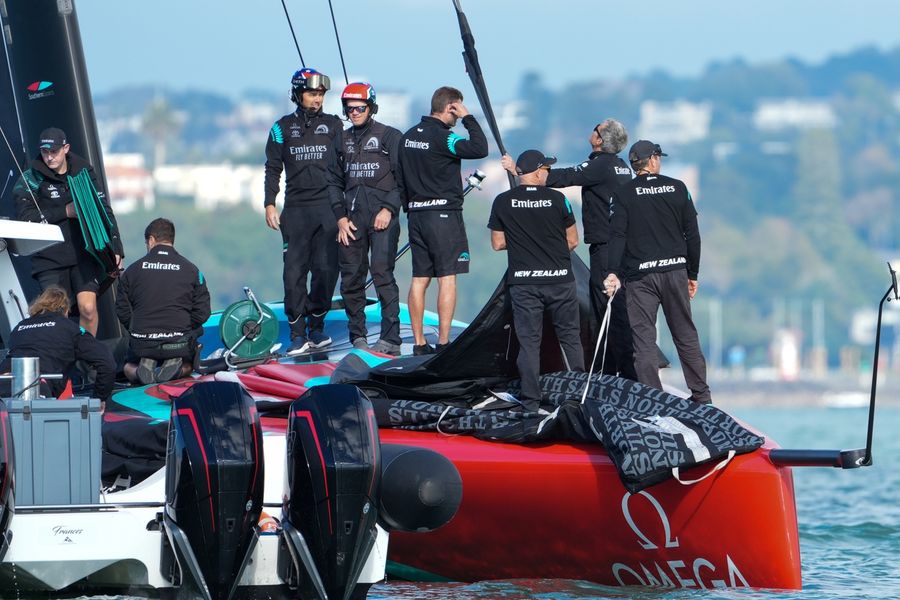
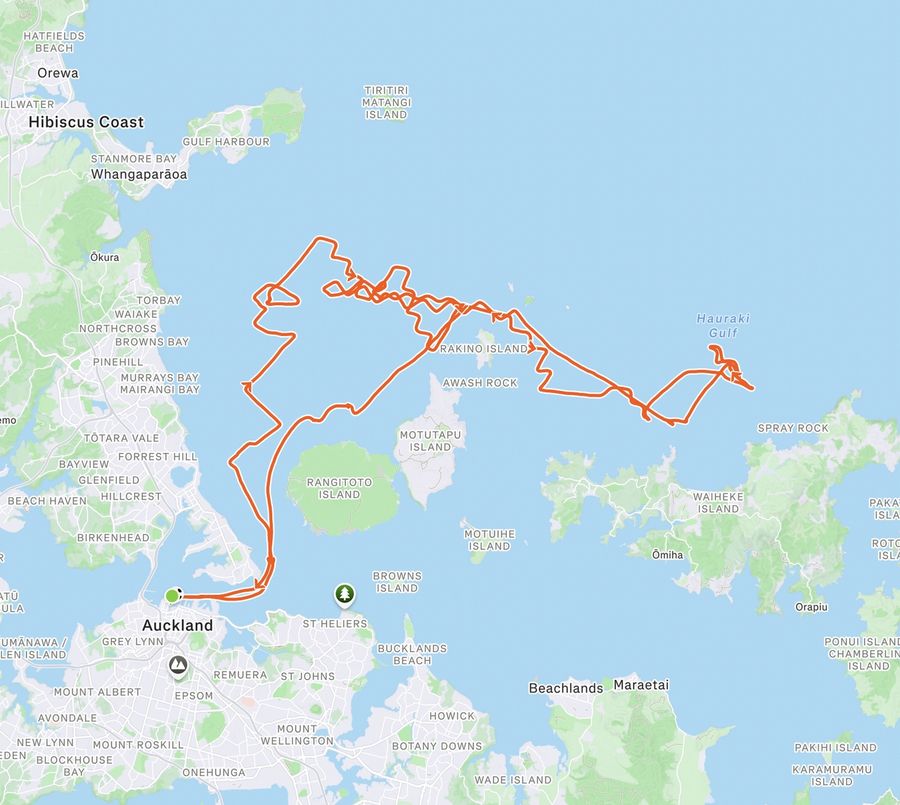
Clear skies and sunshine greeted the team as the boat rolled out of the shed at 0917 on the final morning of the block. It was in the water by 0945 and clear of the dock by 1057, with the standard crew of Outteridge, Menzies, Maloney, Jensen and Aleh aboard.
A tow down to North Head opened the day before the team hoisted the M1-0 main and J2-2 jib. At 1143 they towed up onto the foils in a patchy 3 to 5 knots, stopping just six minutes later to inspect the outer tip of the port foil, which had made contact with a UFO during the tow out. The inspection was brief and the team elected to continue. In a marginally stronger 4 to 6 knots the boat lifted onto the foils and handled most manoeuvres without issue, with just one noticeable touch-and-go recorded. The first session came to an early close at 1216 when a mistimed raise of the windward board during a gybe brought the boat off the foil. Whether the cause was mechanical or sailor error was not established. A lunch break followed.
Session two got underway at 1228, towing back onto the foils in 3 to 4 knots. After a handful of manoeuvres the team headed downwind toward Waiheke Island in search of steadier pressure, completing the session at 1317 off Onetangi Bay with only occasional touch-and-go moments to note.
The third session began at 1338 with a tow onto the foils and moved into several practice races in a consistent 4 to 6 knots, wrapping up at 1422. The team then swapped to a J3-3 and towed from Waiheke out toward the back of Rakino Island, releasing the tow at 1451. A north-westerly of 5 to 8 knots had settled in by this point, and the boat worked its way back up toward Rangitoto Island. In the slightly elevated pressure the team observed a notably bow-down exit from gybes, particularly on the starboard-to-port transition, which produced the occasional splashdown. That session closed at 1533 for a battery swap.
The day's final session began at 1540 with a tow onto the foil, a single pre-start, and a sail home. Sails came down just off North Head at 1558, bringing a productive final day of the winter block to a close. Despite marginal conditions throughout and damage to the port foil from the earlier collision, the team extracted meaningful testing and practice racing from what was on offer, with the programme now turning toward Naples.