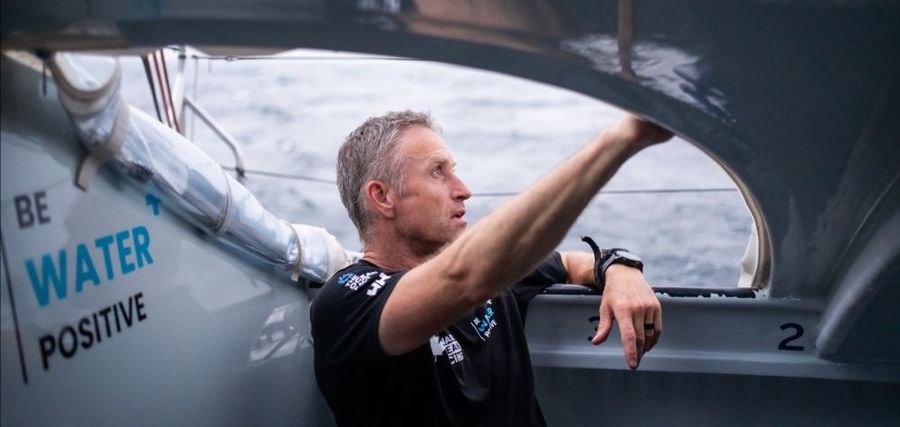
With less than two months to go until the Route du Rhum, Emira IV is heading back across the Atlantic, and Scott Shawyer, skipper and president of Canada Ocean Racing, is closing out the most important sailing summer of his life.
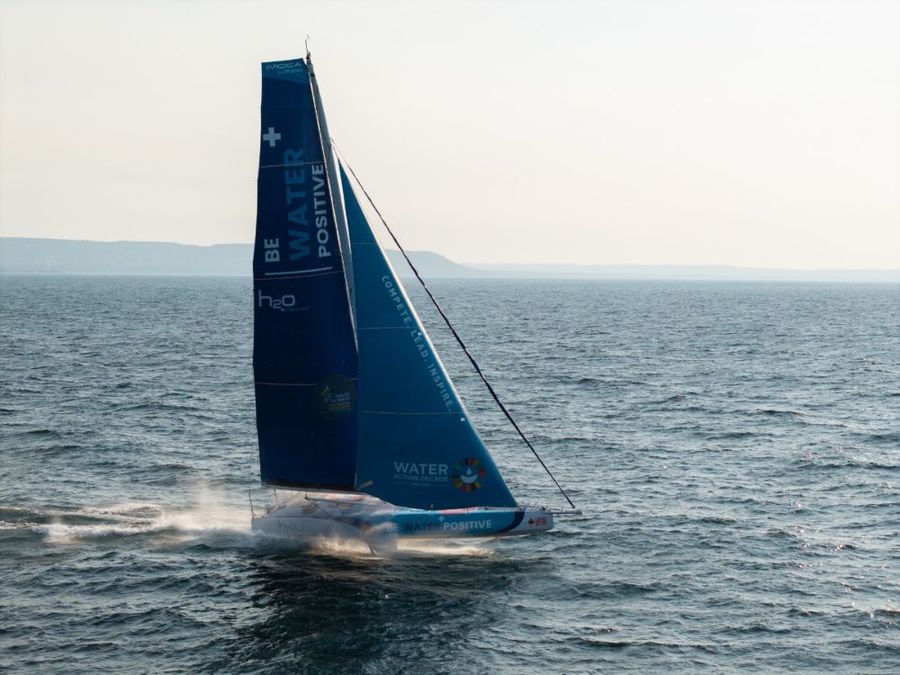
The Canadian skipper spent the season on Lake Huron, North America putting his foiling IMOCA 60 through its paces ahead of his first Route du Rhum campaign, a step on the way to the bigger goal, becoming the first Canadian to finish the Vendée Globe.
A Team NZ connection behind the foils
Emira IV was designed by Frenchman Guillaume Verdier, whose New Zealand connection goes back to 2010, when he joined Emirates Team New Zealand's design team. He has since worked closely with the team across three generations of foiling America's Cup boats, from the AC72 programme through to the Cup winning AC50 and AC75.
Verdier splits his time between Cup design and offshore raceboats, and Emira IV is one of his. Launched in 2021 as 11th Hour Racing Team's Mālama, she won The Ocean Race under Charlie Enright, then finished third in the 2024/25 Vendée Globe under French skipper Sébastien Simon, setting a solo 24-hour distance record of 615.33 nautical miles along the way. Canada Ocean Racing bought the boat in May 2025 and renamed her Emira IV.
Under two months to Saint-Malo
The 118-boat Route du Rhum fleet, including 23 IMOCA (4 September) entries, lines up in Saint-Malo on 1 November, bound for Pointe-à-Pitre in Guadeloupe, and this will be Shawyer's first crack at the famous solo transatlantic in the IMOCA class. Before that, Emira IV spent its first Canadian summer docked in Collingwood, Ontario, believed to be one of the first visits by a foiling IMOCA 60 to Canadian waters. For Shawyer, a Georgian Bay sailor since childhood, it meant learning one of the most technical boats in the sport somewhere he already knew the weather.
Learning to speak the boat's language
Shawyer says the biggest gain of the summer wasn't a single manoeuvre, it was building a complete picture of how Emira IV works: sail sheeting and trimming lines, watermaker, engine, charging systems, hydrogenerators, solar panels, alternator, plus the foils, sensors, computers and autopilot stacked on top. Training partner Alan Roberts worked with him on the Exocet autopilot overlays, a system widely used across the IMOCA and Ultim fleets, while Alberto Zaccaria covered the electrical and sensor side, and mentor Nick Moloney kept building Shawyer's feel for the boat. "I think I've pretty much mastered them in the conditions that I could try them in," Shawyer says of the boat's core manoeuvres, though he's yet to test Emira IV in open ocean swell or benchmark her speed against rival boats.
Eyes on 2028
That gap is the next job. Once Emira IV is back in Europe, Shawyer's focus shifts fully to race preparation, first the Route du Rhum, then the long build toward the 2028 Vendée Globe and Canada's first finisher in the race. "I feel like I'm on the right path," he says. It's a fitting note to end a summer that, thanks to Verdier's work on both sides, carried a Great Lakes training block a little closer to the design thinking Kiwi sailing fans have followed for over a decade.
https://www.canadaoceanracing.com/