A quiet revolution is unfolding on Britain's inland waterways. Over recent years, a new generation of electric and hybrid narrowboats has been steadily displacing diesel fumes with clean, silent propulsion. The pace of change is measured rather than dramatic, but the direction of travel is driven by pioneering builders and owners prepared to do things differently.
Elektrika 2025, held on 11 and 12 July at Brinklow Waterside & Marina in Warwickshire, marked a notable landmark for the movement. Now entering its second year, the event was organised by Ortomarine in partnership with Aquavista and remains the only boat show in the UK devoted entirely to electric propulsion on the canals. Builders, suppliers, owners, and those simply weighing up a switch came together to exchange hard-won knowledge, compare systems, and talk honestly about life afloat with electric drive. Reliable information on this subject is still genuinely difficult to find, even at the major national shows, and Electrika continues to address that gap by providing a focused forum for practical insight and emerging innovation.
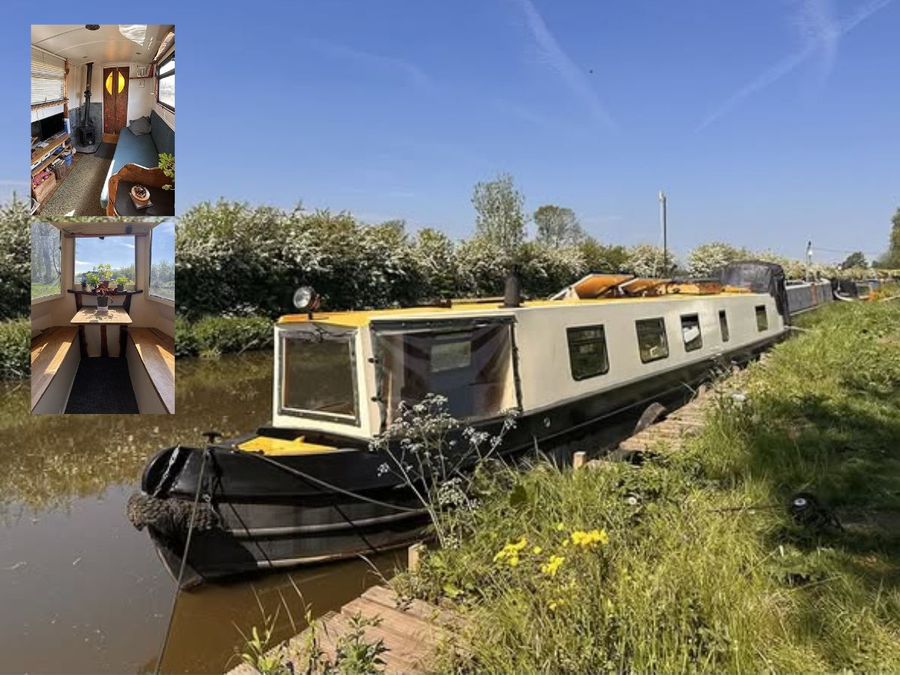
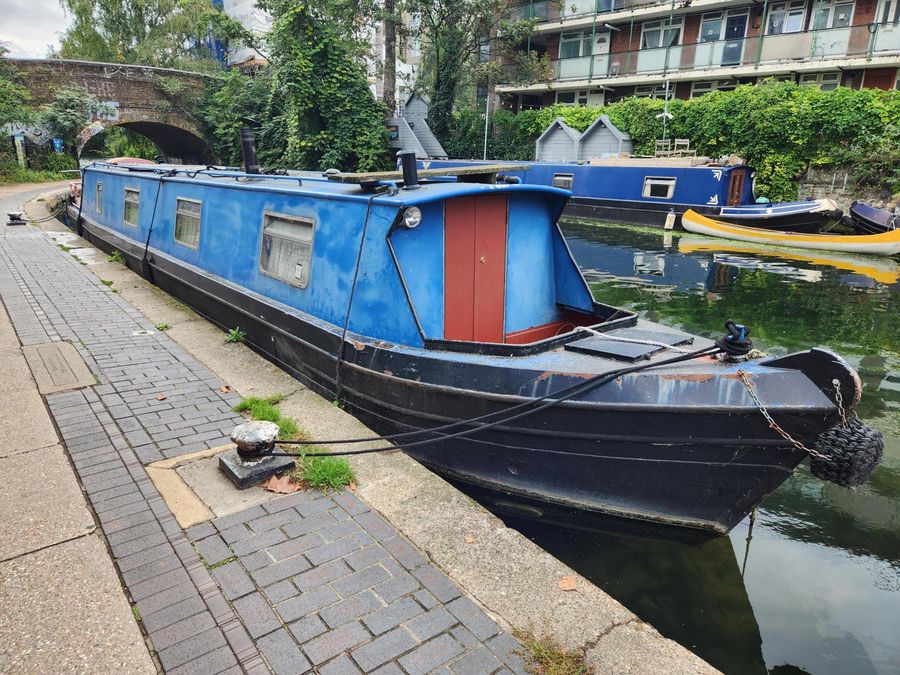
To understand why electrification matters here, it helps to understand the narrowboat itself. These vessels are a direct product of the Industrial Revolution, engineered to fit the tight dimensions of the UK's canal locks. Long and slim, they have a maximum beam of 6 feet 10 inches, just enough to pass through the narrowest stretches of the network. Originally horse-drawn cargo carriers, they were later fitted with steam engines and then diesel, before leisure use and liveaboard living became their dominant purpose today. The Canal & River Trust licences more than 35,000 narrowboats, with over 8,500 registered as permanent homes.
Most narrowboats are built from steel and measure somewhere between 30 and 72 feet in length. Traditional, cruiser, and semi-traditional stern configurations give owners a range of layout options, and interiors span the full spectrum from stripped-back utility to fully appointed floating apartments complete with kitchens, bathrooms, and 240V electrical systems.
The journey from horse power to electric drive has taken more than 250 years. Canal horses walking the towpath came first, followed by steam, which proved too cumbersome and too hot for vessels of this size. Diesel arrived in the early twentieth century and quickly became the dominant choice, valued for its reliability, low maintenance demands, and mechanical simplicity. But diesel has never been without its shortcomings.
A typical diesel narrowboat spends long stretches idling, burning fuel inefficiently and producing both soot and nitrogen oxides in the process. The drivetrain consists of a stern-mounted diesel engine connected via a gearbox to a shaft, cooled either by drawing water directly from the canal or through keel tanks welded into the hull. Heating generally comes from solid-fuel stoves or diesel-fired units such as Webasto or Eberspacher systems. Functional as this all is, diesel-powered boats are noisy, smoky, and increasingly difficult to reconcile with modern environmental expectations.
That is precisely the opening electric motors are stepping into. Drawing power from battery banks recharged by solar panels, shore connections, or an onboard generator, electric narrowboats have moved from novelty to credible option. Some operate as fully electric vessels, while others use serial hybrid arrangements in which a generator tops up the batteries without driving the propeller directly. Parallel hybrids combine diesel and electric power on a shared shaft, though they tend to be less efficient overall.
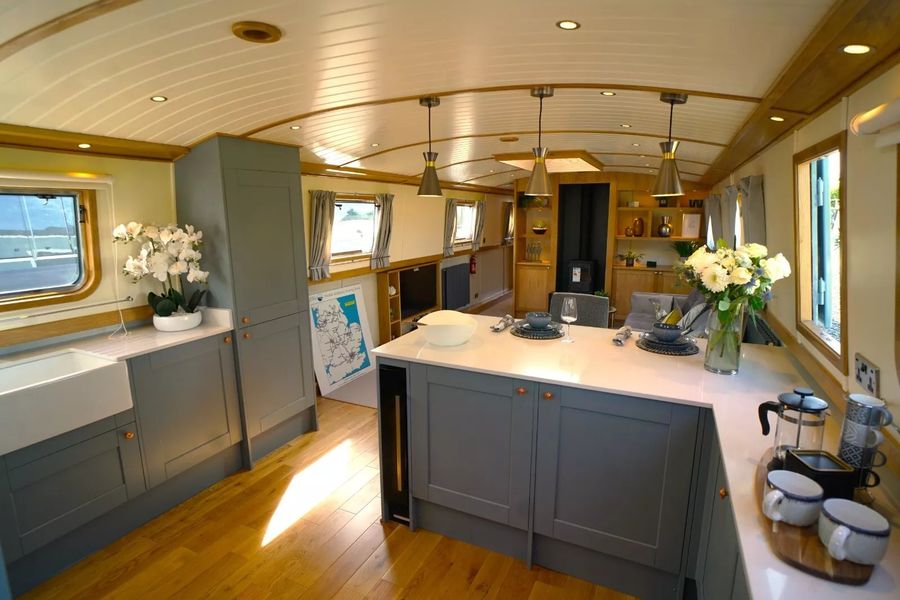
According to Ortomarine's Caroline Badger, real-world experience suggests electric narrowboats can achieve substantially greater fuel efficiency than traditional diesel-powered equivalents. Three factors explain this. A small generator running at its optimum load is meaningfully more efficient than a large diesel engine working well below capacity. Electric motors draw no power when the boat is sitting still, whereas diesel engines are routinely left to idle. And electric motors can turn larger propellers at lower RPMs, which itself improves propulsion efficiency. An Ortomarine propeller trial conducted in actual canal conditions confirmed these combined advantages in practice.
Electrification reshapes more than the engine room. Because electric motors operate at lower shaft speeds, boats can be fitted with propellers of greater diameter, producing smoother and more efficient movement through the water. There are trade-offs, though. Larger propellers demand careful hull design and can increase draught. In cases where a conventional three-blade propeller cannot be accommodated, a four-blade alternative can deliver comparable thrust within tighter constraints.
Batteries add both bulk and weight, but when their placement is properly thought through, they can serve as ballast in their own right. Builders now design hulls and interior configurations around battery banks, inverters, and control electronics rather than treating these as afterthoughts. Engine bays that once housed diesel blocks have become technical centres for power management hardware and cooling systems. Ortomarine is among those leading this rethinking of the narrowboat from the ground up, and at their 2025 Electrika showcase they reported an order book full through to 2026.
Recharging options differ considerably depending on how and where a boat is used. Shore power is the most dependable choice, particularly for liveaboards with a fixed or semi-fixed mooring. Solar contributes a consistent top-up, though the practical details matter: rigid panels cost less but consume roof space, while semi-flexible panels allow the roof to be walked on but risk overheating during summer. Ortomarine and other builders are exploring insulating layers between panels and the steel roof as a way of managing that problem.
Forum discussions on Canal World point to inboard marine generators in the 5 to 10 kVA range as the typical choice when generation is required. Units such as Fischer Panda or Paguro fall into this category and are water-cooled via keel tanks or heat exchangers to keep noise and heat to a minimum. Looking further ahead, hydrogen-powered PEM fuel cells are emerging as a promising option for off-grid domestic power. Nick Swift of Hydrogen Afloat has been one of the key voices introducing this technology to the narrowboat community.
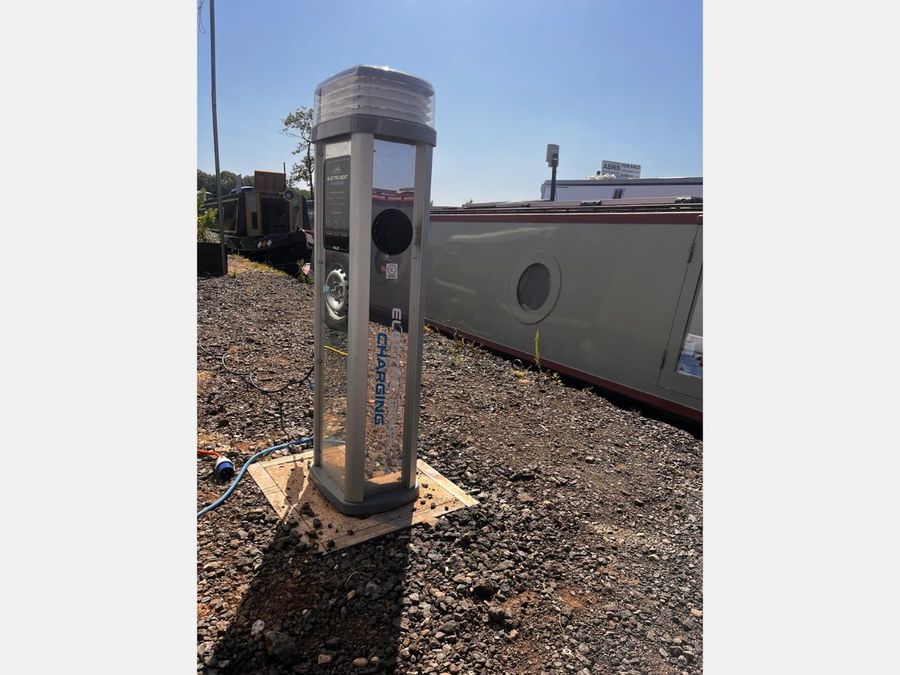
Elektrika 2025 attracted builders, engineers, suppliers, content creators, and a large number of curious boaters seeing electric systems in person for the first time. Paul and Anthony from Narrowboat Life Unlocked spoke about their own electric journey and what they had learned from living aboard. Malcolm Bridge from the Inland Waterways Association brought a decade of experience in electric cruising. Keith Meadowcroft offered a direct, practical assessment of system design. Caroline Badger worked through the environmental arithmetic, and Nick Swift outlined what a post-diesel future on the canals might look like.
The exhibition brought together a broad cross-section of the industry. Among the exhibitors were propulsion specialists ePropulsion and infrastructure and supply partners Vetus, both names familiar to New Zealand boaters. A range of other propulsion, power management and control, and infrastructure and supply specialists also exhibited. Boatbuilders represented at the show included Aqua Narrowboats, ABC Leisure Group, Bluewater Boats, Bath Canal Craft, Ovation Boats, Finesse, Clearwater Boats, Elton Moss, and Ortomarine, who also co-organised the event.
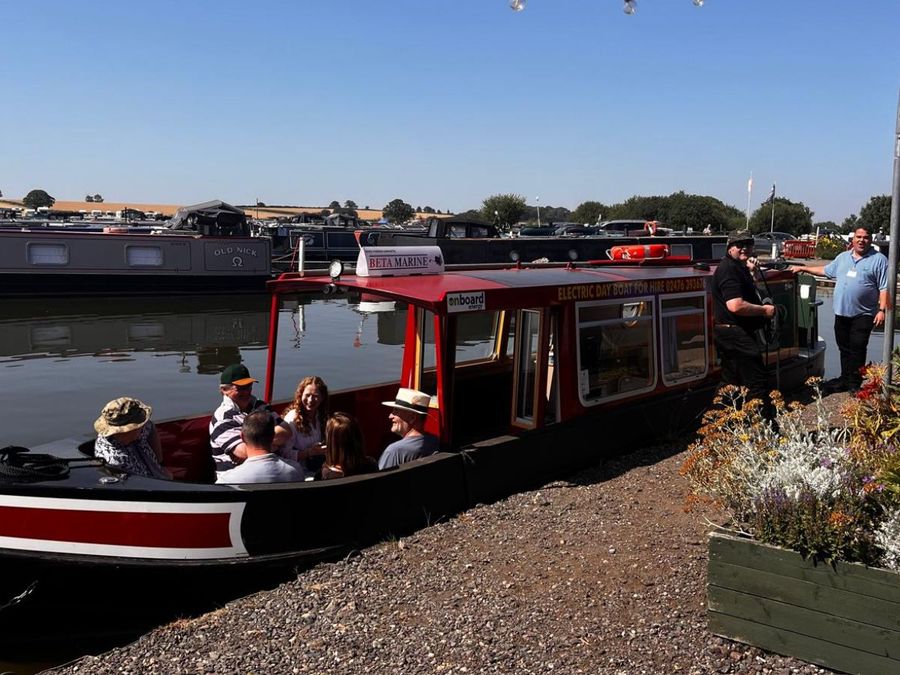
Ten officially designated Show Boats were moored alongside the main marquees and available for tours. Among them were Sunbeam, from Mothership Marine, Jenny Wren, from Ortomarine, and the ABC Electric Day Boat, from Ovation Boats. Beyond the official show fleet, a number of other electric narrowboats were moored around the marina and open for informal conversation with their owners.
For many who attended, it was the first chance to see electric propulsion working in a real narrowboat context, to speak with people living and cruising aboard these vessels, and to get close to the hardware that is beginning to define the future of Britain's canals.
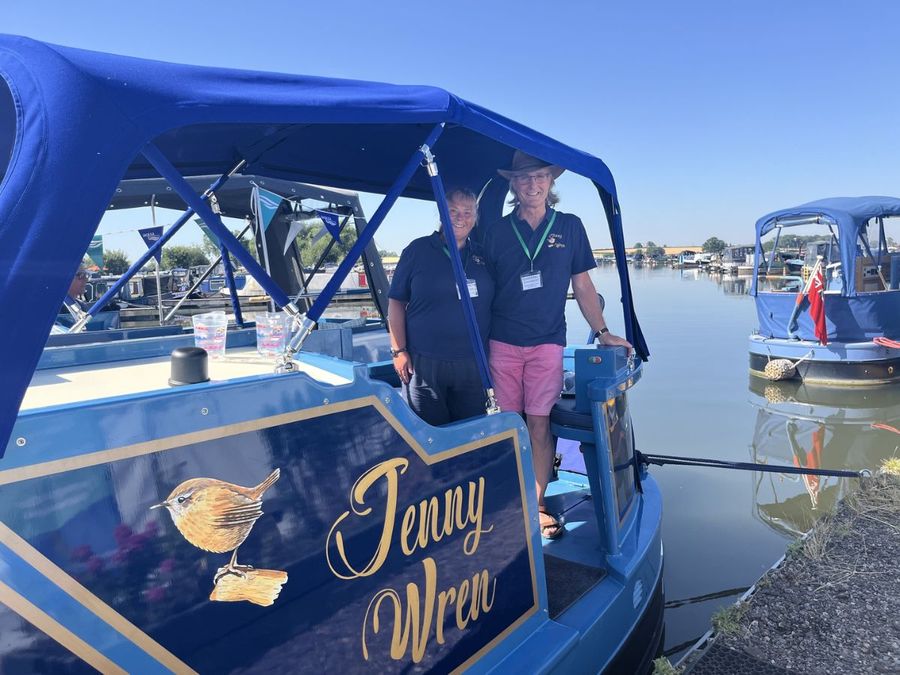
The broader appeal of electrification is expanding the narrowboat's audience. Environmentally minded liveaboards, technically inclined builders and retrofitters, and younger people attracted to low-impact ways of living are all finding their way to electric. Purchase cost remains the most significant barrier, but running costs are lower, maintenance is less demanding, and those who have made the change consistently report a better experience on the water.
Charging infrastructure is the next challenge to be resolved. As more marinas and moorings add shore power connections, the rate of electric adoption will increase. Ortomarine and Aquavista are already investing in this next stage of the network.
Electric propulsion on the canals is about more than swapping one engine type for another. The narrowboat has always been associated with unhurried travel and peaceful waterways, values that sit naturally alongside quiet, clean electric drive. With the persistent rattle of diesel giving way to the near-silent hum of an electric motor, that long-standing appeal is only deepening.