The business case for electric boating is no longer a future proposition. Across vessel design, system integration, power management, shore infrastructure, and regulation, the pieces are converging, and the International Electric Maritime Association (IEMA) is working to ensure all stakeholders move in the same direction.
Founded in 2023, IEMA brings together around 100 organisations involved in manufacturing electric boats, providing charging infrastructure, and advancing the science of electric propulsion. METSTRADE is among its partners.
Daniele Gaviotis, managing director of Vulkan Italia, which provides electric and hybrid propulsion solutions for yachts and commercial vessels, sees 2026 as a critical point for the sector. "Electric boats are ready to be better than boats propelled by combustion engines," he says. "The industry is moving towards fully integrated propulsion architectures, where energy management, power distribution and mechanical interfaces are designed as a single ecosystem."
The key shift, Gaviotis argues, is one of design philosophy. "The most important change will be the transition from component-based design to system-level integration. In hybrid and electric propulsion, performance is no longer driven by a single component, but by how efficiently the entire system—mechanical, electrical, electronics and digital—works together."
He also flags that infrastructure and technology cannot be separated. "There is a growing awareness that electrification requires a holistic rethink of onboard energy systems—including propulsion, hotel loads, storage and interaction with port infrastructure. It is therefore of outmost importance that the electrification industry can consult the entire framework of institutions to drive the electrification path and not being driven by it."
IEMA president Adrià Jover identifies shore-side capacity as the critical bottleneck. "The challenge is no longer whether electrification works, but how to scale it. The greatest barrier to growth is infrastructure readiness. Demand for shore power and charging capacity is increasing rapidly, while grid expansion remains slow, capital-intensive, and constrained by permitting processes. Power availability is emerging as a critical bottleneck, requiring closer coordination between ports, marinas, utilities, and vessel operators."
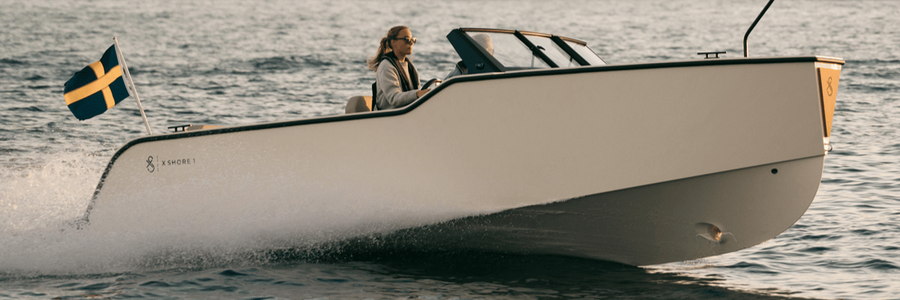
On the commercial side, René Hansen, CEO of X-Shore, points to regulation as the accelerant. "The professional segment is where the shift becomes undeniable. In Europe alone, there are approximately 36,000 boats in the 0–15 meter category that will need to change to electric propulsion." Norway is already moving toward zero-emission requirements in that size range by 2027, which Hansen says is shifting investment decisions now to avoid stranded assets.
Hansen sees momentum spreading well beyond Scandinavia. He points to strong signals in the United States, India, and the Middle East, with India driven by tourism and government investment in cleaner infrastructure, and the Middle East by luxury tourism and tightening environmental requirements in noise-sensitive areas.
Sandith Thandasherry, CEO of Navalt Solar & Electric Boats, offers one of the more compelling real-world cases. His solar ferry Aditya has been operating in India for nine years. "Aditya has carried more than 3 million passengers, travelled over 200,000 km, saved 300,000 litres of diesel, and avoided around 780 tonnes of CO₂. These numbers tell a very clear story: solar-electric ferries are not an experiment anymore—they're a proven, mainstream solution for slow-speed inland transport."
Thandasherry makes a pointed case for purpose-built hull design rather than retrofitting. "If you simply take a diesel hull and put batteries in it, of course the CAPEX goes up. But if you redesign the hull to reduce drag and weight, the battery becomes smaller and cheaper." Aditya recovered its CAPEX difference within three years, with battery replacement in year seven occurring exactly as planned.
Jover puts the broader challenge plainly. "The priority now is building the ecosystem that allows innovation to scale. Infrastructure, financing, standards, data, and policy frameworks that keep pace with technological progress. The organisations and regions that successfully align these elements will be best positioned to capture the economic opportunities, efficiency gains, and industrial growth enabled by the next generation of maritime technologies."