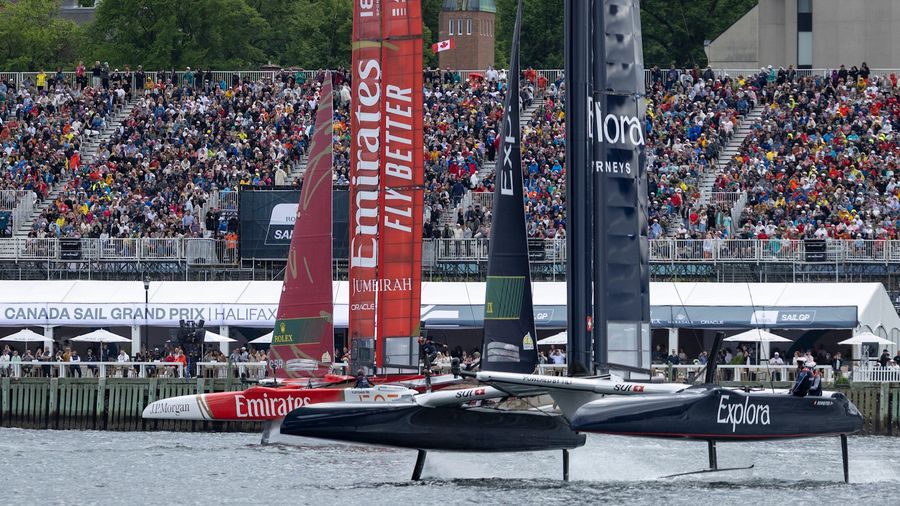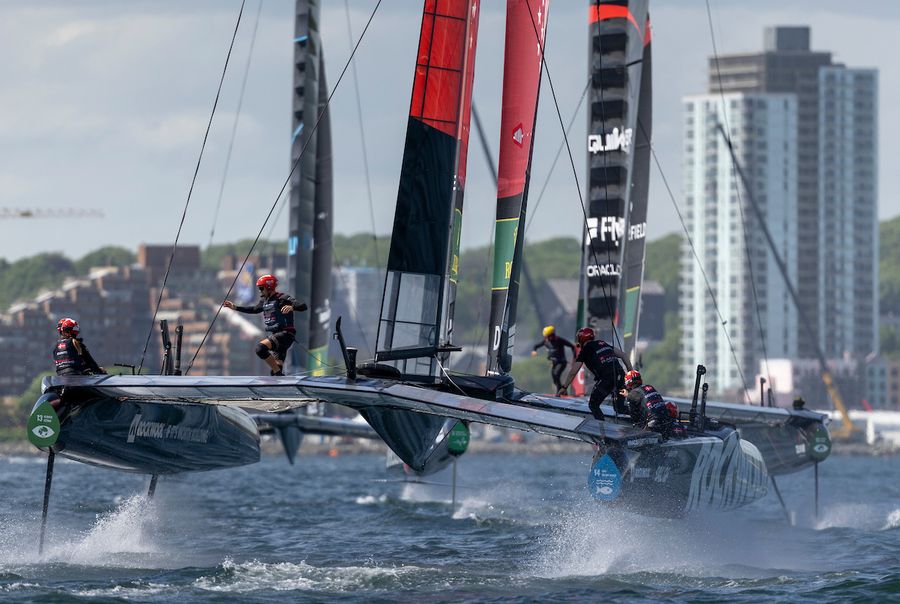
There is something worth naming before getting into the racing itself. Covering SailGP in real time is a genuine commitment for Go Boating NZ, not a casual arrangement. The races are watched live as they happen, the writing is done in those early hours while New Zealand sleeps, and the articles are ready and waiting when readers open their phones in the morning. That is how it works, and there is real pride in doing it that way.
This morning did not go to plan.
Computers were up, the television was running, SailGP Media Insights was open and ready to pull live data, and then there was just nothing. Five minutes passed. A quick search turned up the reason: overnight, without any meaningful forewarning, SailGP had moved the entire Halifax start time forward by two hours.
The reasoning behind that call is not difficult to understand. Yesterday's racing in Halifax was a frustrating affair, marked by light, shifting winds and very little pressure on the course. Today was shaping up the same way, and whoever held the authority decided to push the schedule earlier in the hope of finding better breeze. As a pure racing decision, that logic holds.
What is harder to set aside is the way the decision was communicated, and the disruption it caused. A sport operating at international scale, with dedicated followers, committed television windows, and publicly published schedules, cannot simply shift its timetable overnight and expect the consequences to be absorbed quietly. Real-time coverage this morning was one casualty. Television broadcasters who had locked programming around the published start time will have aired nothing. It is also difficult not to think back to Auckland, where tickets were not cheap, and where the question of how many people arrived at the venue expecting racing to be under way, only to find the final had already been run or was in its closing moments, is a fair one to raise.
The wind itself is not the issue. Anyone who has ever owned a yacht understands this, and nobody covering SailGP is naive enough to pretend the schedule can simply override the weather. That is the nature of the sport and it is accepted without complaint. The harder question is whether the league has developed the contingency structures and communication standards that its own ambitions demand. Several events now have seen wind-related disruption handled in ways that fall short of what a competition at this level should be capable of. Contingency days, clearly defined protocols for schedule changes, and genuinely transparent communication to broadcasters, accredited media, and ticketholders all deserve serious consideration. A press release arriving in inboxes roughly five hours before a revised start time, in the middle of the night, does not meet the standard this event sets for itself in every other respect.
The practical consequence for today's coverage is straightforward. The real-time reporting this publication would normally deliver was not possible. The insights data that underpins detailed race analysis will not be available for twenty-four hours, which means working from the broadcast replay rather than the live feed. The depth of the race digest will not be what it usually is, but a full account of the day's racing will be put together and published as soon as it can be.
Stay tuned.