With the NZ Fishing, Hunting & 4x4 Expo taking place in Rotorua this weekend, thoughts naturally turn to how we push our boats beyond the boat ramp and into genuine wilderness. That idea sits at the heart of our For the Wild Ones series, which looks at using your boat not simply as a vessel on the water, but as a launching point for shore-based fishing, hunting, tramping, and trekking adventures.
Duck hunting is one pursuit where your choice of boat carries as much weight as your decoys or your shotgun. New Zealand hunters work with everything from basic tinnies and dinghies to purpose-built mud-sliders engineered for wetland country. Whatever the platform, the core requirement is the same: a rig that tows and launches without fuss, then moves quietly into the shallow estuaries, backwaters, and wetland margins where mallards, paradise ducks, and teal feed and roost.
*Flat-bottom hulls*
The flat-bottomed hull has been a staple of duck hunters for generations, and for good reason. Minimal draft lets these boats skim across skinny water that would strand a deeper-hulled vessel, while a wide beam delivers a stable shooting platform that keeps things honest when the action heats up. Two New Zealand-built options consistently rise to the top of the conversation.
Huntercraft builds in aluminium with shallow runner designs that cope equally well with estuary chop and tight backwater channels. Stabicraft's rotomoulded polymer hulls have earned a strong following for their generous deck space and rock-solid stability, making them a natural choice for hunters heading out with kids, dogs, or a substantial spread of decoys.
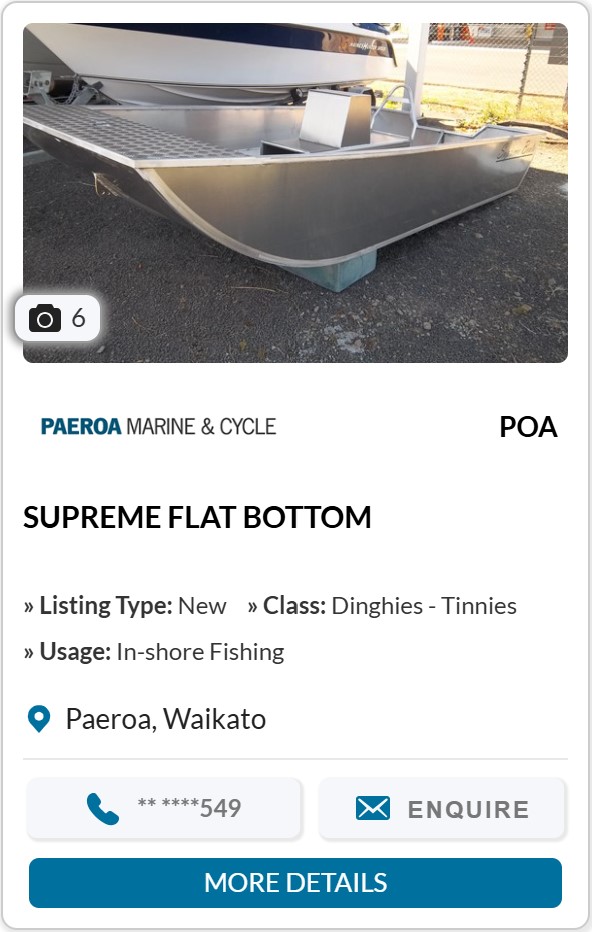
Other options appear from time to time. At the time of writing, for instance, a Supreme 3.6-metre flat-bottom hull with the centre console removed was listed on Trade-A-Boat.
*Pontoon boats*
Pontoon-style hulls bring a different set of advantages to the marsh. Broad decks, multiple buoyancy chambers, and very shallow draft combine to create spacious, forgiving platforms well suited to carrying blinds and large decoy spreads. Families and hunters who work with retrievers find them particularly appealing.
High windage is the main trade-off. A big pontoon can be genuinely hard work to handle when a breeze comes through. In sheltered lakes or calm estuaries, though, the space and safety margins they offer are hard to beat. Kiwi names in this space include Osprey Boat's range, among others.
Stabicraft's approach differs from the lake-style pontoon. Their hulls integrate welded aluminium buoyancy chambers into a rigid structure, which delivers both the stability benefits of a pontoon and meaningfully better on-water performance.
Whether you are running a flat-bottom, a pontoon, or a straightforward dinghy, the governing principle does not change. You need a shallow-draft, stable hull capable of carrying your blind and placing you precisely where the birds are working.
*Your floating duck blind*
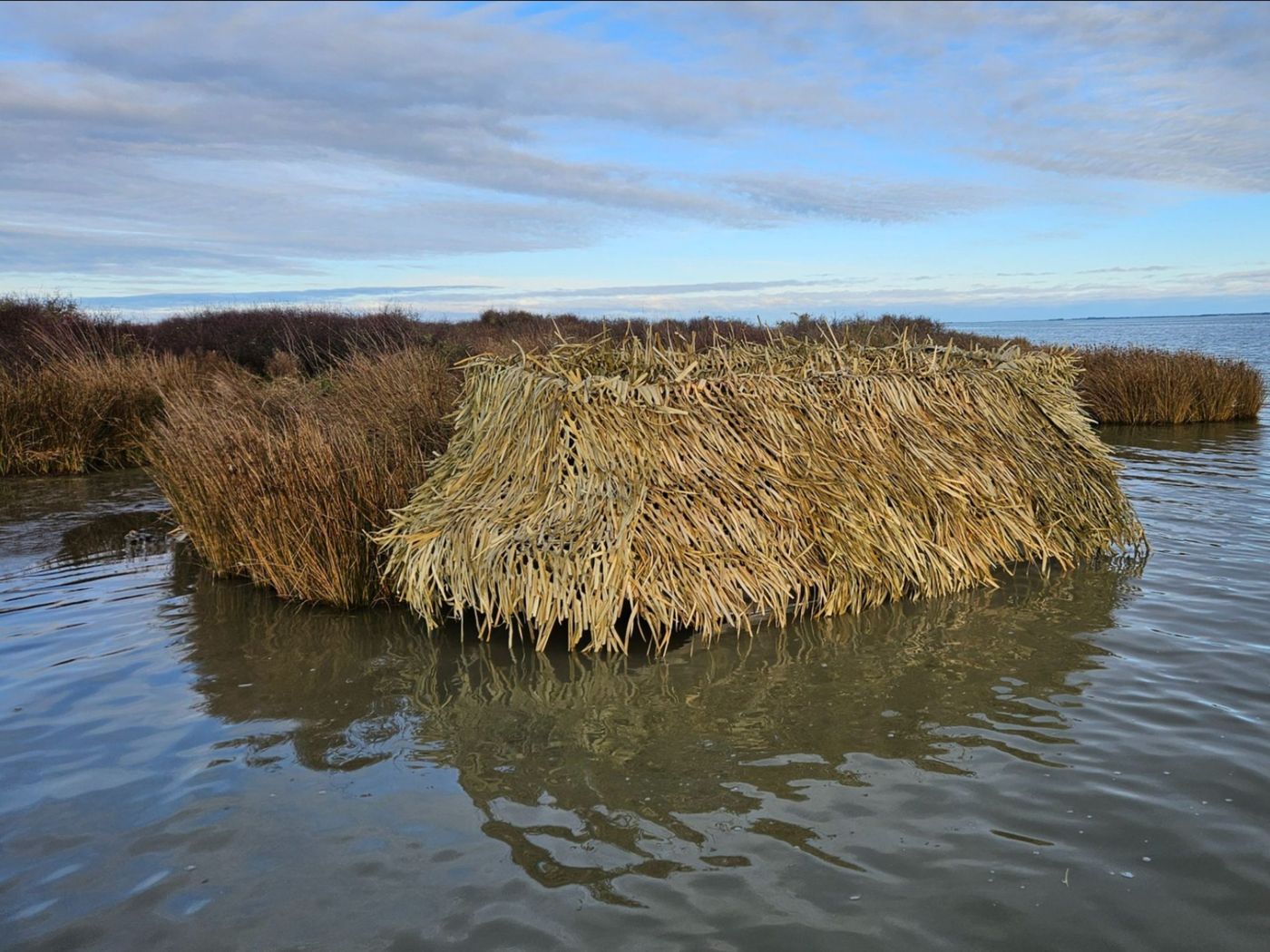
Ducks are acutely observant. A bare, reflective hull sitting out in an estuary is about as inconspicuous as a black swan on a trout stream. A well-built blind breaks up the boat's outline, hides movement, and opens up hunting in locations where natural cover simply does not exist.
The real advantage a boat blind holds over a fixed maimai is mobility. When the wind swings and the flightlines shift, you move with them. You can reposition your decoy spread on the fly, slip around to another bay, or push into a reedbed at first light. For New Zealand duck hunters, that freedom to adapt frequently determines whether a morning produces a heavy bag or an empty one.
*Kit or DIY?*
Once the hull is sorted, concealment becomes the next problem to solve. Most hunters end up choosing between commercially available kits and building something themselves.
*Huntercraft Duck Blind kit*
Huntercraft produces a purpose-built Duck Blind designed to fit its Pioneer 3900, 4200, and 4600 models. Made in Southland, the aluminium frame folds flat for towing and takes only seconds to raise once you are on site. Seating frames keep the structure rigid, while canvas sides dressed in shredded flax help the whole rig disappear into surrounding vegetation. The Full Kit includes three clip-on flax-covered panels and all necessary fasteners. In practice, it is a plug-and-play system: arrive, raise the blind, and hunt.
<span data-mce-type="bookmark" style="display: inline-block; width: 0px; overflow: hidden; line-height: 0;" class="mce_SELRES_start"></span>
*Ready-made kits*
A number of hunting retailers carry generic boat blind kits, such as the Avery Quick Set Boat Blind, which can be adapted to suit most hull types. When choosing one, prioritise rot-resistant materials with a naturally textured appearance. Once fitted, paint or dye them to match the environment you will be hunting.
*Building your own*
Hunters who prefer a tailored solution, or who run a hull that no commercial kit supports, will find a DIY blind a genuinely satisfying project. Most home-built frames use PVC pipe, EMT conduit, or steel rod formed into fold-down or scissor-style structures. Canvas or mesh provides the skin, flat camouflage paint knocks back any sheen, and a finish of raffia grass, flax, or locally cut reeds completes the effect. Plan from the start for a clear opening your retriever can use without drama.
The payoff is a blind built exactly to your specifications. The cost is shed time and the discipline to test the design properly before the season opens.
*Safety and handling*
Fitting a blind changes a boat's behaviour in ways that deserve respect. Weight added above the gunwales reduces the stability of smaller hulls, so testing your full setup in calm water well before opening day is not optional. Use that time to practise deploying decoys, working around the dog, and moving through the boat with a full load of gear aboard.
Load management deserves attention too. Many of these hulls carry a rated capacity of four people, but once you account for decoys, ammunition, a retriever, blind materials, and general hunting kit, two hunters tends to be the realistic working number.
One further point: check that the blind, whether raised or folded, does not obstruct navigation lights or the helmsman's sightlines. Safe boating always takes priority over the hunt.
*Bringing it all together*
For New Zealand duck hunters, a boat blind is fundamentally about freedom. Rather than being committed to a single maimai, you can track the birds, respond to changing wind, and set up in exactly the spot the ducks have chosen for that morning.
Whether you go with a Huntercraft kit, build your own frame from conduit, or simply fit out a solid flat-bottom or pontoon with home-cut reeds, the outcome is the same: a camouflaged platform that puts you in the right place when the light comes up.
Preparing that blind is not merely a logistical step before the real thing begins. It is part of the hunt, as much as the cold walk to the water's edge or the sound of wings in the grey morning air above the reeds.