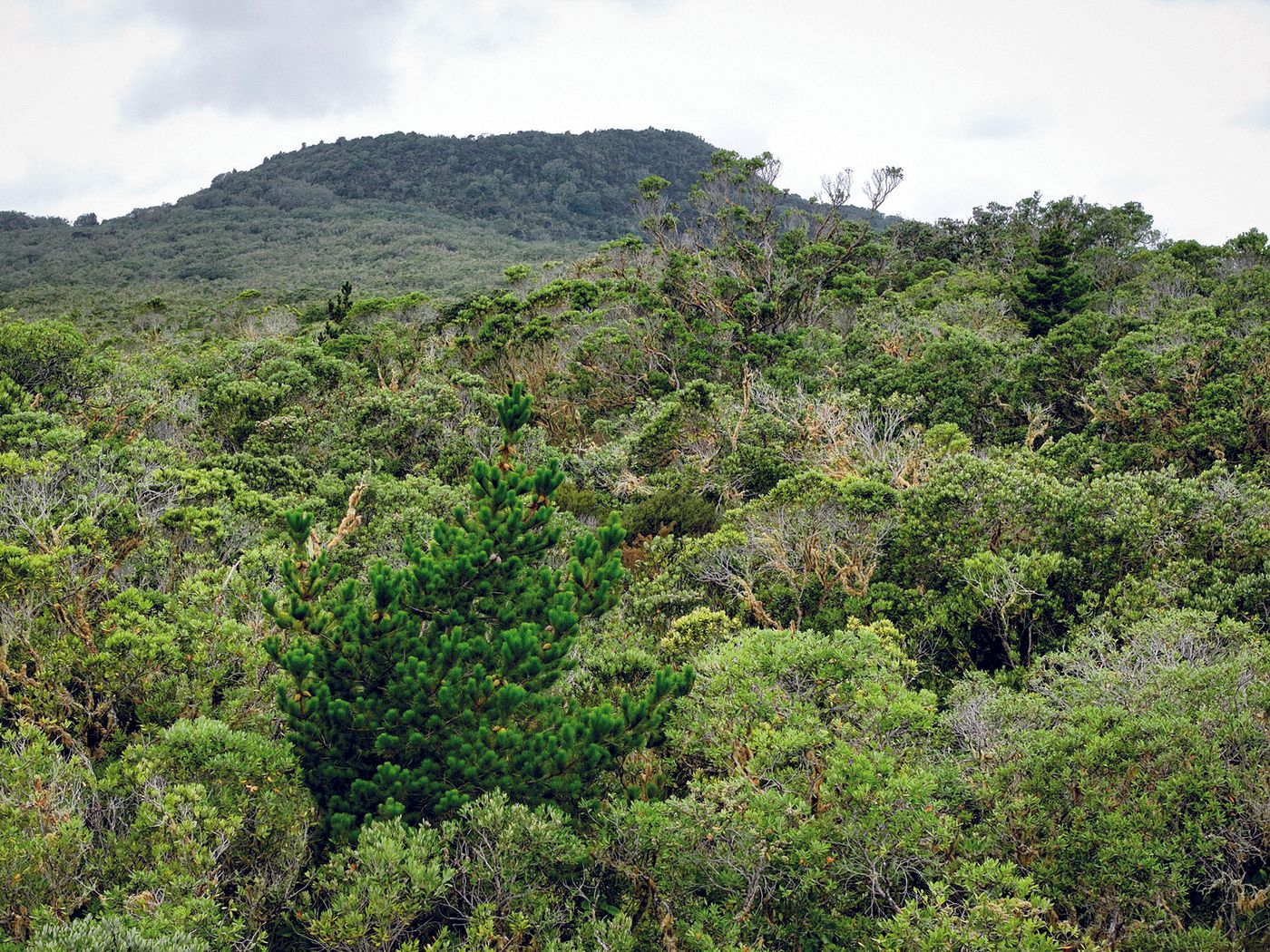
Drone mapping and laser rangefinders made it possible to locate and chart the wilding pines spreading across Rangitoto Island. Left unchecked, those pines would gradually overwhelm the island's native vegetation, according to Dr Leigh Joyce, DOC Senior Biodiversity Ranger.
Rangitoto supports the largest pōhutukawa and rātā dominated forest anywhere in the world and has been predator free since 2011. It is also the only Auckland volcano carrying an intact indigenous ecosystem, one that shelters kākāriki, korimako/bellbird, kākā, tūī, pīwakawaka/fantail, riroriro/grey warbler, and ruru/morepork, along with five species of native lizards, all of them taonga species.
The threat posed by wilding pines is partly a matter of how they grow. Native New Zealand bush is characterised by a wide variety of plant species coexisting together. Wilding pines do the opposite, forming dense overgrowth that supports only other wilding pines. The problem extends well beyond Rangitoto. Wilding pines currently affect more than two million hectares across New Zealand, and experts warn that without large-scale funding and control, as much as 25% of the country could be covered by them within 30 years.
Funding to remove wilding pines on Rangitoto was announced by the Minister of Conservation in November 2024, drawn from the International Visitor Levy (IVL). That same funding stream is enabling weed control work on several other conservation islands throughout the Hauraki Gulf, either already underway or in planning.
Rangitoto holds deep significance for iwi and is a tourism and economic drawcard, attracting more than 100,000 visitors each year.