For years, divers off the south coast of England have explored a mysterious wreck site. Lying at a depth of 73 metres and cloaked in silt and fishing nets, the wreck showed signs of age and intrigue—an intact twin-cylinder steam engine, a massive iron propeller, and cargo holds filled with coal. But no bell, no nameplate, and no official record tied it to any known vessel.
The dive that found history
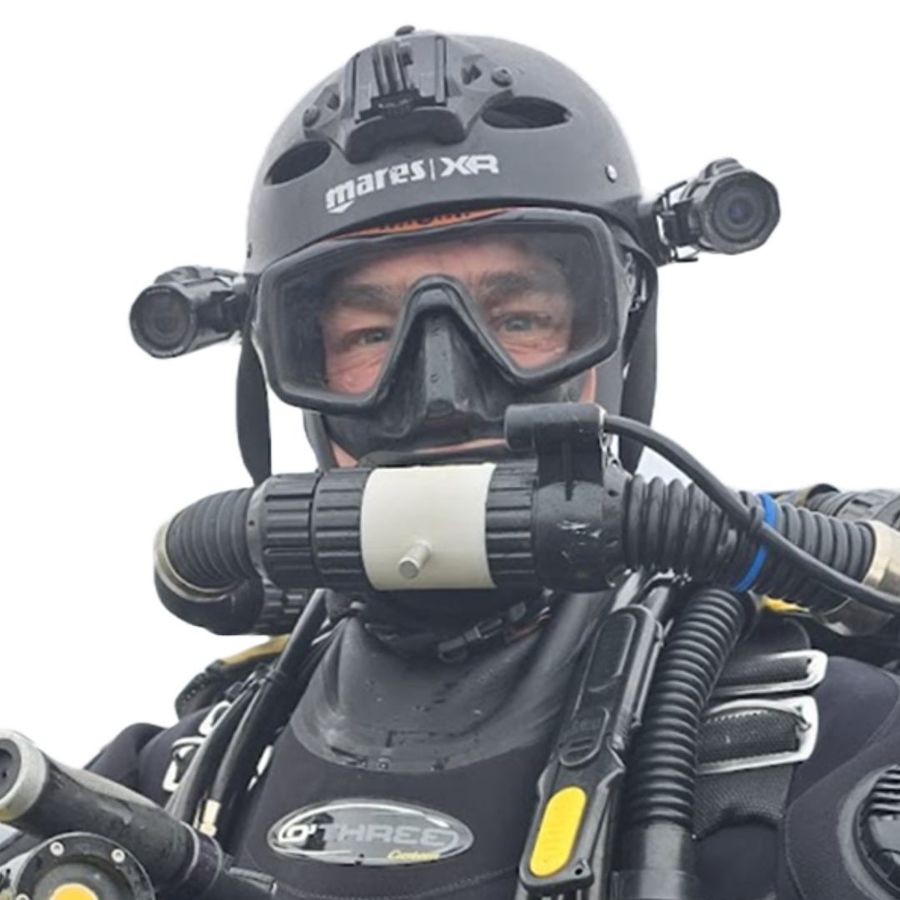
That changed during a September dive led by British technical diver Dom Robinson. Dom Robinson is a specialist in deep technical diving on wrecks around the British Isles, using a Closed Circuit Rebreather (CCR) system. His passion lies in uncovering the lost maritime heritage scattered across the seabed, particularly ships that have never been properly identified. It just so happened that Robinson had previously dived upon
SS Hornet
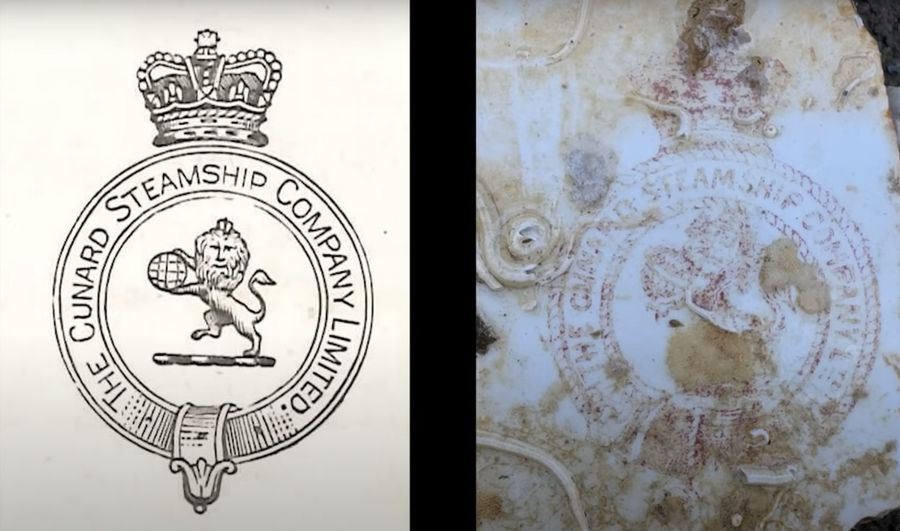
. You might be left wondering why this piece of information is important? The conditions on the day were perfect. Flat seas, warm sunshine, and excellent underwater visibility offered an ideal opportunity to explore what would turn out to be a landmark wreck discovery. For this dive, Robinson and his team used a well-practiced setup—staggered entries, a primary shot line, and a secondary lazy shot line fixed with a prussic at 40 metres. When Robinson surfaced, he did so holding a small, timeworn shard of crockery. On its surface: the unmistakable crest of the Cunard Line. With that single fragment, a new story began to surface—and an old one was finally given its proper name.
The SS Nantes' final a tragic voyage
Historical research quickly linked the wreck to the
SS
Nantes
, a coal steamer launched in 1874 from Glasgow’s Blackwood and Gordon yard—a modest shipyard that only operated for about 50 years before closing at the turn of the century. At the time of its loss,
SS
Nantes
was on passage from Liverpool to Le Havre (France), carrying a cargo of British coal. On the night of 6th November 1888, the
SS Nantes
collided with the German
SS Theodor Rüger
in heavy seas, 36 miles east-southeast of the Lizard Peninsula (a headland jutting out into the English Channel.) Both ships were critically damaged. The crew of
SS
Nantes
fought to save her, stuffing mattresses and bedding into the breached hull, but by early morning on the 7th she was lost. Of the 23 crew, only three survived. The
SS Theodor Rüger
also went down (with eight lost), and both wrecks slipped beneath the Channel with no formal identification—until now. Further research revealed that the
SS Nantes
was one of only two ships built by the Blackwood and Gordon yard in Glasgow in 1874. The other,
SS Hornet
, also sank—and Robinson had previously dived on her. That link proved valuable: a bronze porthole recovered from the
SS Nantes
matched an identical design found on the
SS Hornet
, offering further confirmation of the ship’s identity.
Signs in the sand
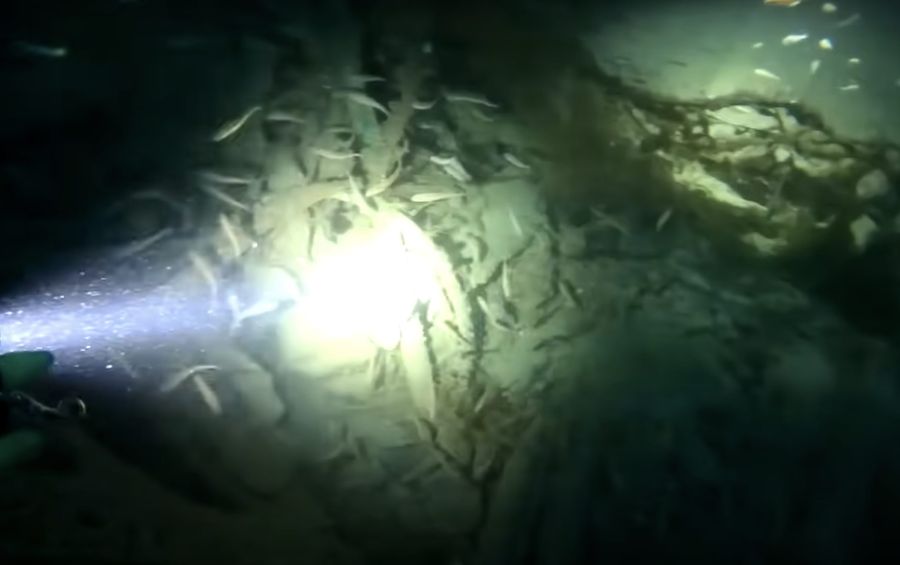
Robinson and his dive team found the central steam engine largely intact, flanked by the remains of the boiler, a towering funnel, and collapsed bridge structures. Massive iron propeller blades rested near the stern, and the wreck’s structure was remarkably well-preserved—a rarity for a Channel wreck of this age.
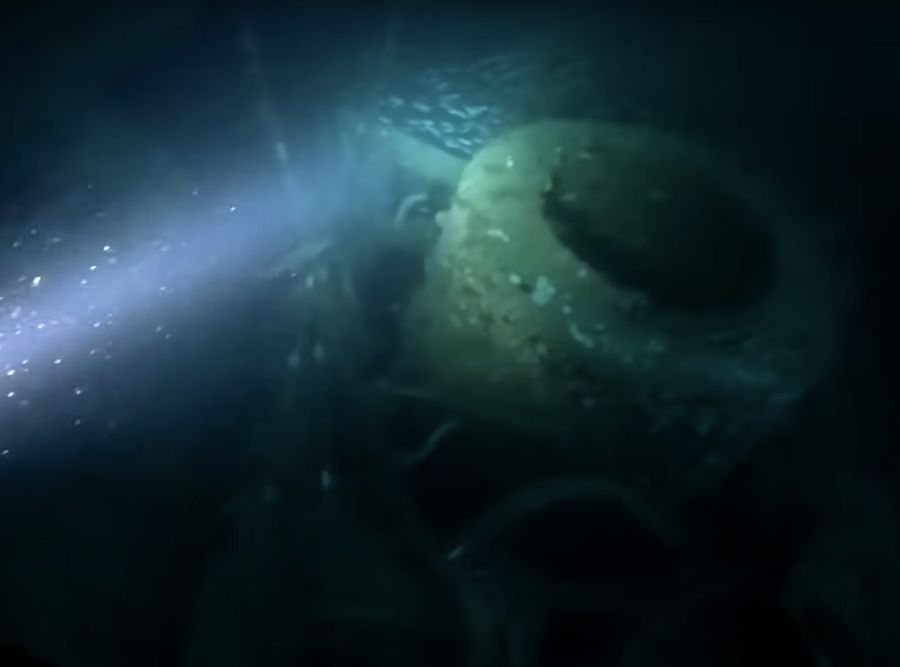
But it was the discovery of Cunard-branded crockery that provided the breakthrough. A small piece of ceramic, then a bowl with clearer markings, aligned with records pointing to one likely match. The location, ship length, configuration, and cargo all matched with the
SS
Nantes
. The
SS Nantes
’ final cargo may have been its best protection. Coal was tightly packed in the holds, shielding the wreck from tidal scouring and physical decay. Coal was also the vessel’s purpose. In the late 19th century, ships like the
SS Nantes
ran regular cross-Channel trade routes, carrying British coal to fuel French industry and homes. Le Havre was a major import port and Liverpool one of Britain’s biggest coal-exporting centres.
For
SS Nantes
, the November 1888 crossing was entirely routine—until it ended in tragedy. The steam engine on the
SS Nantes
was another clue. A double-cylinder engine with no compound layout, it marked an older generation of marine engineering. The simplicity of its propeller design — straight-bladed, with minimal curvature — also pointed to an early build date. Divers noted that while the bell remains missing, the wreck’s structure strongly supports further artefact recovery in the future. The wreck is also rich with fish life and has become entangled with discarded nets — a common hazard in the Channel. Robinson and his team, experienced in wreck diving risks, used multiple knives and line cutters to mitigate entanglement, all while sticking to tight dive and decompression schedules.
From plate to story
With a bottom time of just over 35 minutes and a two-hour decompression ascent, the team surfaced safely. The crockery fragments in hand, and the full dive footage and images secured, Dom Robinson began confirming the identity—and finally brought
SS
Nantes
’ story back to the surface.
The story resonates not just for its historical significance but for its dive ethic. It was patience, technical expertise, safety discipline and curiosity that led to the discovery—values shared by divers exploring wrecks from the Three Kings to the Sub-Antarctics. And like many wrecks off New Zealand's own coastlines, the
SS Nantes
was carrying the commercial cargo that powered an era. Coal may be long past its heyday, but the legacy of the ships that carried it still lies waiting on the seabed.