Charles Darwin's library numbered more than 13,000 volumes at his death in 1882, yet until recently that collection had never been fully assembled in one place. A new project from Darwin Online has changed that, producing a digital archive that reveals the true breadth of his reading life. Scientific journals, early works on evolution and geology, fiction, philosophy, art criticism, travel writing — the range is extraordinary, and it tells us something important about how Darwin thought. He did not arrive at his ideas through fieldwork alone. He read insatiably, teaching himself French, German, Spanish and Latin so he could access texts in their original form.
That intellectual hunger found its physical counterpart in the five-year voyage he made aboard HMS Beagle, which departed in 1831 carrying a 22-year-old Darwin whose thinking would eventually reshape the foundations of science. The Beagle herself was a Royal Navy 10-gun brig-sloop, refitted that year for hydrographic survey work. Her route took in the South American coast, Tierra del Fuego, the Andes, the Galápagos, Tahiti, New Zealand, Australia, the Cocos Islands, Mauritius and Cape Town before she returned to England via the Atlantic. Darwin collected beetles in Brazil, rode through the Argentine Pampas, and was present when earthquakes struck Chile. He stood before volcanoes and coral reefs, studied finches, and questioned the patterns he found everywhere he looked. The fieldwork and the reading fed each other, together building the evidence that would challenge scientific orthodoxy for generations.
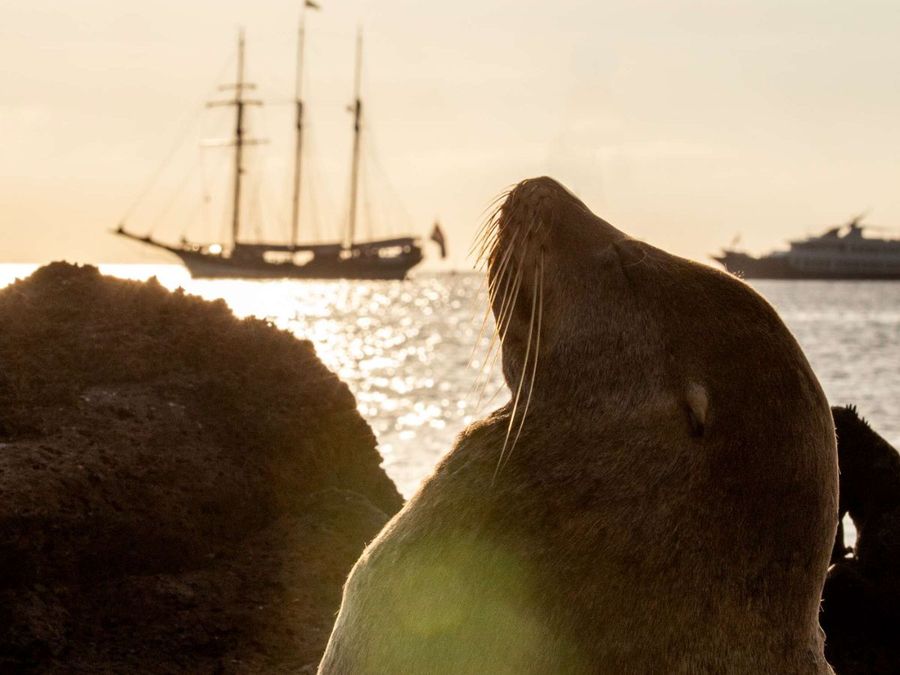
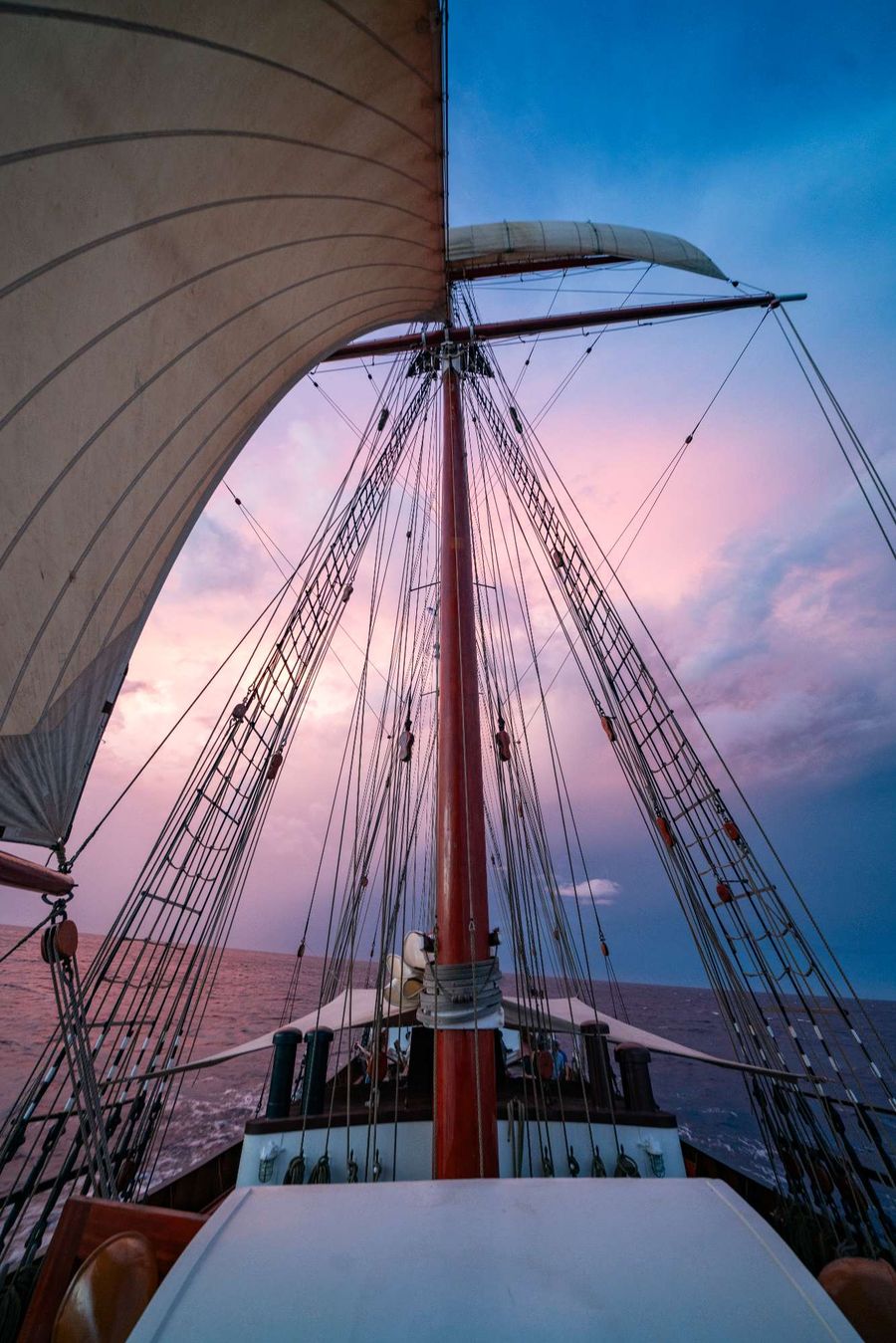
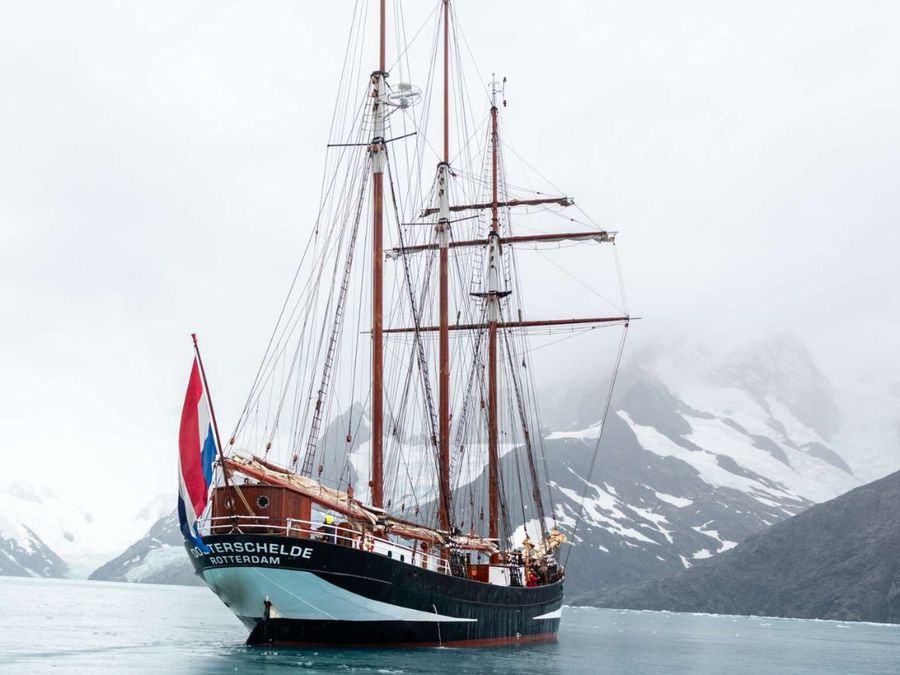
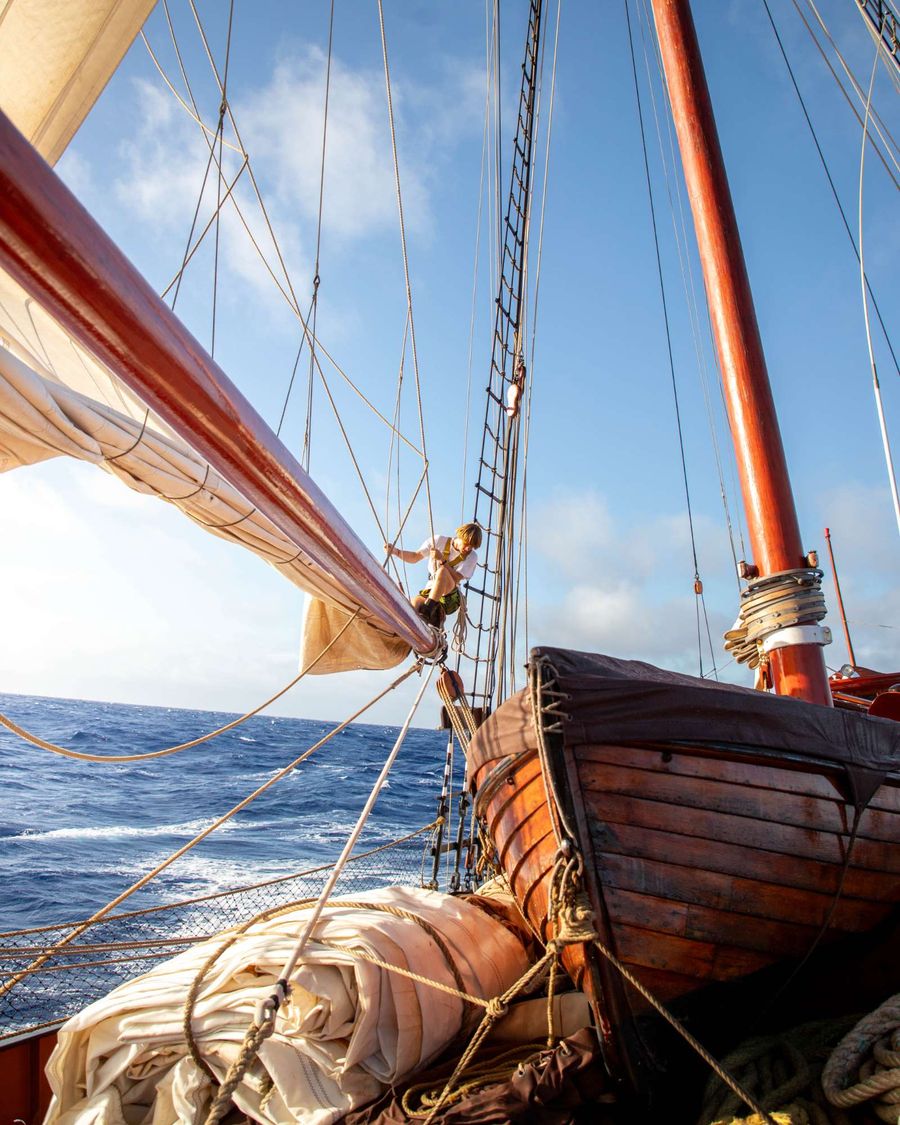
Nearly two centuries later, a different ship set out to honour that legacy and put it to work. In 2023, the Dutch three-masted schooner Oosterschelde departed Plymouth on the DARWIN200 Global Voyage, a working expedition that retraced the route of HMS Beagle while training the next generation of conservationists. It was a functioning programme built around partnerships with local organisations across 20 countries, calling at 31 ports and covering more than 43,000 nautical miles.
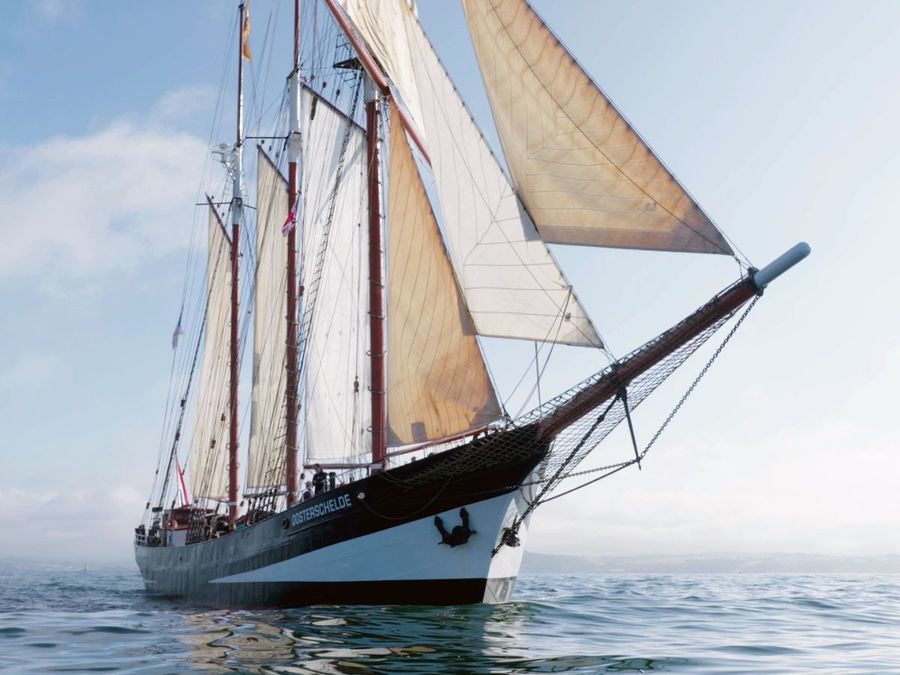
Oosterschelde has a history of her own. Built in 1918 as a civilian cargo vessel, she was later restored and repurposed as a platform for education and research. Where the Beagle was compact and naval, adapted for survey work, Oosterschelde is larger and was originally designed for trade. What both ships share is a capacity to carry keen minds far from home and return them changed.
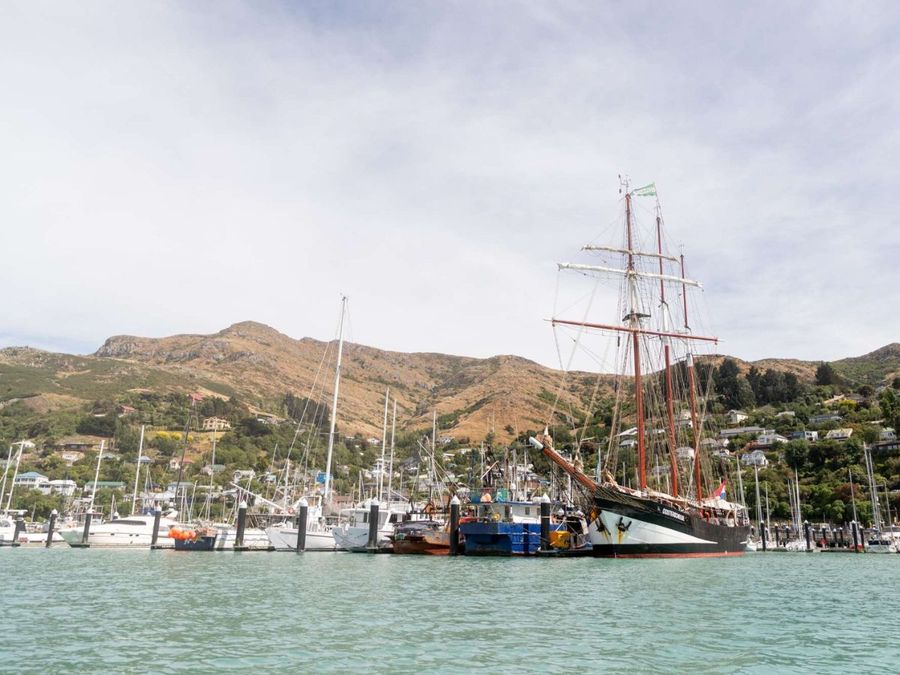
The voyage followed Darwin's original route with purpose at every stop. From Cape Verde the ship moved along the Brazilian coast, then south to Argentina and the Falklands, across to Chile and the Galápagos, and onward through Rapa Nui, New Zealand and Australia. Later legs covered the Indian Ocean, with calls at Mauritius and Reunion, before Atlantic stops at Cape Town, St Helena and the Azores completed the circuit. Conservation work was tailored to each location. In Brazil, crews engaged with projects protecting the Atlantic rainforest. In the Falklands, the focus shifted to seabirds and marine mammals. The Galápagos legs concentrated on turtles and invasive species. On Rapa Nui, a newly discovered marine cricket became one of the voyage's more unlikely symbols. In Australia, efforts included coastal restoration and work alongside indigenous communities.
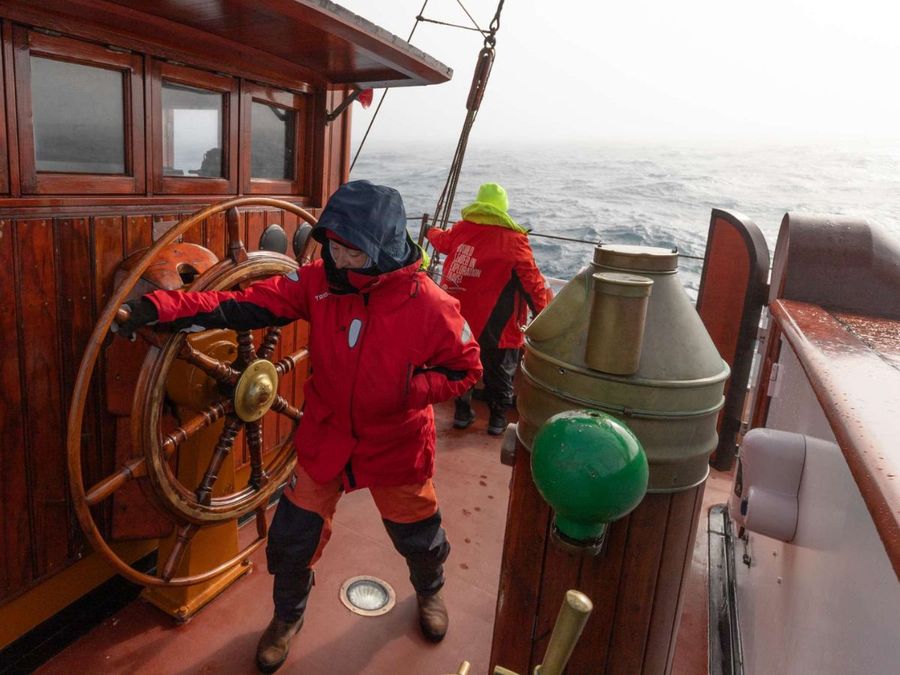
The Pacific crossing brought unpredictable weather that disrupted the schedule, and technical difficulties off South America tested both crew and resolve. The expedition kept moving regardless, sustained in part by weekly public livestreams that connected the ship to classrooms and whānau across multiple continents. The initiative was known as "The World's Most Exciting Classroom," and it reached thousands of schools throughout the voyage.
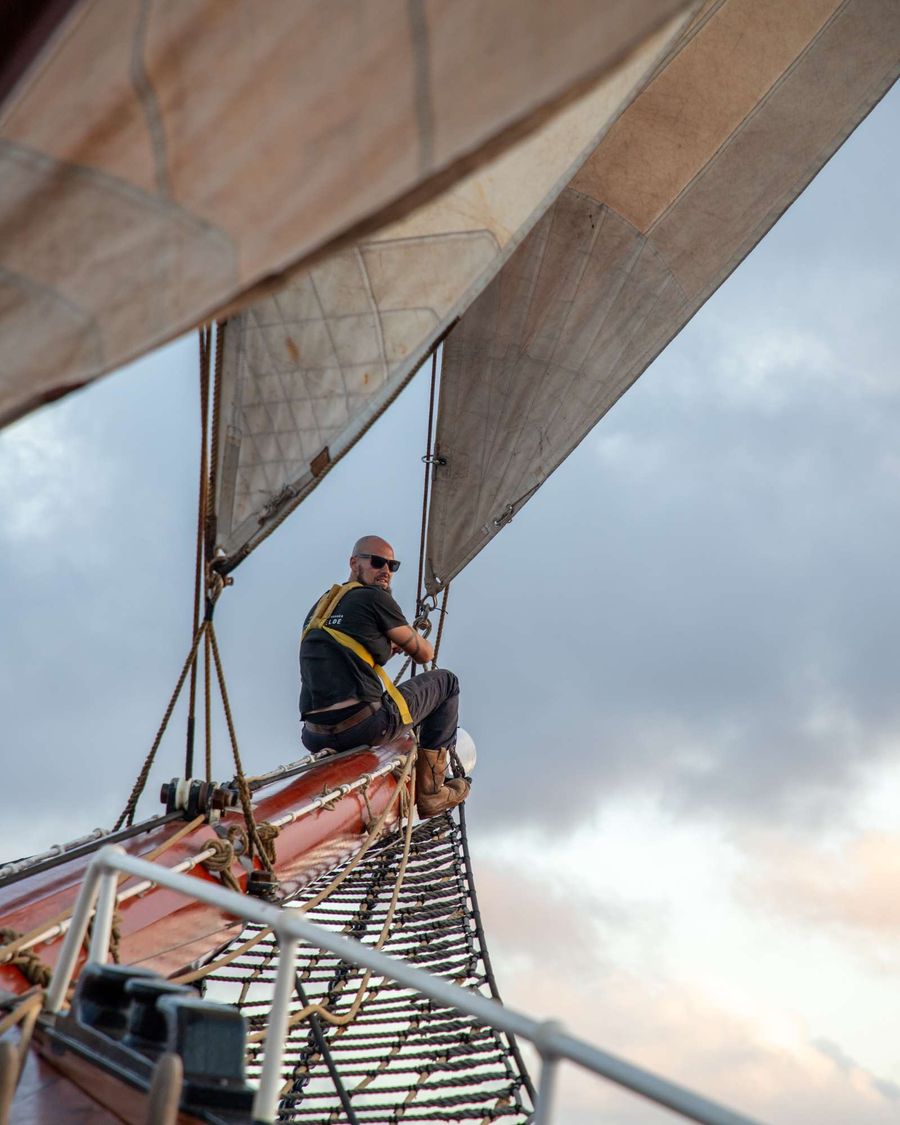
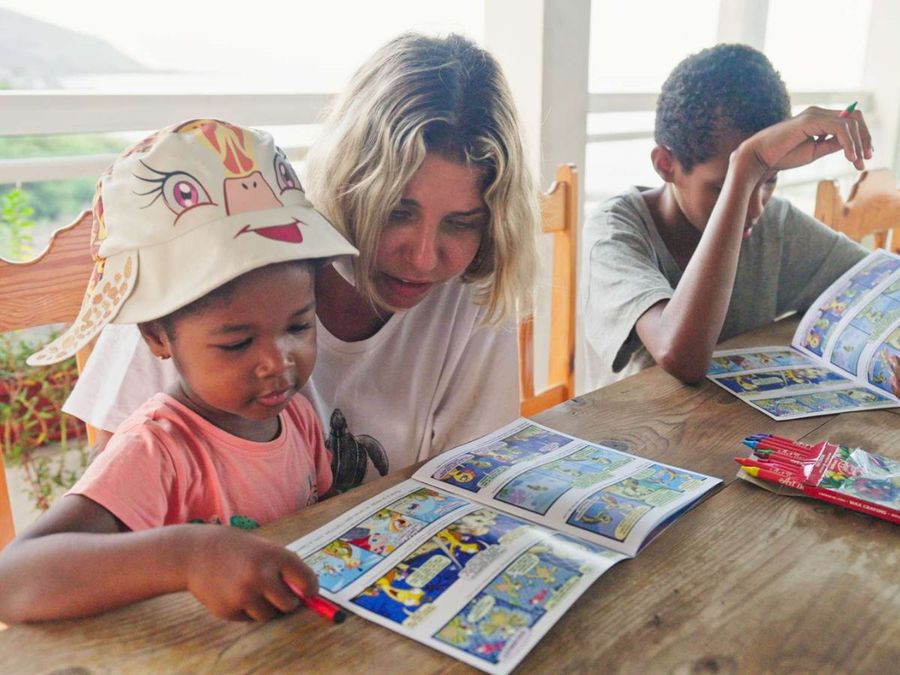
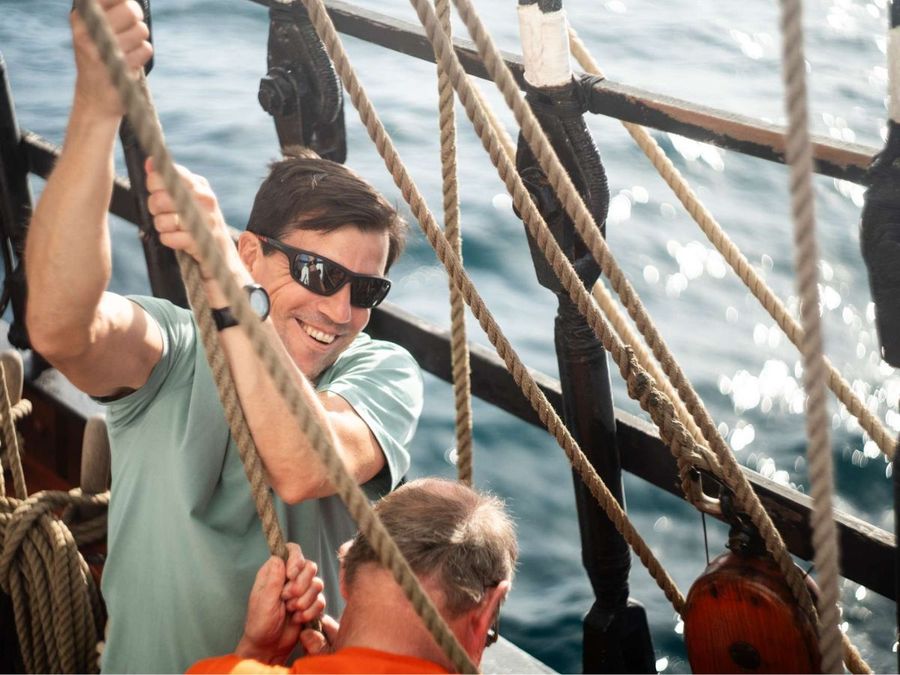
At the heart of the programme were more than 100 Darwin Leaders, young people aged 18 to 25 drawn from 45 countries, who joined Oosterschelde for hands-on training in species monitoring, fieldwork, science communication and community collaboration. More than 600 guest crew also sailed shorter legs of the journey, broadening participation beyond the core group. The ship functioned simultaneously as a floating classroom, a research station and a base for conservation action.
When Oosterschelde finally sailed into Falmouth, she was completing a circle that HMS Beagle had closed in 1836. A crowd of supporters, scientists, families and children were there to meet her. Dr Sarah Darwin, great-great-granddaughter of Charles Darwin, described the occasion as "deeply moving."
"Curiosity, compassion and connection to the natural world is at the heart of DARWIN200," she said.
The voyage did not end at Falmouth. Oosterschelde continued up the Thames to London, where HRH The Duke of Edinburgh received the crew at Tower Bridge Quay. A rare first edition of On the Origin of Species was on display alongside a sculpture constructed entirely from ocean plastic.
The DARWIN200 project posed a practical question: what does it actually take to prepare young people to protect the planet? The voyage's answer was not confined to data sets or species counts. It lived in relationships formed across 45 countries, in resilience built through difficult passages, and in a renewed sense of what exploration is actually for.
Darwin's reconstructed library now sits alongside the field notes that shaped his thinking, and both are joined by the voices of a new generation who have sailed something of the same route and carried something of the same spirit. The sails of Oosterschelde are furled for now, but the work those voyages set in motion continues.