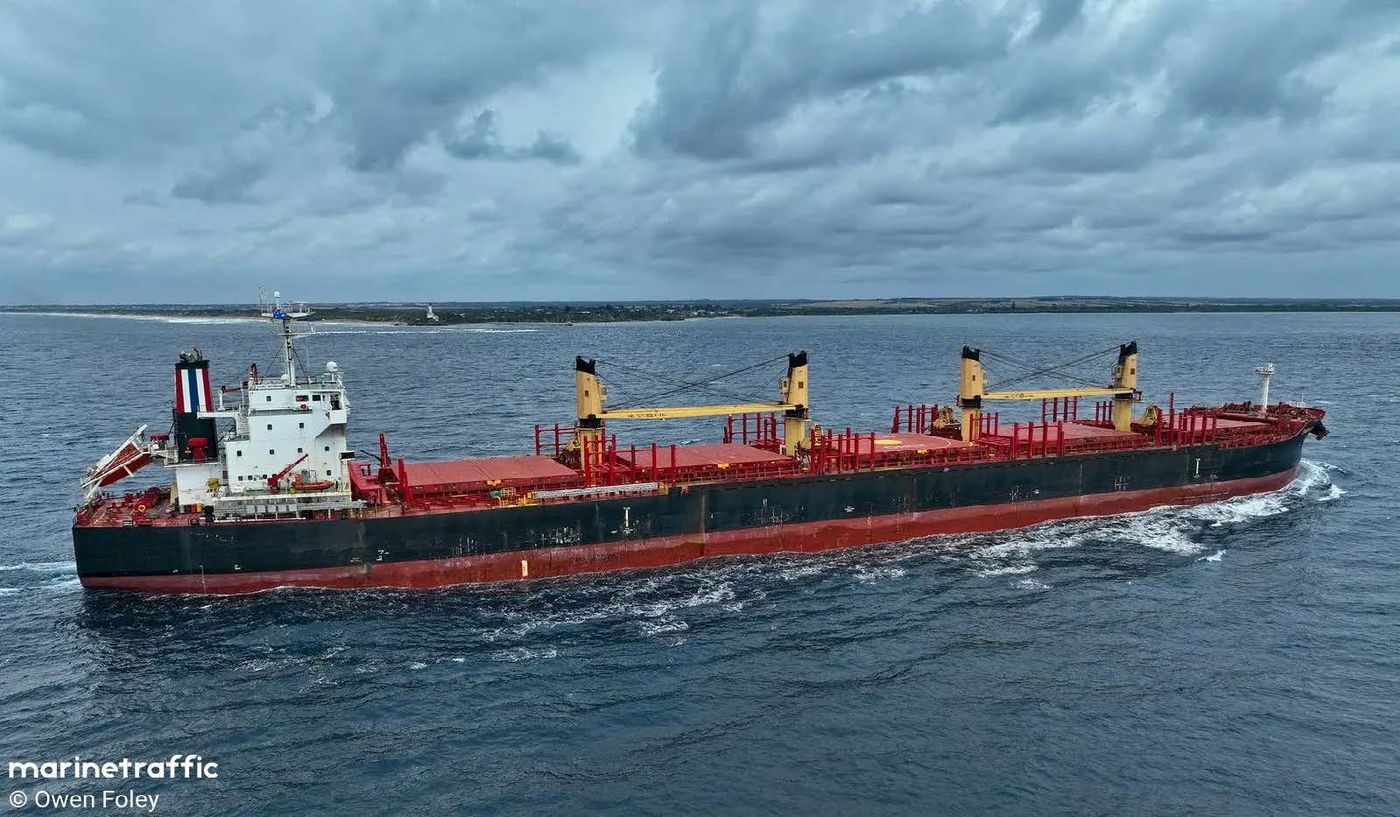
A bulk carrier drifting in Cook Strait, two lashing chains each weighing around 75 kilograms trailing in the sea after being washed overboard, and a crew with an improvised plan to recover them. What followed put one seafarer in Wellington Hospital for a month with serious head injuries, the result not of a single catastrophic error but of preventable failures stacked one upon another.
New Zealand's Transport Accident Investigation Commission has released its final report into the serious injury aboard the Singapore-flagged bulk carrier Thor Nitnirund on 20 March 2025. The investigation traced a sequence of breakdowns, every one of which could have been interrupted before a man hit the deck.
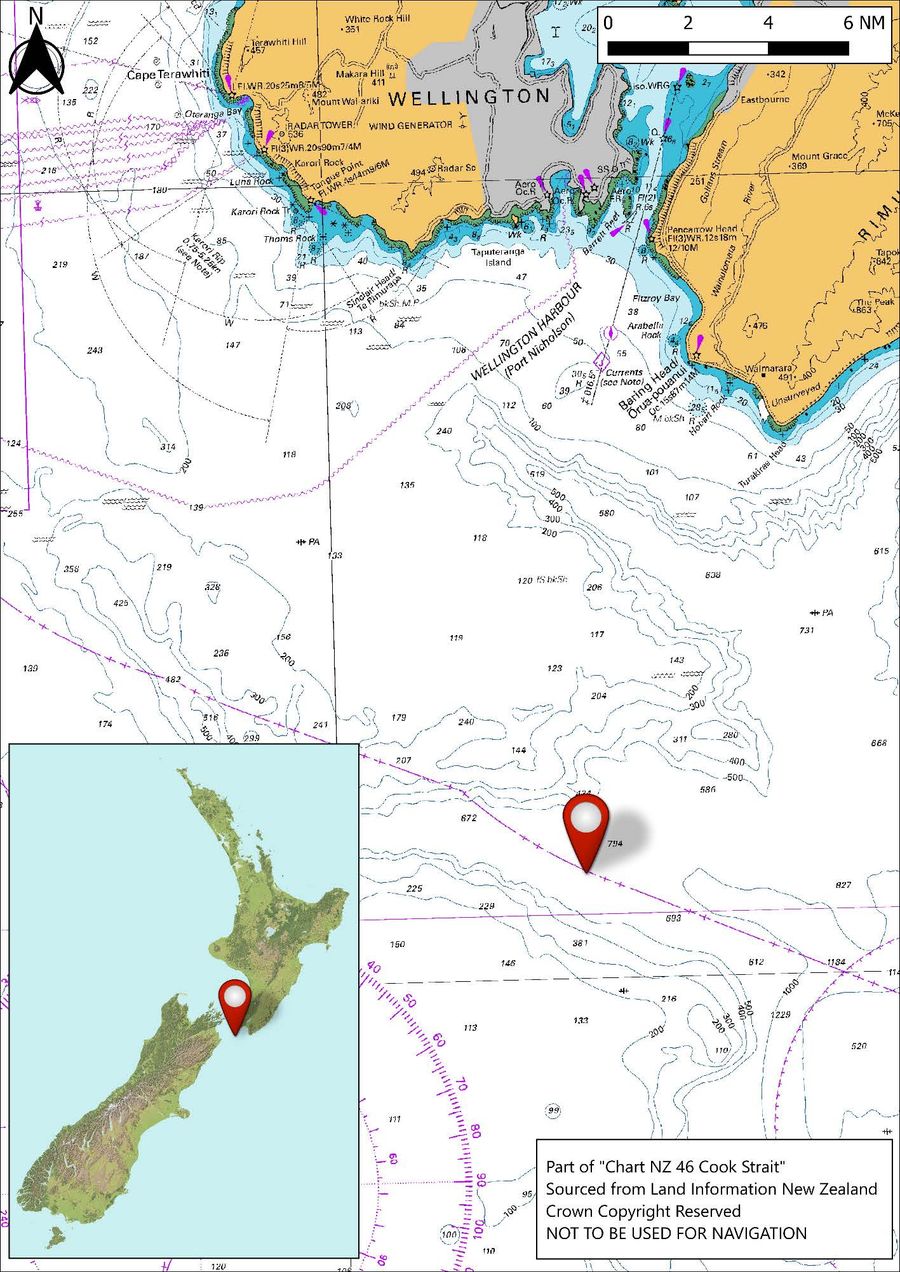
Thor Nitnirund had been waiting on a Wellington berth since 18 March, drifting in Cook Strait while southerly winds of 25 to 40 knots kicked up rough seas. Two cargo lashing chains had gone over the side in those conditions. On the morning of 20 March, the bosun and two able seamen set about recovering them, rigging an improvised lifting arrangement using a mooring winch, a tiger rope, and a web sling secured to the hatch coaming at no. 2 hold. The first chain came back aboard without incident. When they turned to the second, the web sling gave way.
The tiger rope and shackle snapped back violently across the deck, catching one of the able seamen across the back of his legs. He dropped, his head striking the deck, then collided with the bosun. Both men ended up close to the ship's bulwarks. The bosun got to his feet. The AB did not.
A rescue helicopter reached the vessel early that afternoon. The injured AB was winched up and flown to Wellington Hospital, where he was treated for serious head injuries. Within days he had been repatriated to Thailand to continue his recovery.
The web sling carried a rated safe working load of one tonne. Independent testing commissioned by TAIC found it broke at 2.86 tonnes, just 48 percent of its expected minimum breaking load of six tonnes. The sling was saturated with oil and in poor overall condition. Damage to the bearing surface of the eye was consistent with previous loading over a sharp or insufficiently rounded edge, and some fibres had already frayed before the accident. On the day, only the remaining intact fibres were bearing any load at all.
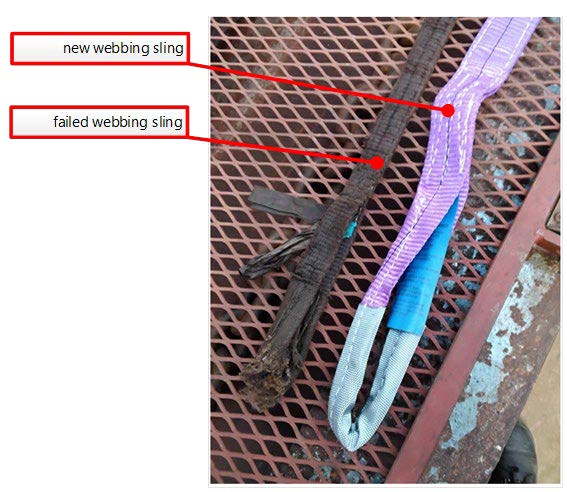
The ship's lifting gear register listed four belt slings of one-tonne capacity, all assessed as being in good condition following an inspection on 28 February 2025. TAIC concluded it was very unlikely the failed sling was among those four. It carried no identification tag, appeared in no inspection record, and had no entry in the register. The Commission found the sling had in all probability come aboard when Thoresen Shipping acquired the vessel from its previous operator in 2021, sitting unexamined and available for use ever since. The bosun picked it up with no reason to suspect it had never passed through the ship's safety management system.
Before the work began, the crew held a toolbox meeting in the cargo office. TAIC's report identifies that choice as a significant contributing factor. Conducting the meeting at the actual worksite would have allowed the crew to observe how the rigging would interact with the surrounding structure, identify potential snag points, understand where the recoil arc would travel if a component let go, and examine the equipment in the context in which it would be used. None of that was possible from inside the cargo office. No formal risk assessment was completed. The toolbox log recorded three separate work activities across a single 20-minute session, with no remarks against any of them. Recovering lashing chains using powered deck machinery is a non-routine task, one that warranted a dedicated risk assessment. It did not receive one.
While the winch hauled on the second chain, both the bosun and the injured AB were standing in the bight of the lifting system, directly in the path the tiger rope and shackle would travel if anything gave way.
Keeping clear of the bight of a line under load is among the most fundamental rules of seamanship, covered in basic training and broadly understood across the industry. Identifying that danger zone and keeping crew clear of it is precisely what pre-task planning and active supervision exist to achieve. Neither happened here. Because the bosun was a working member of the crew rather than a dedicated supervisor, nobody held an overview of the operation as it unfolded. Nobody noticed where the men were standing, and nobody raised a challenge.
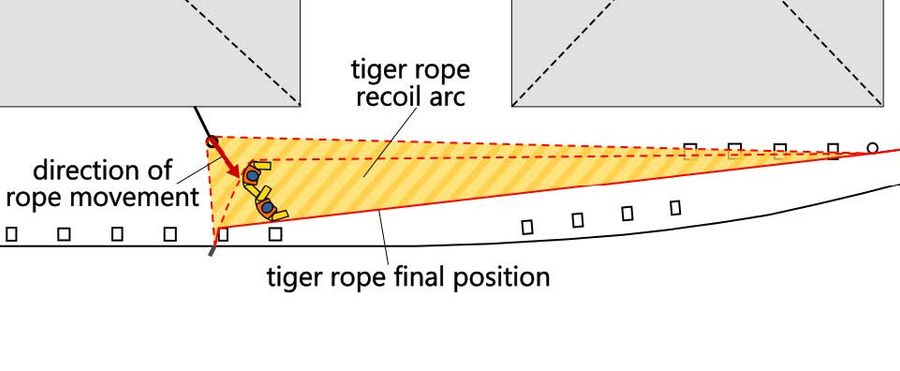
The mooring winch added another layer of risk. Mooring winches are designed to handle loads many times greater than the one-tonne rating of the sling anchoring the improvised arrangement. Had the chain snagged, the winch would have kept pulling until the weakest component gave way. With an uninspected sling already in poor condition, that point arrived far sooner than anyone on deck had anticipated.
One factor worked in the injured AB's favour. He was wearing a safety helmet with the chin strap properly fastened. When the recoiling rope put him on the deck and his head struck the surface, the helmet absorbed part of the impact, the shell separating from the harness on contact. TAIC concluded the helmet contributed to the survivability of the accident. Personal protective equipment sits at the last line of defence in any safety hierarchy, not as a substitute for eliminating hazards at their source. The helmet reduced the consequences of a failure that sound planning should have prevented altogether.
The Thor Nitnirund incident is not the first time TAIC has examined a snap-back injury in New Zealand waters. In 2014, a crew member aboard the purse seine fishing vessel Captain M. J. Souza was killed when a deteriorated choker line parted under load and recoiled into his head. In 2019, a seaman suffered fatal injuries on the bulk log carrier Coresky OL at Eastland Port, Gisborne, when a wire snapped during a cargo-securing operation. Across both cases the same core elements were present: equipment failure under load, inadequate safety management, and crew positioned where they should not have been. TAIC issued recommendations following both investigations. None of those lessons were reflected in the practices aboard Thor Nitnirund.
Thoresen and Co. Bangkok moved to address the findings ahead of the report's publication. Across the fleet, the company introduced individual identification and colour coding for all lifting gear, tightened inventory controls, made worksite toolbox meetings mandatory where practicable, assigned dedicated supervision for non-routine tasks, and shifted the focus of auditing towards what crews actually do rather than whether paperwork has been completed.
TAIC issued no new recommendations.