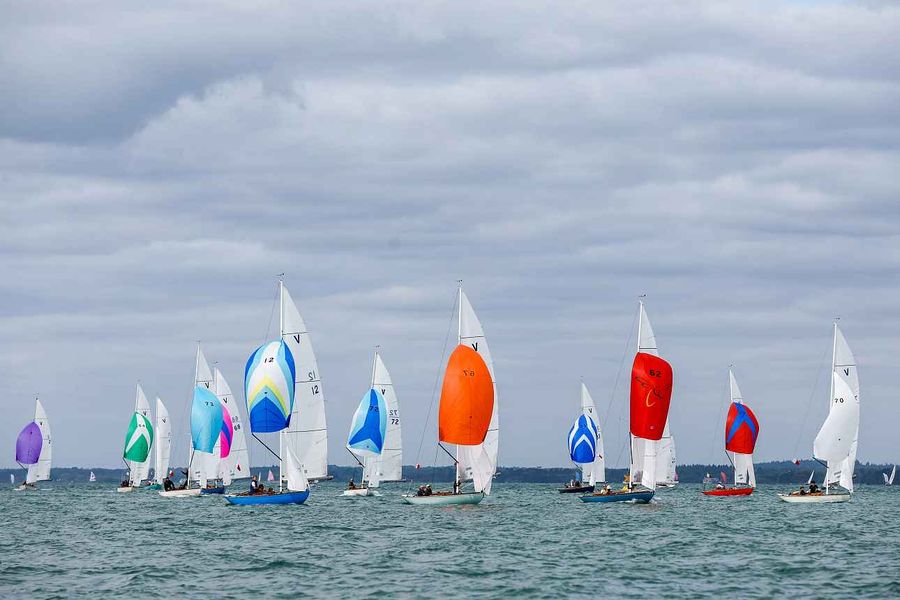
The cannons crackled across the Solent on Friday, 8 August 2025, bringing Cowes Week's racing to a close. Yet the moment carried something beyond the usual end-of-regatta feeling. When those guns next sound, it will be for an occasion the sailing world has never seen before: the 200th anniversary of the greatest multi-class regatta on the planet.
Two hundred years is a long time to be doing anything, let alone sailing races. Cowes Week began in 1826 with a single contest for a £100 Gold Cup, seven yachts competing under the flag of the Royal Yacht Club, which would later become the Royal Yacht Squadron. From that modest beginning grew something extraordinary. King George IV presented the King's Cup as early as 1827, royal patronage cementing Cowes as a fixture in Britain's high-summer calendar. Through the elegant metre-class yachts of the 1900s, the towering J-Class campaigns of the 1930s, and on to today's TP52s, Cape 31s, and foiling sportsboats, the regatta has never stopped evolving while somehow always remaining itself.
The organisational architecture has evolved too. In 1964, following a suggestion from HRH Prince Philip, the Cowes Combined Clubs was formed, drawing nine separate organising bodies into a single coordinating structure. Cowes Week Ltd took over overall management in 2007, producing the efficient and cohesive format that exists today. What has stayed constant through every administrative change is the scale and character of the event: 500 boats, 28 classes, 40 races a day, and a shore scene that draws more than 60,000 visitors.
The 2025 edition ran from 2 to 8 August and gave competitors the full range of Solent conditions. Light airs on the opening day held up starts, and Day 3 was abandoned entirely when Storm Floris rolled through and made racing unsafe. Between those disruptions, breezy and sun-drenched days alternated with tricky, shift-ridden tactical puzzles, keeping race officers on their toes and crews honest.
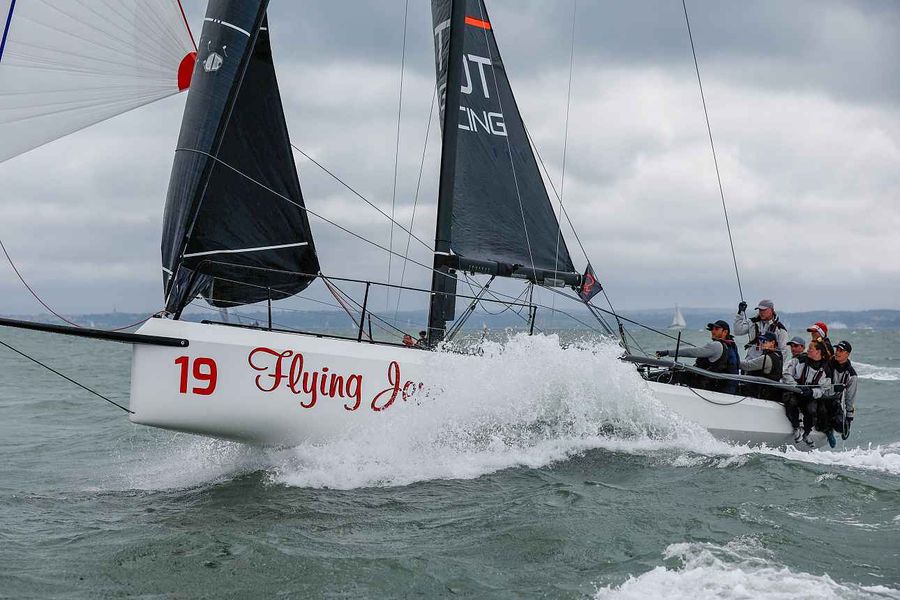
The Cape 31 fleet produced some of the week's most eye-catching performances. Sandy Askew's Flying Jenny claimed the prestigious Britannia Cup on Youth Day, prevailing over 23 of the highest-rated IRC yachts in a mixed-fleet battle. Bullit, with Julian Metherell at the helm, took the New York Yacht Club Challenge Cup after Cape 31s swept IRC Zero, IRC1, and their own class. Mini-series titles were shared across the fleet: Flying Jenny in the Cape 31s, Nils Razmilovic's Glasgow Kiss in the SB20s, and Martin Dent's Jelvis in the J/70s.
Away from the podium, the community dimension of Cowes Week was just as visible. The Andrew Cassell Foundation put four Sonars on the water crewed by sailors with disabilities. The Scaramouche Sailing Trust's Flying Fifteen Scaramouche raced on with a replacement spinnaker donated mid-week after the original blew out. Autism on the Water competed in IRC6, bringing the benefits of sailing to a wider audience.
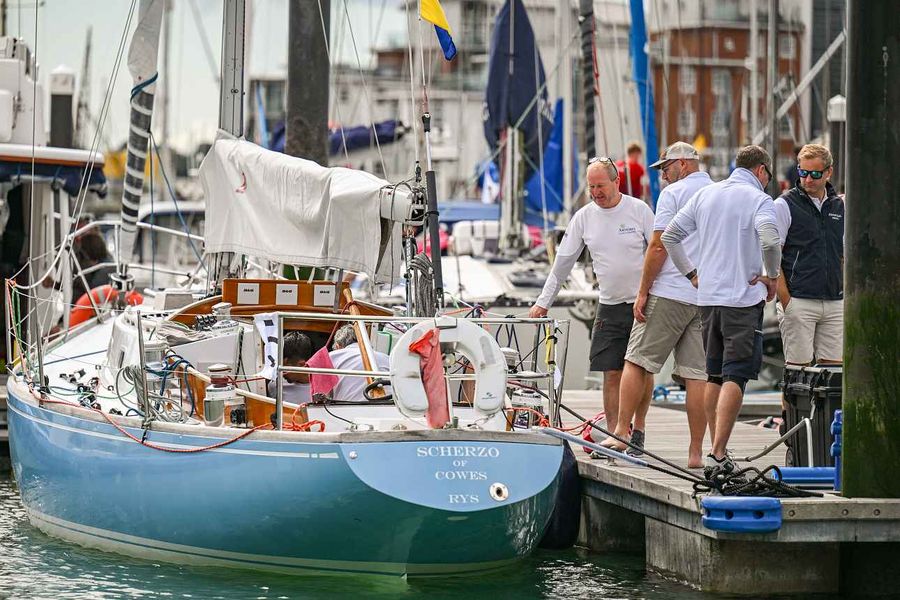
Grand prix hardware was well represented on the startline. Tony Langley's TP52 Gladiator joined the regatta for its final days alongside Malcolm Offord's TP52 Braveheart. In IRC2, Adam Gosling's Yes!, a multiple Black Group overall winner, took on Rutger Krijger and Caroline van Beelen's Jack Rabbit and David Franks' Leon. Peter Morton's Scherzo of Cowes, which won the Black Group in 2022, was back in IRC5 along with the South African-flagged Tokoloshe 4 and the immaculate Quarter Tonner BLT.
Kiwi and Australian connections ran through the fleet. Scherzo of Cowes carries New Zealand design heritage and Morton is a name familiar to many sailors in the southern hemisphere. Antipodean crew members were evident across the Cape 31s and IRC Zero fleets, many of them bringing experience forged in Fastnet, Sydney Hobart, and SailGP campaigns.
Heading into Friday's final racing, several trophy battles remained wide open. Among the Black Group contenders, BLT in IRC6 had gone through the week unbeaten, Tokoloshe 4 in IRC1 was among the quickest Cape 31s on the water, Leon had been dominant early in the regatta in IRC2, and Wight Wedding held the IRC7 lead with three consecutive wins to its name. The White Group picture was equally tight. Astralita, steered by John Tremlett with Tim Copsey and Fraser Graham, was well placed in the XODs. Bertie, helmed by Richard Bailey, was in contention in the Sonars. The Seaview Mermaid Sheen carried a near-perfect scoreline, Bluebottle with Graham and Julia Bailey aboard was the Dragon to beat, and the Swallow Osprey, sailed by Jack Hartley, Georgina Patterson, and Luke Cross, held an overnight lead to defend. For every one of these boats, Friday's racing would settle not only class positions but the bigger prizes and bragging rights going into the bicentenary year.
Garmin's official Cowes Week meteorology service forecast a post-frontal south-westerly for the finale. The morning opened with five knots from the west, the breeze gradually veering south-westerly and strengthening to 12 knots around noon before building to 16 to 20 knots through the afternoon. Race officers noted the possibility of a divergence zone off Cowes where the pressure might lag, but by midday the Solent had filled in properly.
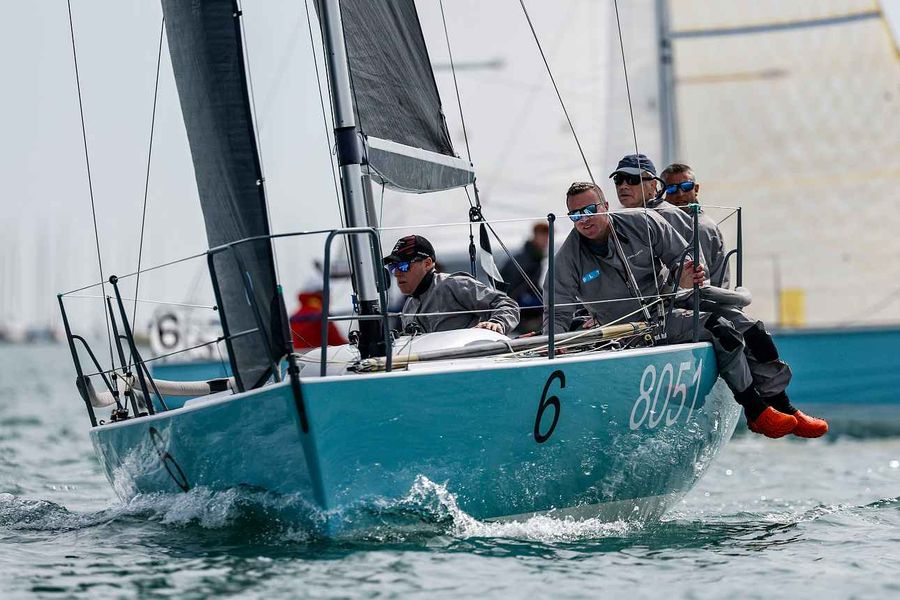
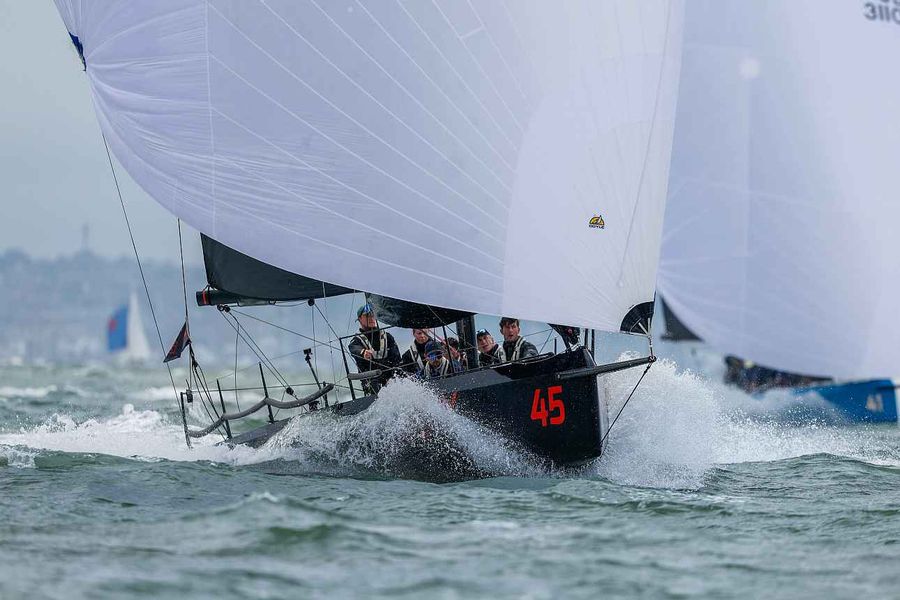
From the Royal Yacht Squadron line, the J/109s, IRC4, IRC5, IRC6, Contessa 32s, IRC7, Performance Cruiser B, and Club Cruiser fleets set off on courses ranging from 9.6 to 16.1 nautical miles. Committee Vessel 1 dispatched IRC Zero, IRC1, the Cape 31s, IRC2, IRC3, and Performance Cruiser A on longer legs stretching out past Hamstead Ledge, Zwerver, and The Boss mark. As the breeze built through the afternoon, downwind legs came alive. Spectators lining the Parade watched asymmetric kites snap full as Cape 31s planed past the slower keelboats. Gladiator led Braveheart boat for boat through the IRC Zero fleet, though corrected-time honours in that class would fall to other hands.
In the Dragons, Bluebottle held her series lead despite determined resistance. The J/109 Joule, sailing under the Dutch flag, maintained her near-flawless week against Jukebox. And BLT looked to be on course to finish without a single loss in IRC6.
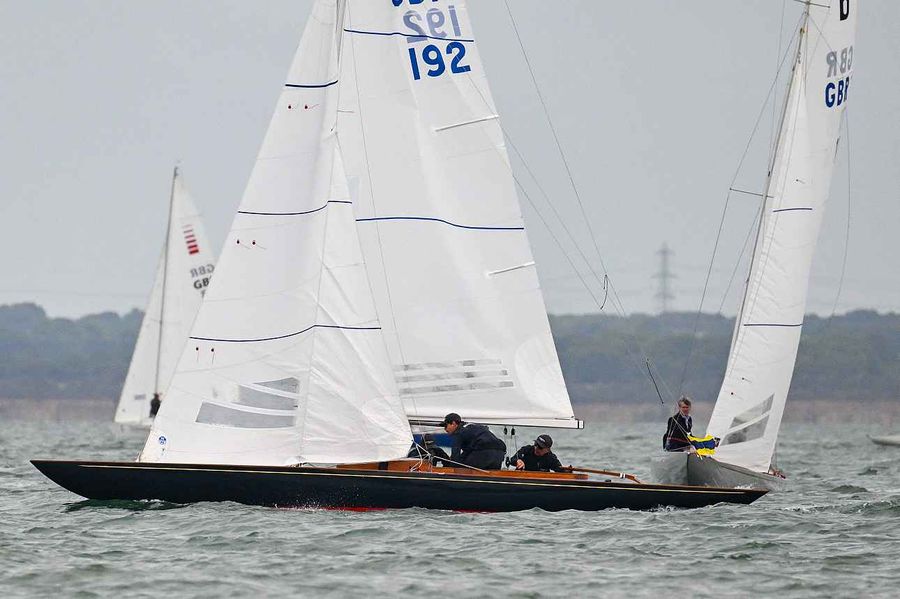
Cowes has always been as much about stories as scoresheets. The Seaview Mermaid fleet illustrated that perfectly, with Sheen protecting her advantage while the boats immediately behind remained separated by only a handful of points. In the Victory class, Peregrine held the overall lead going into the final race, but the chasing group of Shearwater II, Zada, Zilch, Zest, and Ziva had no intention of letting it go without a fight.
When the final gun fired, the results were clear. BLT delivered again in IRC6, completing an unblemished week to claim both the class win and the Black Group Overall Trophy. Tokoloshe 4 finished with a commanding race victory in IRC1 to confirm second in the group standings, while Leon secured the IRC2 title despite sitting just off the podium on the final day. Wight Wedding performed when it mattered most in IRC7, winning the last race to take class honours.
The White Group was settled just as decisively. Bluebottle's composed defence through the Dragons earned Graham and Julia Bailey both class victory and the White Group Overall Trophy. Astralita withstood late pressure in the XODs to top her fleet. Bertie won through in the Sonars after a week of close-quarters competition. Sheen closed with another top-three result to secure her near-perfect series in the Seaview Mermaids. In the Swallows, Osprey's crew converted their overnight lead into silverware.
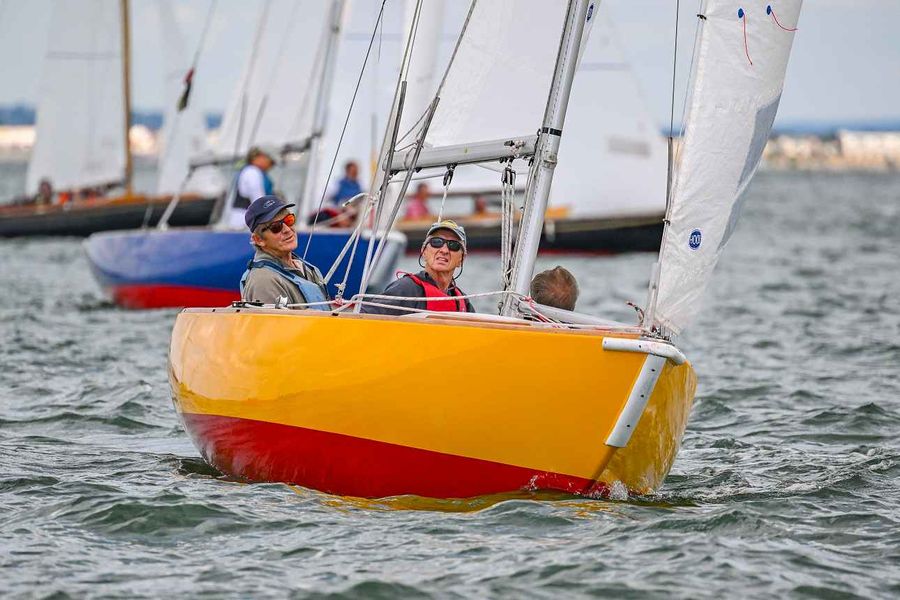
The Cowes Week Overall Trophy went to BLT, a fitting outcome for a boat that had given competitors no opportunity to exploit mistakes all week. Among the special awards, the Under-25 Trophy went to the all-youth crew of Mary Rose Tudor, while White Heather II received the Sustainability Trophy for logging the highest number of carbon-free miles sailed.
Royal Navy Day gave the final afternoon an extra dimension, with a helicopter display and a Fairey Swordfish scheduled for the evening programme. Along Cowes High Street, crews still buzzing from their final races shared the pavement with day-trippers. Live music filled the Parade stage as prize-giving preparations got underway. For anyone ashore, the spectacle of Cowes Week finale racing is difficult to match, from the morning cannon to the sight of converging fleets at marks and the sound and feel of hulls driving hard through Solent chop.
With BLT lifting both the Black Group and Overall trophies and Bluebottle claiming the White Group, the 2025 champions take their place on a roll of honour stretching unbroken back to 1826. They also carry the particular responsibility of defending those titles in a bicentenary year that will draw eyes from across the sailing world. Others will return with unfinished business: Tokoloshe 4, Leon, Astralita, Bertie, Sheen, and Osprey all proved throughout the week that they can compete in any conditions.
As the sun lowered over the Royal Yacht Squadron on Friday evening and applause from the prize-giving drifted down the Parade, 2025 was put to rest. One competitor, stepping ashore that afternoon, captured the feeling simply enough: "It's Cowes Week – the trophies are hard to win, the beer tastes better when you do, and next year it's the big one."
Fleets will now scatter to home ports the length of Britain, Europe, and beyond. The clock is already counting down. Cowes Week 2026 will arrive carrying two centuries of history, and everyone who has tasted the regatta's unique combination of competition, community, and spectacle knows exactly what that means.