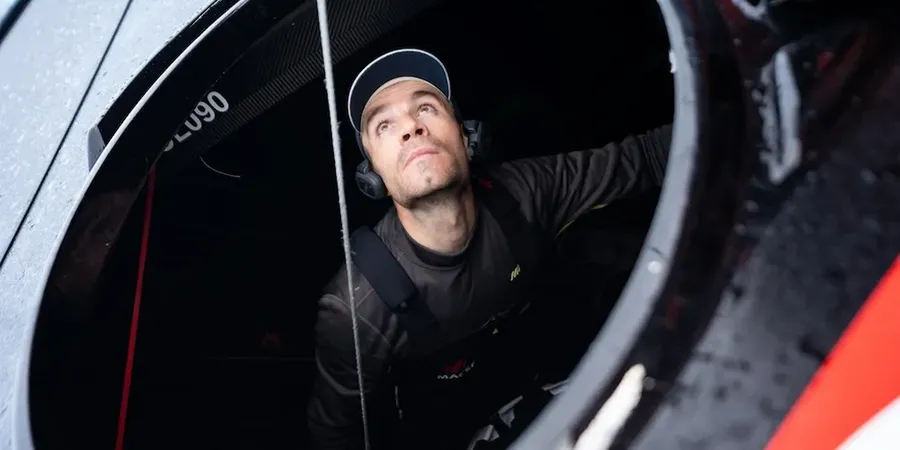
Corentin Horeau's Vendée Arctique was over before the fleet had barely stretched its legs. On Monday evening, the cadène, the lower deck-level attachment point for the J3 jib, failed on his MACSF boat, forcing him into an immediate reassessment of his race.
At the time of the failure, Horeau was sitting third overall, roughly 160 kilometres south-east of the Fastnet, pushing hard in 22 to 24 knots of wind. He had been locked in a tight battle with Violette Dorange and Élodie Bonafous when a wave caught the sail and the damage made itself known. The structural consequences were not trivial. "The cadène is a critical structural element," Horeau said after turning for home. "Without it, the mast becomes fragile and could snap."
No serious consideration was given to pressing on. Continuing an ocean race with a compromised rig, hundreds of nautical miles from safety, was simply not a risk worth taking. "It was more prudent to return to Lorient, understand what happened, and repair properly," he said. He was expected back at his home port in Brittany by Wednesday morning, NZST.
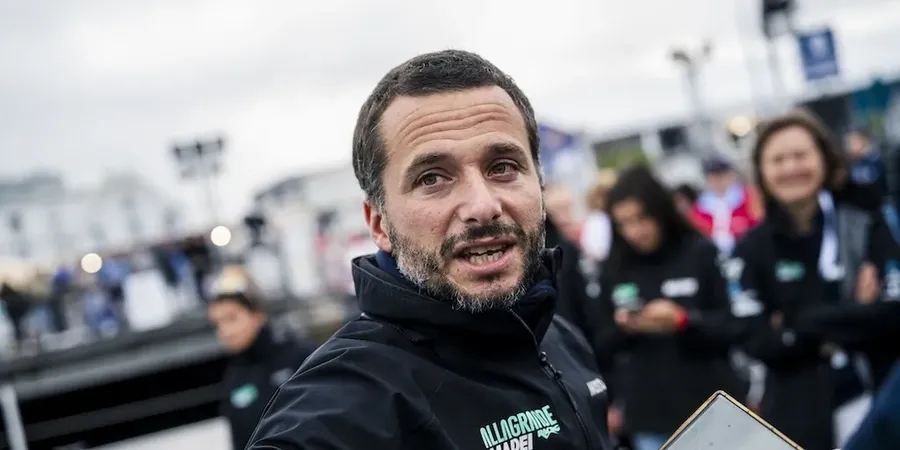
What has struck many observers is the composure Horeau brought to a genuinely deflating situation. His first solo IMOCA departure from Les Sables-d'Olonne had ended in retirement, yet there was no trace of bitterness in how he spoke about it. He reached instead for a longer perspective. "I know this is part of the game. You push these machines hard, and sometimes things break. I'm actually relieved it happened now rather than later in the year or during the Vendée Globe." Far from treating the broken fitting as a setback to lament, he reframed it as something that could ultimately work in his favour. "The greatest successes are built on the long term and they pass through failures. We'll get back to work and come back stronger."
That sentiment was echoed from further up the fleet. Sam Goodchild, racing aboard MACIF Santé Prévoyance, was candid about what the retirement cost the race. "I'm sad for Coco. It's a shame to see him turn around. He was sailing really well and had made a beautiful start. Losing a competitor like that always hurts. But I'm certain he'll come back stronger."
Alain Leboeuf, president of both the Vendée Arctique and the Vendée Globe, expressed similar disappointment while noting that Horeau's return, controlled, deliberate, and without drama, was itself a reason to be thankful. "We know his qualities and his talent," Leboeuf said. "We expect to see him at Les Sables in 2028 for the next Vendée Globe."
With the boat back in Lorient for repairs, Horeau now has time to examine exactly what failed and why. For a skipper with the Vendée Globe firmly in his sights, a lesson learned this early may yet prove worthwhile.