Conrad Colman's voice, when it crackled through from his IMOCA somewhere south of Lisbon, carried exhaustion alongside steady resolve. "It's been relentless," he said. "We've had things break on this boat I never thought could fail."
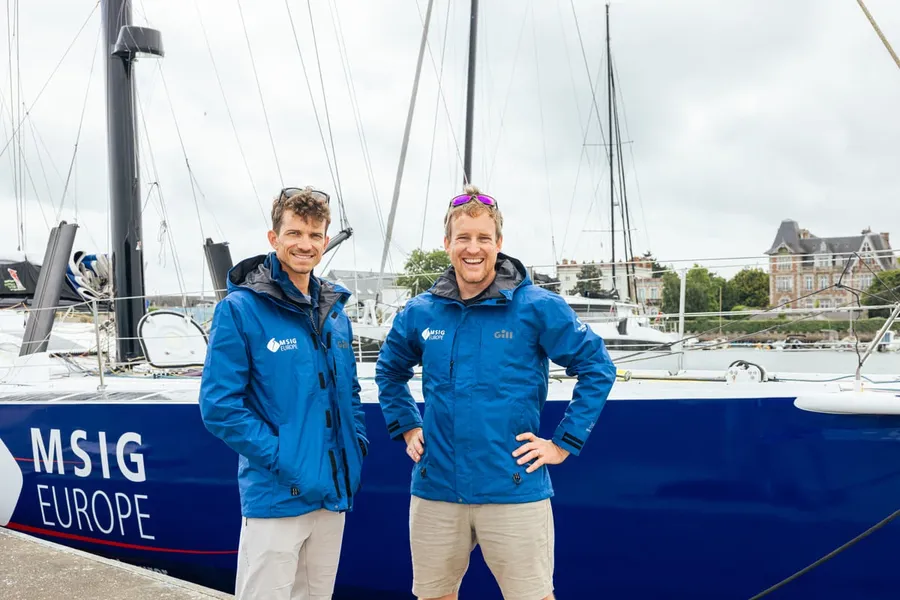
The race exacting such a toll is the Transat Café L'Or, formerly known as the Transat Jacques Vabre: a punishing 7,500 km double-handed passage from Le Havre, France, to Fort-de-France, Martinique, and one of the toughest tests ocean racing has to offer. Colman knows the race well. His co-skipper, Mathieu Blanchard, is meeting it for the first time.
The campaign opened in chaos. Within hours of leaving Le Havre, both autopilots failed. Colman took the helm personally, hand-steering through 50-knot gusts and towering seas while Blanchard watched, learned, and did what he could to help. Blanchard is a world-class ultra-trail runner, not a seasoned sailor, and this was a harsh introduction. Things deteriorated further when the radar dome tore free from the mast, leaving Colman no choice but to climb the rig in freezing spray and cut it down. The pair diverted to Roscoff, carried out emergency repairs, and rejoined the race under a mandatory four-hour stop.
[gallery td_select_gallery_slide="slide" ids="156977,156978"]
Blanchard, 37, is not someone easily unsettled. A French-Canadian who left an engineering career behind to pursue extreme endurance sport, he is a two-time podium finisher at the Ultra-Trail du Mont-Blanc and the first person to complete the 600 km Yukon Arctic Ultra on foot. Sub-zero blizzards and nighttime mountain passes are familiar ground. The ocean is another matter.

"I've faced storms in the Arctic and mountains at night, but the sea is different," Blanchard told Boating New Zealand before the start. "Here, the challenge is teamwork, trust, and constant motion."
Colman, for his part, is glad to have him. "Mathieu's a bit of a nutter," he laughs. "But that's exactly why we get along. He's unbreakable, and he's learning fast."
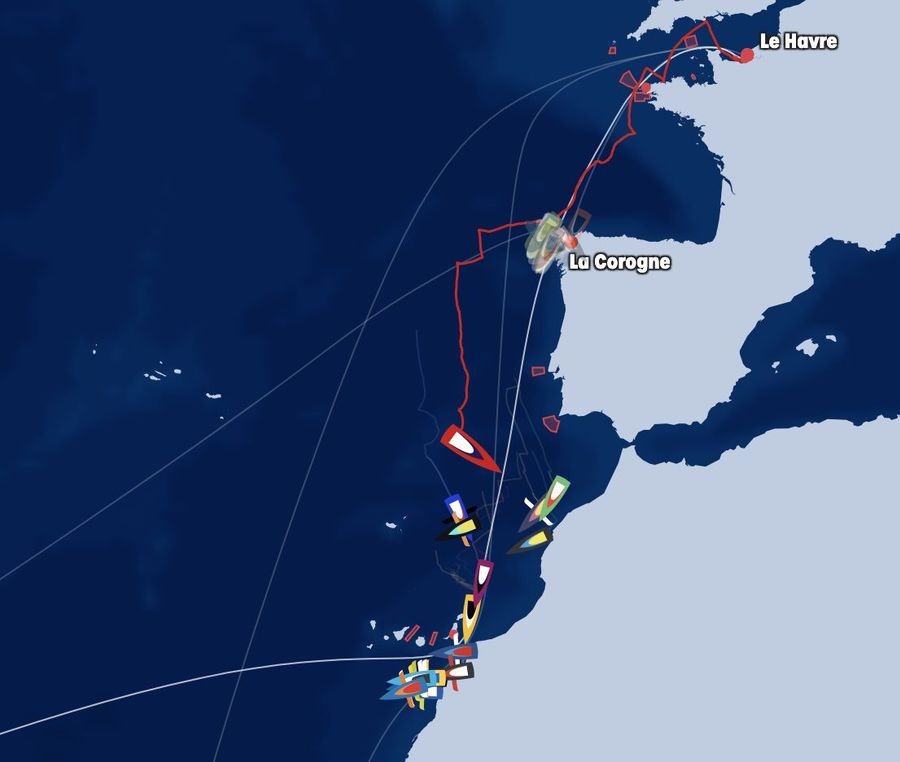
Having pushed through the Bay of Biscay and two violent cold fronts, the pair have settled into downwind sailing, averaging around 11 knots on a west-south-westerly course toward the Canary Islands. Race tracking at transatcafelor.org/cartographie shows their IMOCA sitting mid-fleet, with roughly 20 percent of the distance covered. Waiting ahead are the Canary wind shadows, notorious stretches of calm capable of pinning boats for hours, before the Atlantic trade winds open up and the run to Martinique begins in earnest.
The boat carries 18 days of food, matched to Colman's predicted crossing time. A Starlink connection allows brief windows for weather routing and the occasional call, but sleep stays scarce and the repair list continues to grow. His outlook, despite all of it, remains upbeat. "We've taken our hits, but the worst is behind us. Now it's about finding the rhythm again, and enjoying it."
One practical edge the boat holds is kick-up rudders, a feature that has proved its value on a course where orca interactions off the Iberian coast have caused damage to a number of competitors. The New Zealand-flagged IMOCA carries a hybrid A2.5 sail marked with the Fern Mark, reflecting both Colman's Kiwi roots and the international reach of his campaign.
Colman became the first New Zealander to finish the Vendée Globe, and his career has been shaped by a refusal to stop when equipment fails, seas turn violent, or the pressure of ocean racing becomes almost unbearable. "The difference between surviving and thriving out here is mindset," he said. "You can't just endure it, you have to find joy in the fight."
Seven days in, with roughly 6,000 kilometres and 13 days still to go, the fleet is pushing south toward the tropics and the faster conditions they promise. Boating New Zealand will check in with Colman again Monday NZ time for an update on repairs, routing, and life aboard as the trade winds take hold.