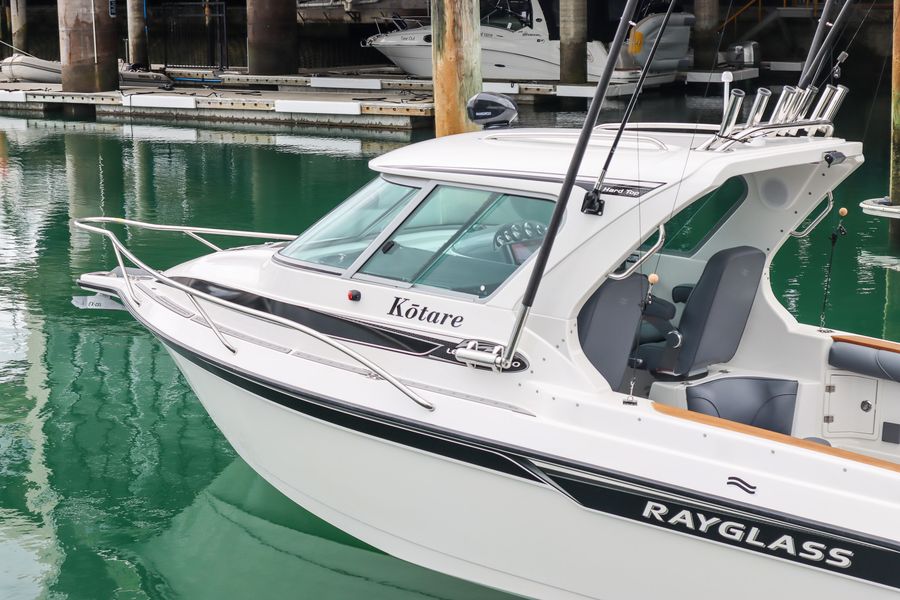
A conversation that began with a father's quiet concern ended up becoming something far more significant. Tim Tsoumas, who heads the Rayglass Premium Restoration Department, was approached by the owner of a Rayglass Legend 2200 with a straightforward worry: his 18 and 20-year-old sons had lost interest in getting out on the water. He wanted to change that.
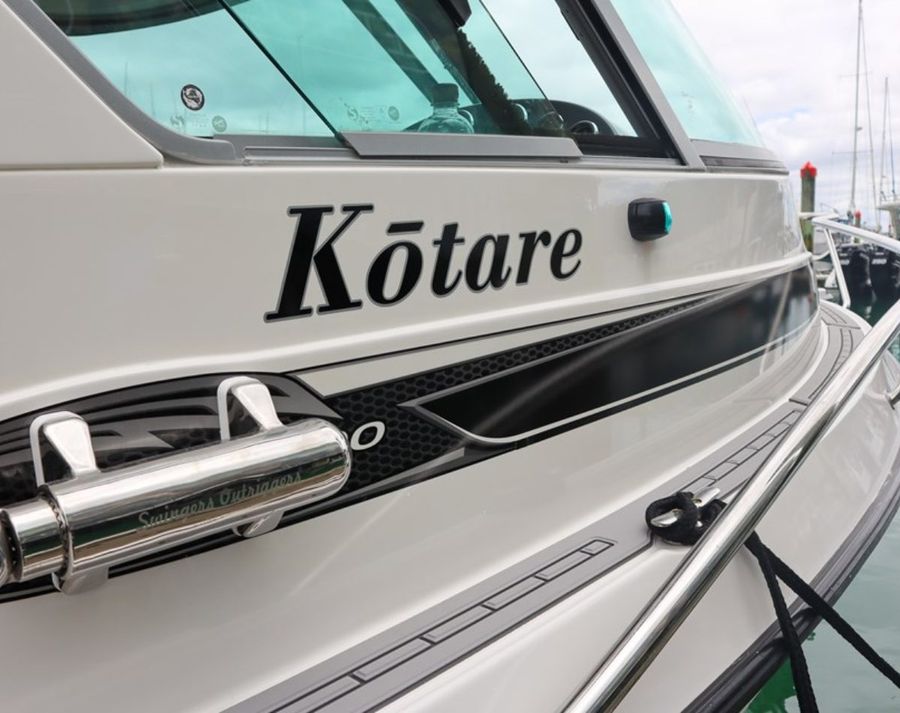
The boat in question was Kōtare, a name drawn from the Māori word for Kingfisher and shared with the family's bach. By most measures she was already a fine vessel, and the owner's first instinct was simply to tidy her up and put her on the market. That plan didn't survive the conversation with Tim. As the two talked through the possibilities, a more ambitious and more meaningful idea took shape.
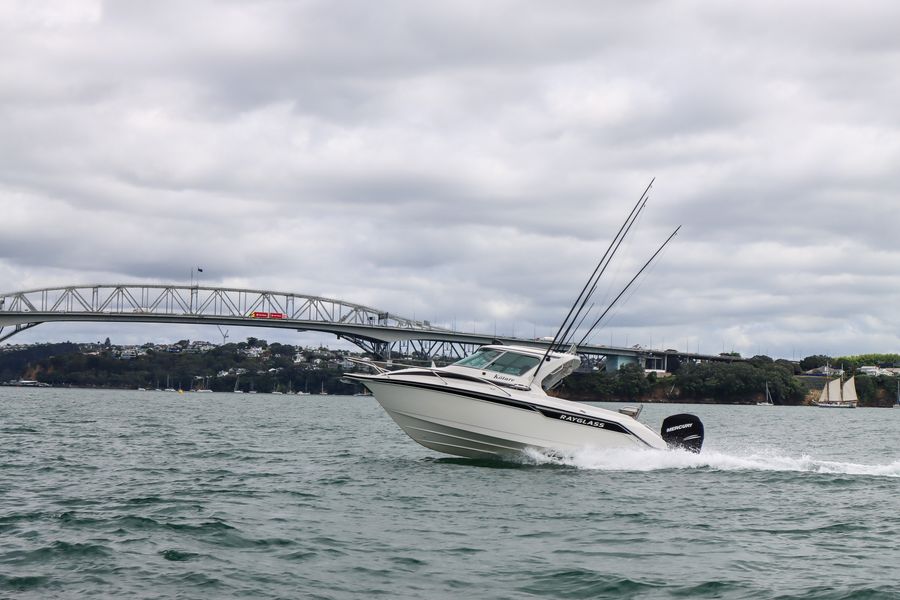
Rather than let Kōtare go, the owner decided to reinvent her as a purpose-built game fishing boat. The thinking was sound: get the configuration right and the sons would find their enthusiasm again. The boat would finally get the use it deserved, and the whole family would have something to look forward to.
With that goal settled, Tim prepared an initial estimate before he had even laid eyes on the vessel, then drove down to Whangamata himself to collect her.
"Next thing I'm driving down to Whangamata, picking up the boat from their bach and having a good look at her in the factory," he said.
With Kōtare in the workshop, Tim could carry out a proper assessment and draw up a thorough plan. The owner flew to Auckland, went through the estimate in detail, and the Rayglass Premium Restoration team set to work.
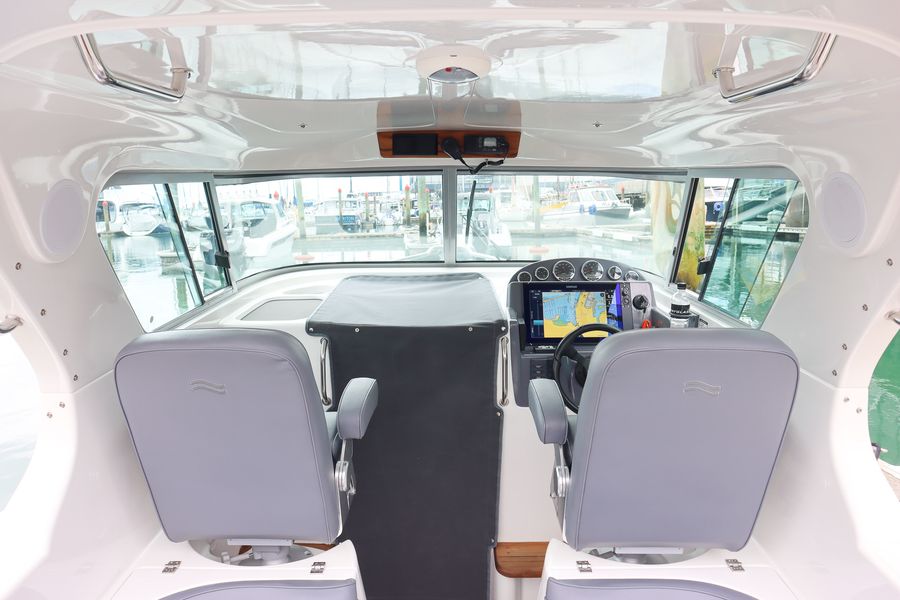
Like most Rayglass builds, Kōtare had strong bones, but the scope of the project expanded considerably once Tim had a proper look at her.
"We noticed this and noticed that, and it ended up being a bit of a rebuild. And I'll tell you what, the end result looks awesome," he said.
The finished boat received a cut and polish, new graphics set in silver, and a bow protection plate. A live bait tank was installed along with a new winch motor and underwater lights. U-Dek flooring was laid throughout, and the game fishing gear added included a carbon shotgun pole and 4.6m Killwell outriggers.
That package alone would have been enough to give Kōtare the look and feel of a fresh production boat, but the team pressed on. A Simrad NSS16 EVO3S combo multi-function display and a Verado autopilot kit formed the core of the new electronics fit-out, with the autopilot proving particularly well suited to trawling for big game. The audio system was overhauled entirely, with an MS-RA670 Fusion True Marine Media Player installed alongside a range of 6.5" and 7.5" speakers.
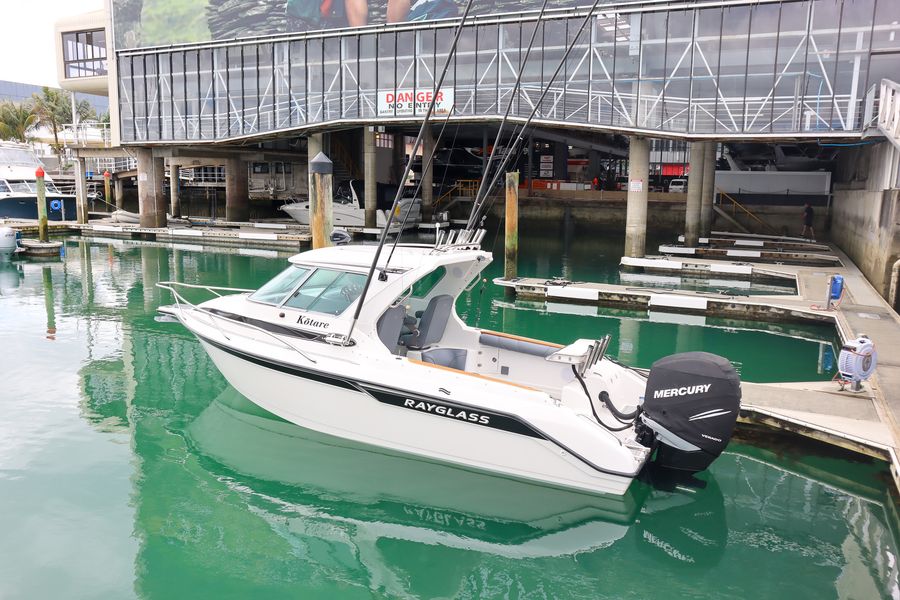
As Tim discussed the project, the finish line was close. The owner had visited the workshop a couple of weeks earlier, and what he shared during that visit made the family's anticipation plain enough.
"He asked a few questions, had a few ideas, and we had a good chinwag, said his boys are fizzing to see the boat and get out on the water," Tim recalled.
With only a few days of work remaining, attention had turned to the final steps: completing the build, putting Kōtare in the water for a test run, then arranging her transport back to Whangamata. For Tim, that moment of delivery sits at the heart of what the whole restoration process is really about.
"The boat will be all locked up in his garage looking great. I get to call and tell him the news and he and his boys will get to come home to a brand new boat. His sons and him will have a boat ready for game fishing. How cool is that?"
He also reflected on what jobs like this one mean in the broader context of restoration work.
"That's the good thing about these big restorations. They're not just an oil change or a cut and polish. You build a relationship, they're a story in themselves."