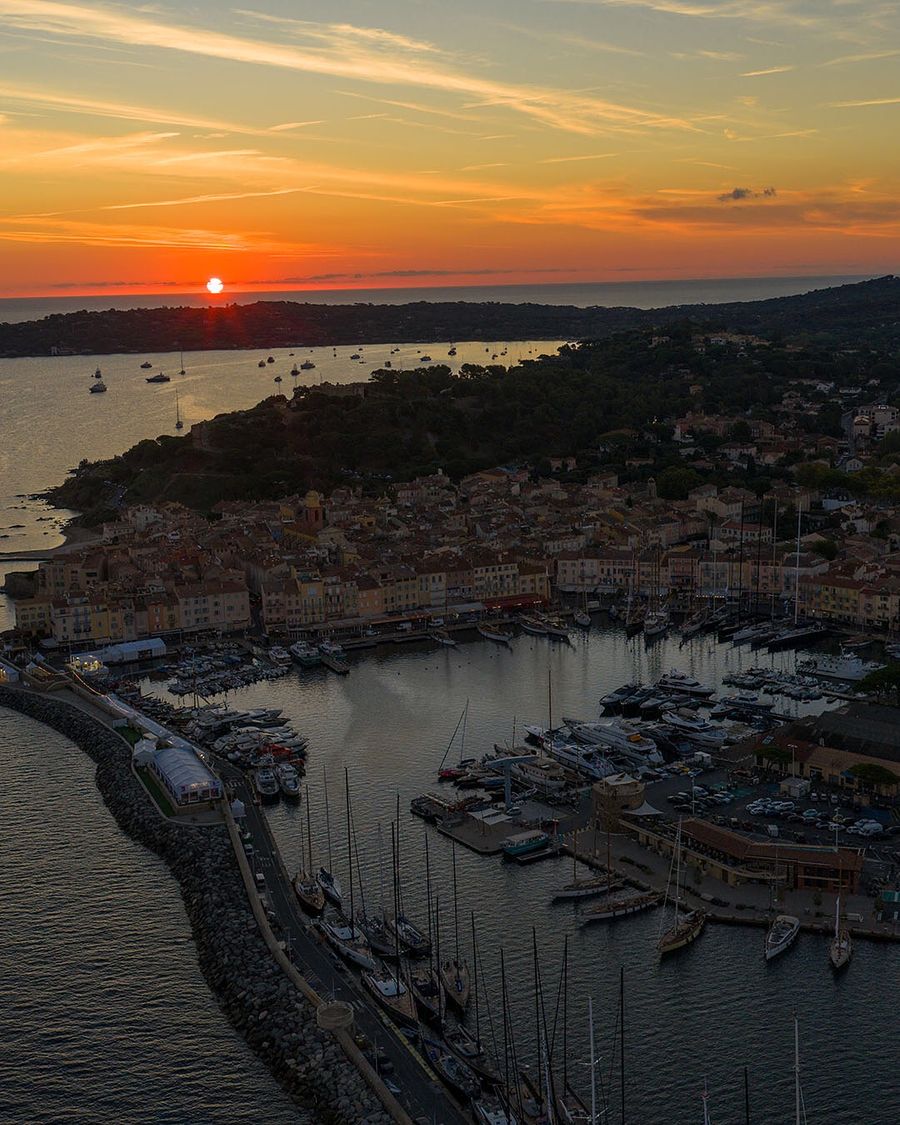
Saint-Tropez rarely sleeps, but the final Sunday of September carries a particular energy. As the Village des Voiles opened its gates and the gulf filled with canvas, the town made its annual transformation into one of sailing's great gathering points. More than 3,000 sailors and 245 yachts had made their way to the port, a fleet spanning varnished classics and schooners at one end to carbon-fibre Maxis at the other.
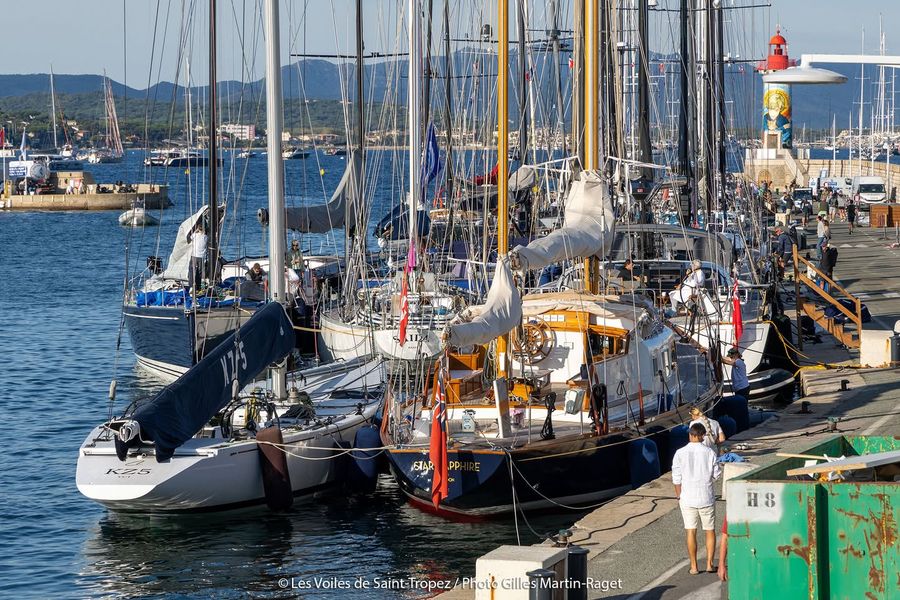
The day unfolded more like a festival than a conventional race day. Tradition, Modern, and Classic crews attended to last-minute preparations while visitors crowded the waterfront under warm autumn sunshine, savouring what amounted to a preview of the week ahead. With terracotta rooftops framing the scene, the horizon came alive with colour, the sharp black sails of the Maxis contrasting with the multicoloured spinnakers that seemed to echo a Jacques Cordier painting.
The afternoon's focal point was the finish of the 36th Yacht Club de France's Autumn Cup, a passage race linking the Régates Royales de Cannes to Les Voiles and run in from Théoule-sur-Mer under light upwind conditions. Thirty-two classic yachts completed the course, much to the delight of those watching from the shore and from rival boats.
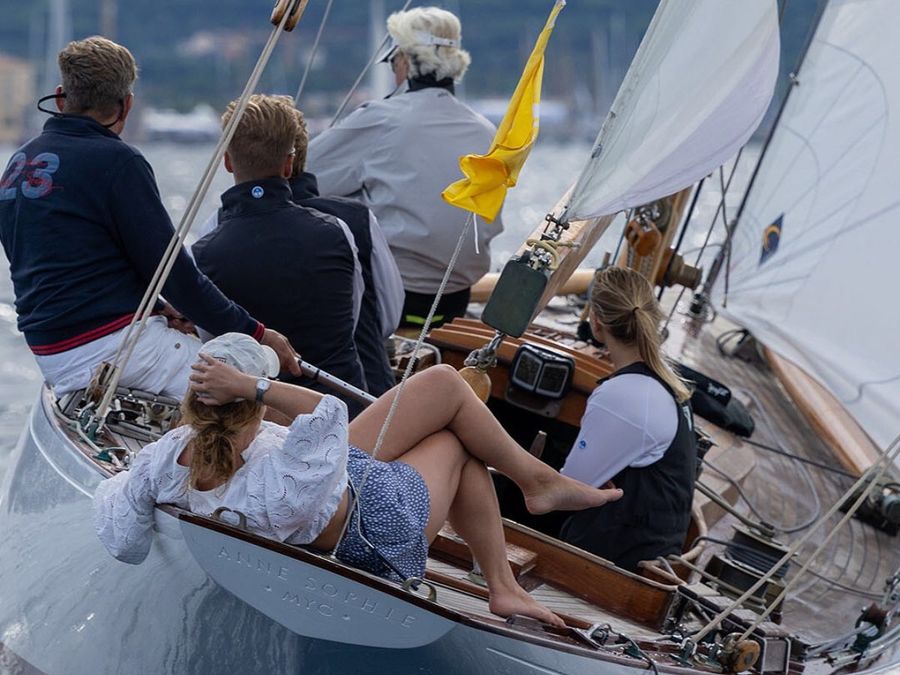
Line honours went to Flica II, the distinguished 1930 12-metre class (12mR), with Il Moro di Venezia, the celebrated 1976 Maxi IOR, crossing close behind. On corrected time, Matrero and Maria Giovana led the Classic division, while Anne Sophie took the Marconi class. Oriole was first across for the gaff-rigged boats and Circé rounded out the results in the Esprit de tradition category. The finishers between them captured much of what makes this event distinctive: yachts from different eras, carrying different rigs and built to different philosophies, yet sharing the same stretch of water.
Adding a further layer of occasion to the afternoon, the Swan 651 Evrika, freshly returned from a vintage round-the-world race, joined the festivities with Yacht Club de France President Catherine Chabaud on board. The navigator and former journalist needed little prompting to describe the experience: "Rediscovering these classic yachts was magical. This afternoon it was just buzzing out on the water! Between the schooner Atlantic, the Maxis out training, and all the spectator boats, we really had our work cut out pinpointing the finish line."
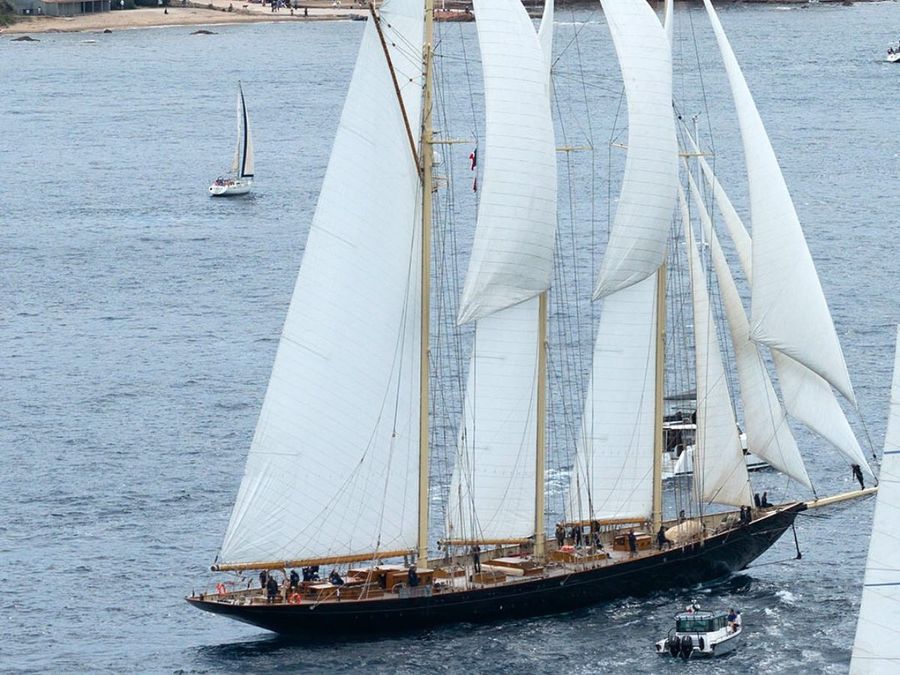
For all its atmosphere and theatre, Les Voiles de Saint-Tropez runs on meticulous organisation. The 245-boat fleet has been divided into five Maxi classes, five Modern IRC categories, and nine Tradition groups. The 65-metre schooner Atlantic, this year's flagship, sits at the top of the scale, while Aramis, an 11-metre Dutch design, occupies the other extreme. The distance between them in size, age, and character is part of what gives the regatta its particular appeal.
Trophy competition adds further definition to the week's structure. The Rolex Trophy will shine its spotlight on the classic Big Boats, the Maxis race for the Edmond de Rothschild Trophy, and the Modern IRC 0 division contests the BMW Trophy. Three separate race committees will oversee the action, supported by 70 volunteers, with the race zone split between Pampelonne for the Maxis and the Portalet Tower, where Traditionals and Moderns start within sight of the jetty.
The organisation extends well beyond the water. More than 200 volunteers work alongside the Société Nautique de Saint-Tropez's permanent staff to keep the event running. The Village des Voiles, rebuilt in 2023 on the Jean Réveille jetty and refined again this year with sustainability at the forefront, makes use of reused flooring and structures while favouring recyclable materials wherever possible. Rope makers, sailmakers, and other marine exhibitors fill the space, and bars and open areas give the harbourfront its familiar, convivial atmosphere.
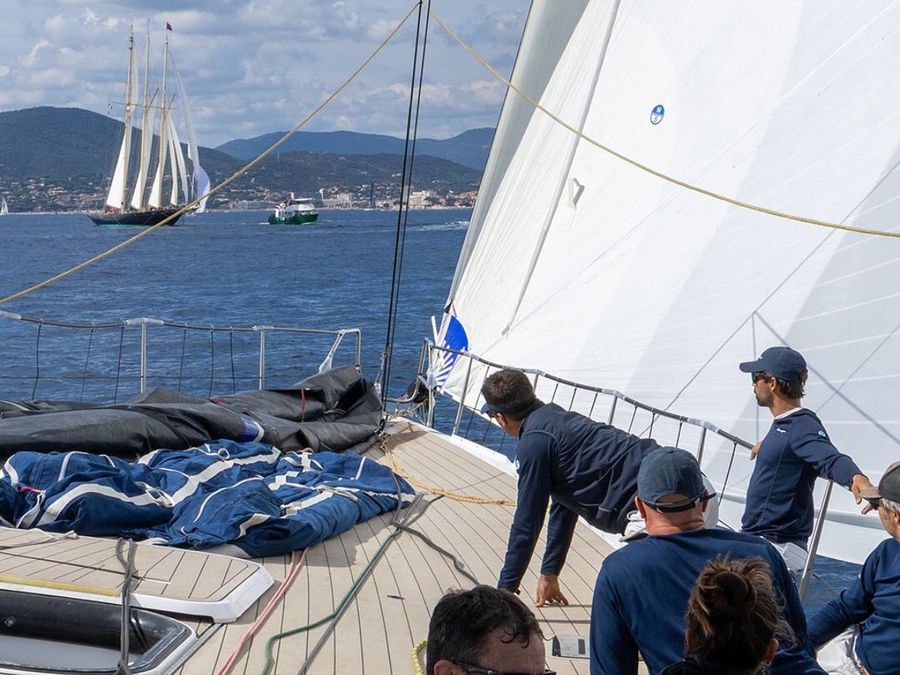
From Monday 29 September, the racing proper gets under way, with Maxis and Moderns first off the blocks before Classics join in on Tuesday as the Rolex Trophy begins. Wednesday is a scheduled layday for the Maxis, though racing continues for the remainder of the fleet. Thursday brings a cluster of highlights: the Club 55 Cup, the Gstaad YC Centenary Trophy, and the newly introduced Wallyrocket 51 match racing. All divisions return for Friday's racing before prizegivings close out the week, with the Maxis honoured on Saturday and the Classics and Moderns on Sunday.
The forecast for the opening days points to light easterly and south-easterly thermal breezes, with more wind pressure building as the week progresses. That pattern should produce tight racing on the short windward-leeward courses for the smaller Maxi classes, while the coastal races will give the larger yachts room to show their pace. A vessel the size of Atlantic inevitably brings its own complications at the start line, something Principal Race Officer Georges Korhel acknowledged with good humour, noting that traffic jams are simply part of the Saint-Tropez charm.
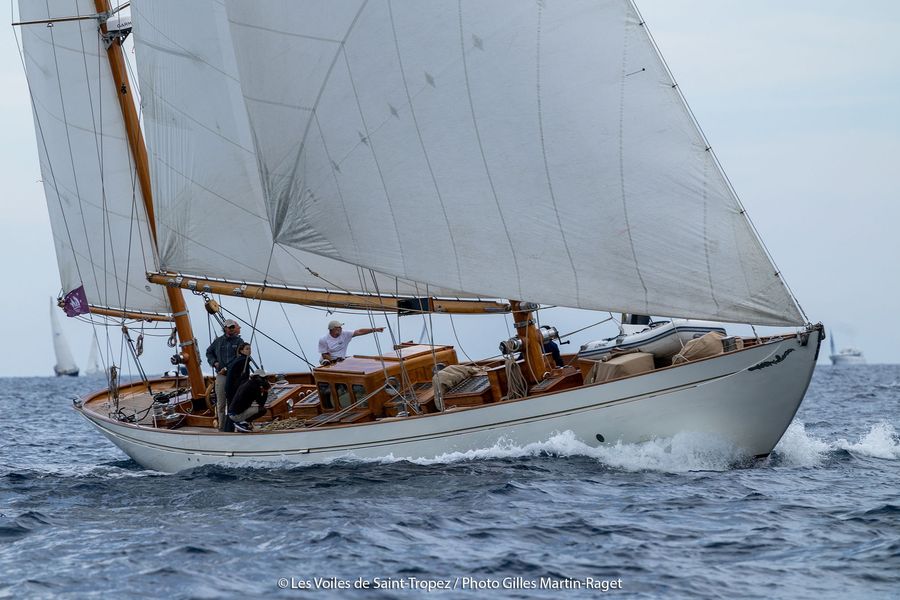
One element that sets Les Voiles apart from many events of comparable scale is its Corinthian ethos. There is no prize money on offer, only trophies and the satisfaction of competition well conducted. Fair play and camaraderie are treated as genuine values rather than formalities, a philosophy the organisers have long summed up simply: "The regatta is a game, and it must remain so."
Sunday gave that spirit a vivid shape. Crews exchanged greetings across the pontoons, visitors and locals mixed freely along the waterfront, and the whole town seemed to hum with anticipation. With the harbour dressed in colour and the gulf busy with sails, the sailing world has good reason to keep returning to this corner of the Mediterranean year after year.