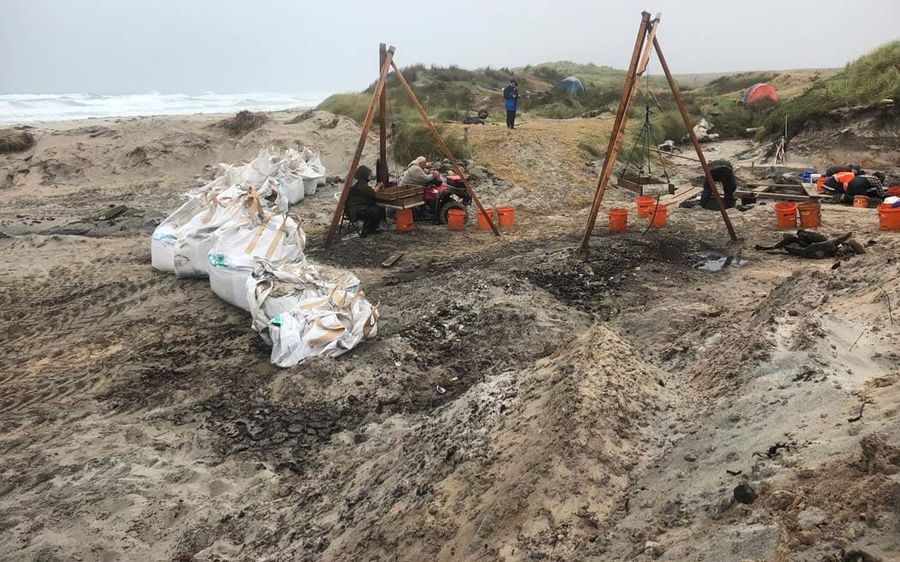
The expert panel concluded the waka is of pre-European construction, most likely from a period predating any meaningful cultural separation between Aotearoa and the wider Pacific. The full picture remains out of reach. Questions about the vessel's age and dimensions cannot be answered while the greater part of it lies buried beneath the sand, and the panel's strongest recommendation is that the Chatham Island community receive the resources needed to bring the rest of it to light.
The report, titled He Waka Tipua, was completed in May 2025 by an expert panel comprising Professor Sir Derek Lardelli, Kiwa Hammond, Heemi Eruera, Dr Kahutoi Te Kanawa and Dr Gerard O'Regan. Its purpose was to offer observations and analysis on the potential origins of the waka partially excavated on Rēkohu-Wharekauri. In April the panel travelled to Chatham Island, where they met with representatives of Hokotehi Moriori Trust, Moriori Imi Settlement Trust and Ngāti Mutunga o Wharekauri, and also with Vince and Nikau Dix, who first discovered the waka.
Glenis Philip-Barbara (Ngāti Porou, Ngāti Uepōhatu), Pou Mataaho o Te Hononga Deputy Secretary Māori Crown Partnerships at the Ministry for Culture and Heritage, was candid about the limits of what is currently known. With only somewhere between five and ten percent of the vessel recovered so far, any firm conclusions about its origins remain premature.
"[It] gives us just an indication of how important it is, but not enough information to draw any reliable provenance theories. So we've got just enough to get our curiosity going but not enough to be able to tell the story."
What has been recovered points toward something potentially extraordinary, she said, a contribution from Rēkohu/Wharekauri that could reshape what the world believes it knows about human settlement in this part of the ocean.
"We are hugely curious to understand how we came to be in the places we are, so we've got just a little indication here and a very clear direction from the experts... that we need to recover the rest and get on with uncovering the rest of the story because there is more to come."
Kiwa Hammond, who sat on the panel as the imi Moriori representative, described the waka as 'our Hawaikitanga', an embodiment of all that tīpuna and karapuna carried with them across thousands of years of migration through Te Moana Nui a Kiwa.
"It really did challenge things that we as indigenous peoples of Te Moana Nui a Kiwa that we have accepted... but it also made us go, 'What is that? Why is that? Why is that there and what is it telling us?'"
For Hammond, the rediscovery carries global weight because it brings us closer to understanding how Moriori ancestors operated and what was truly involved in reaching these islands. The notion that any of those voyages were accidental, he said, needs to be put to rest entirely.
"I mean let's be very clear - there was nothing accidental about any of their voyages," Hammond said. "The whole notion that people drifted from one location to another is a fallacy when you understand the scale of this enterprise and what was involved and what we've seen is a fraction of this waka."
Examining the recovered sections gave the panel a direct appreciation of the knowledge and labour that went into the vessel's construction, Hammond explained. The planning alone would not have been measured in weeks or months but in years. He also believed it quite likely that the builders worked on multiple vessels simultaneously, running what amounted to whole production lines.
"I liken them to a cruise liner, an ancient cruise liner, because when you consider that these waka could have anything up to 100 people, that's how big they were and I think that's something we don't quite comprehend.
"As our tīpuna were traversing Te Moana Nui a Kiwa they were doing this on massive crafts, these were huge vessels."
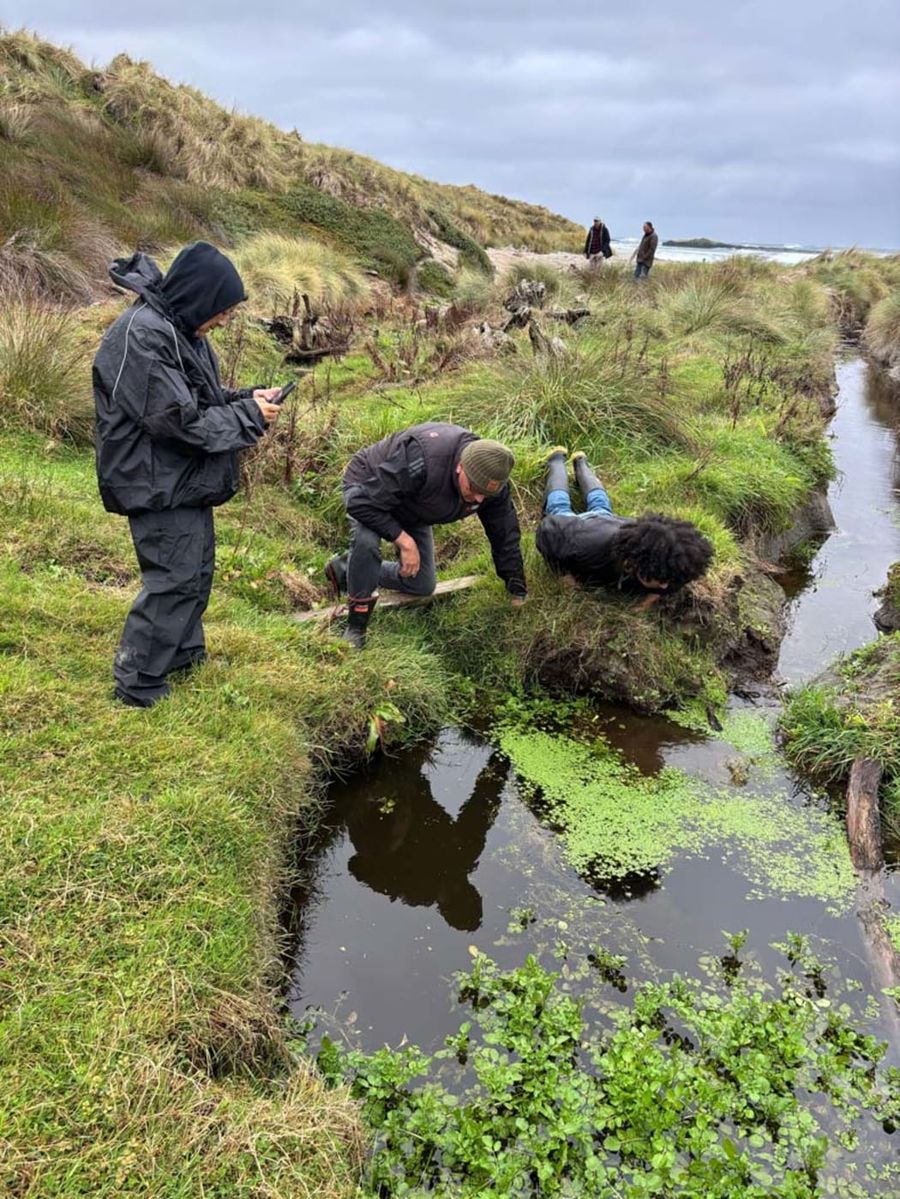
The recovered material makes clear that the Chatham Island waka is unlike anything previously documented in this country. The panel classified it as a 'waka tuitui', an older term for a planked waka whose sections were stitched or lashed together. On the New Zealand mainland, an abundance of large timber, including giant kauri and tōtara, meant planked waka technology gave way to the single-hull dugouts that early European visitors recorded. Before the Chatham Island find, the only fragment in Aotearoa confidently identified as belonging to a voyaging waka of this type was a single plank retrieved from a swamp at Anaweka in north Westland.
Hammond was also keen to address what he saw as a common misreading of the technology involved in ancestral Pacific voyaging.
"As they were travelling around different parts of the world they made use of resources that were there and they honed their knowledge, they honed their understanding of what was the best way of making use of the resources they had at hand."
The planked construction method, he added, represented a technology that had not been seen in Aotearoa for a very long time.
Philip-Barbara expressed deep admiration for the whānau of Wharekauri Station, who discovered the waka, and for the wider island community that had poured its heart and soul into uncovering the vessel and protecting what has been found.
"I'm in awe, quite excited but also feeling there is a burden of responsibility here that we have to work through."
The people of Rēkohu/Wharekauri continue to carry out that daily work of care on behalf of the whole country, she said. Hammond was equally clear that the local community's commitment to the find is beyond question, and that commitment now needs to be matched with practical support.
"No matter who we spoke to they said, 'Look, if this is so significant then it needs to be supported.' The fact of the matter is it needs to be resourced."
The panel's formal recommendation put it plainly: "emphasis now should be on the urgent recovery of the remainder of the waka and ensuring the island is supported for its long-term care."