Brunswick Corporation operates at a scale few companies in the marine world can match. As the world's largest marine technology company, it spans propulsion, electronics, boatbuilding, parts and accessories, and digital services, touching almost every corner of the industry.
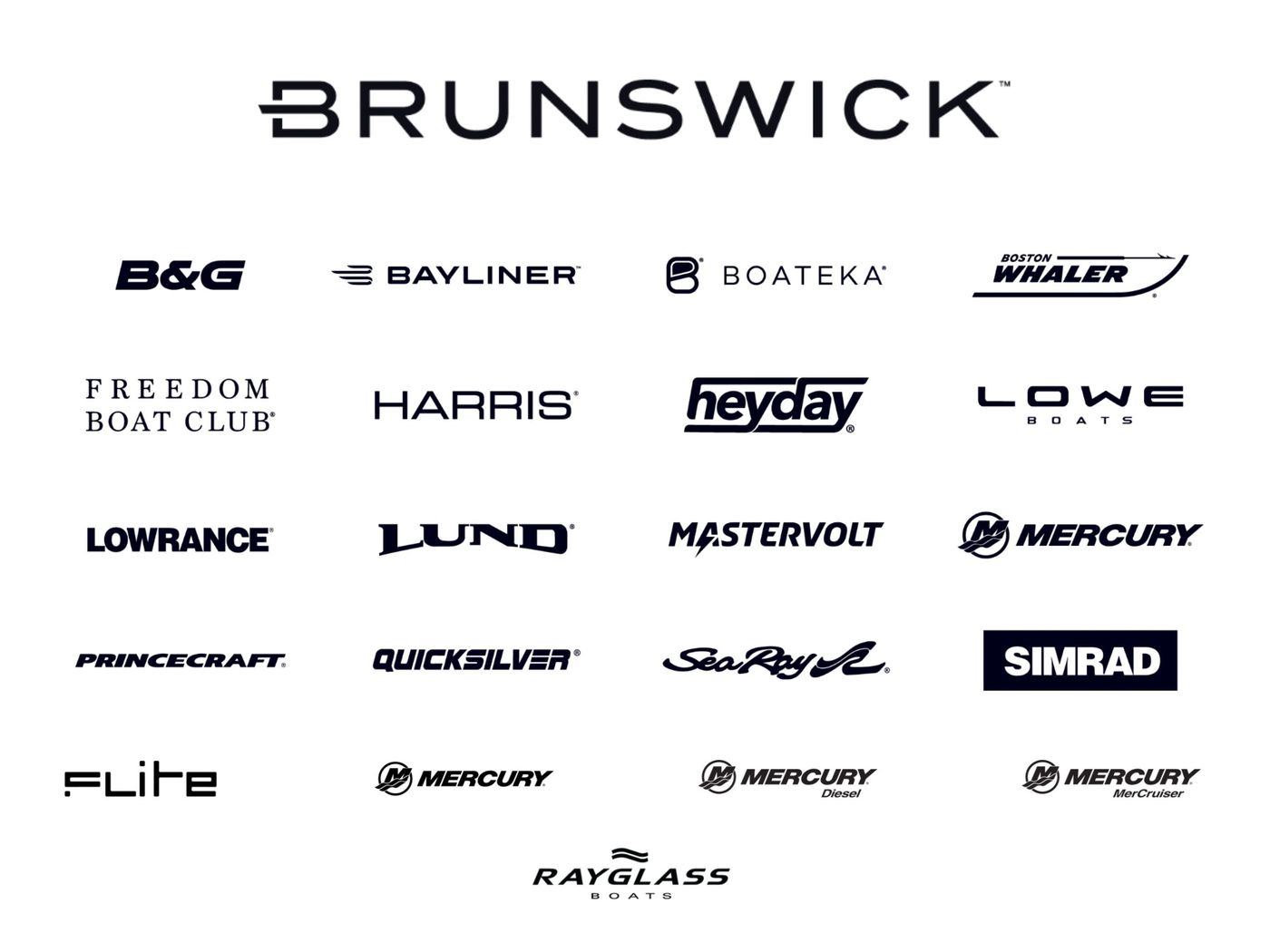
Its ownership of Navico Group brings Simrad, Lowrance, and B&G under the same corporate roof, along with charting and digital services used by both power and sailing boats. For anyone on the water in New Zealand, there is a reasonable chance the electronics aboard carry one of those names.
New Zealand boaters can access the full suite of Navico technology products through Advance Trident.
Mercury Marine sits alongside Navico within the Brunswick family, including Mercury Racing and Avator electric propulsion. On the boatbuilding side, Brunswick owns Sea Ray, Lund, Boston Whaler, and NAVAN, as well as Auckland-based Rayglass Boats. Rayglass has been part of the group since 2016, continuing to design and build in Auckland with its recognisable offshore hull forms intact, while drawing on Brunswick's propulsion and electronics resources. That connection becomes relevant whenever Brunswick talks about technology reaching production boats.
CES, the Consumer Electronics Show, places boating into the wider technology conversation rather than keeping it within the traditional boat show world. Brunswick's presence there signals an intent to be seen alongside the automotive, consumer electronics, and connected device industries, not as a niche leisure market separate from them.
CES 2026 is underway in Las Vegas, running through to Friday 9 January. Brunswick has arrived with its largest marine exhibit to date. Rather than a single headline product, the display centres on how the company's ACES framework is appearing in boats that are either already in production or close to it. ACES stands for Autonomous or Assisted, Connected, Electrified, and Shared boating. The emphasis at CES 2026 is on demonstrating how those ideas translate into hardware and software that is finding its way into real boats, not into concepts sitting behind a rope.
The centrepiece technology is Simrad AutoCaptain, shown on two vessels making significant debuts. The first is a new Sea Ray SLX, appearing publicly for the first time anywhere in the world. The second is the NAVAN C30, shown at CES for the first time. AutoCaptain is designed to assist with route planning, low-speed manoeuvring, docking, and situational awareness. It is not a hands-off autonomous system in the way that phrase is sometimes used in automotive contexts. The intent is to act as a co-pilot, taking on workload during the phases of boating that tend to be most demanding.
Brunswick is backing that message with a helm simulator on the show floor. Rather than a concept video, visitors can step up and experience assisted manoeuvring and autonomy behaviours directly, in a controlled environment.
[embed]https://youtu.be/KDcDFzAkIDY[/embed]
The new Sea Ray SLX is presented as the most technology-focused Sea Ray built to date. The helm design draws clearly from automotive influences, incorporating steering wheel integrated controls and dual Simrad NSX ultrawide displays. The point being made is not simply about screen real estate. Navigation, propulsion, and onboard systems are designed to communicate more directly with one another rather than operating as separate, overlapping layers. For the person at the helm, that should mean fewer competing interfaces and more consistent controls throughout.
Sports Marine represent Sea Ray in New Zealand.
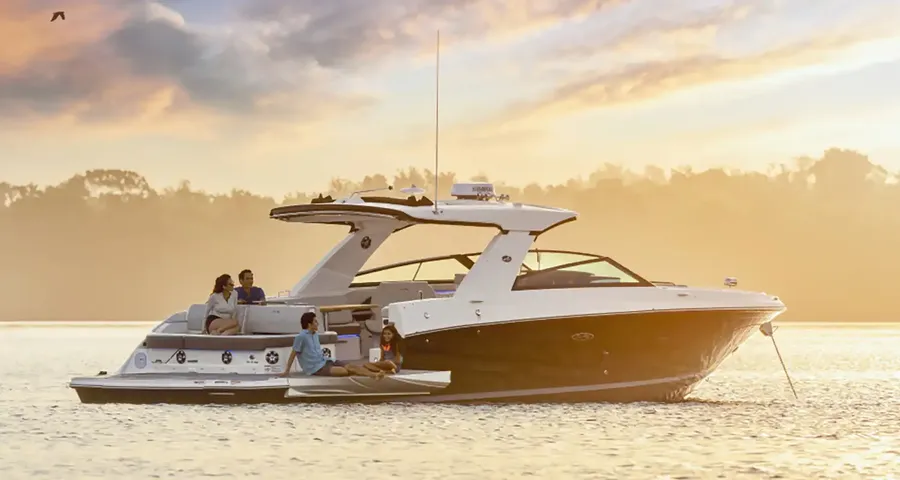
The NAVAN C30 approaches electrification from a practical rather than a performance angle. Solar panels are built into the hardtop and deck, feeding power to onboard electronics and charging a Fliteboard eFoil. The ambition is not to replace combustion engines but to manage energy more intelligently, cutting generator use and supporting onboard systems more efficiently. That kind of thinking lines up well with how many owners actually use their boats, particularly when anchored or spending time away from a marina. The NAVAN C30 also reflects a broader design direction across Brunswick brands, with cleaner layouts, clearer interfaces, and a consistent focus on reducing rather than adding complexity at the helm.
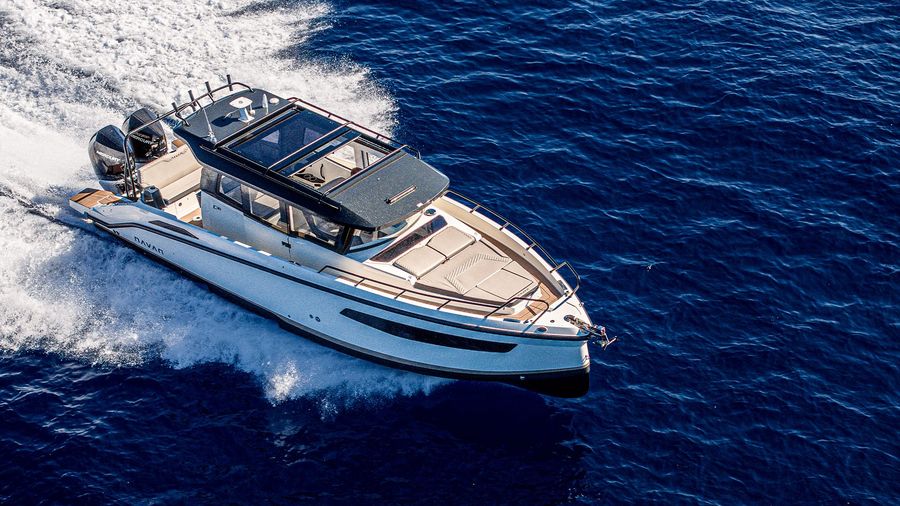
Talk to Sports Marine in New Zealand about the NAVAN C30. We understand that if you want to see one in person, they can make it happen.
At the performance end of the electrification story is FLITE RACE, developed with Mercury Racing. With speeds of up to 34 mph, this sits well outside casual recreation and into genuine performance territory. It is a niche product, but it makes a point worth making: electrification is being applied as a performance tool, not solely as an efficiency measure.
[embed]https://cdn.shopify.com/videos/c/o/v/039b4ffdc45e4481bd7e5c1cf70f052f.mp4[/embed]
Brunswick has also brought freshwater fishing into the CES environment through the Lund Crossover XS. The setup combines a Mercury Racing 150R outboard, a Mercury Avator 35e electric kicker, and a Lowrance Recon trolling motor. Mixed propulsion is not a new concept for serious anglers, and this combination reflects how fishing boats are already being used in practice: combustion power for getting there, electric motors for precision control, and digital systems managing positioning and station keeping.
Strip away the trade show presentation and the underlying message from Brunswick at CES 2026 is fairly clear. Fully autonomous boats are not arriving tomorrow. What is arriving are better assistance systems, more coherent interfaces, and technology designed to reduce workload rather than compound it.
For New Zealand boaters, there is genuine relevance here. Many of the technologies on display at CES already sit within brands found in this country. Rayglass hulls, Mercury propulsion, and Simrad electronics are all part of the same corporate family doing the demonstrating. Brunswick's CES 2026 showing is less a preview of some distant future and more a picture of how modern boats are being shaped right now.