Candela’s modelling suggests a pair of its electric ferries could lower a resort route’s annual running costs by up to 42 percent. The same boats could avoid more than 26,000 tonnes of CO₂ over 15 years, if the projections hold up in regular service. Fiji has now signed an agreement with the Swedish manufacturer to find out.
The MoU covers a fleet of the company’s P 12 vessels, proposed to operate between Nadi, Denarau and the Mamanuca and Yasawa outer islands from mid 2027.
What’s actually being deployed
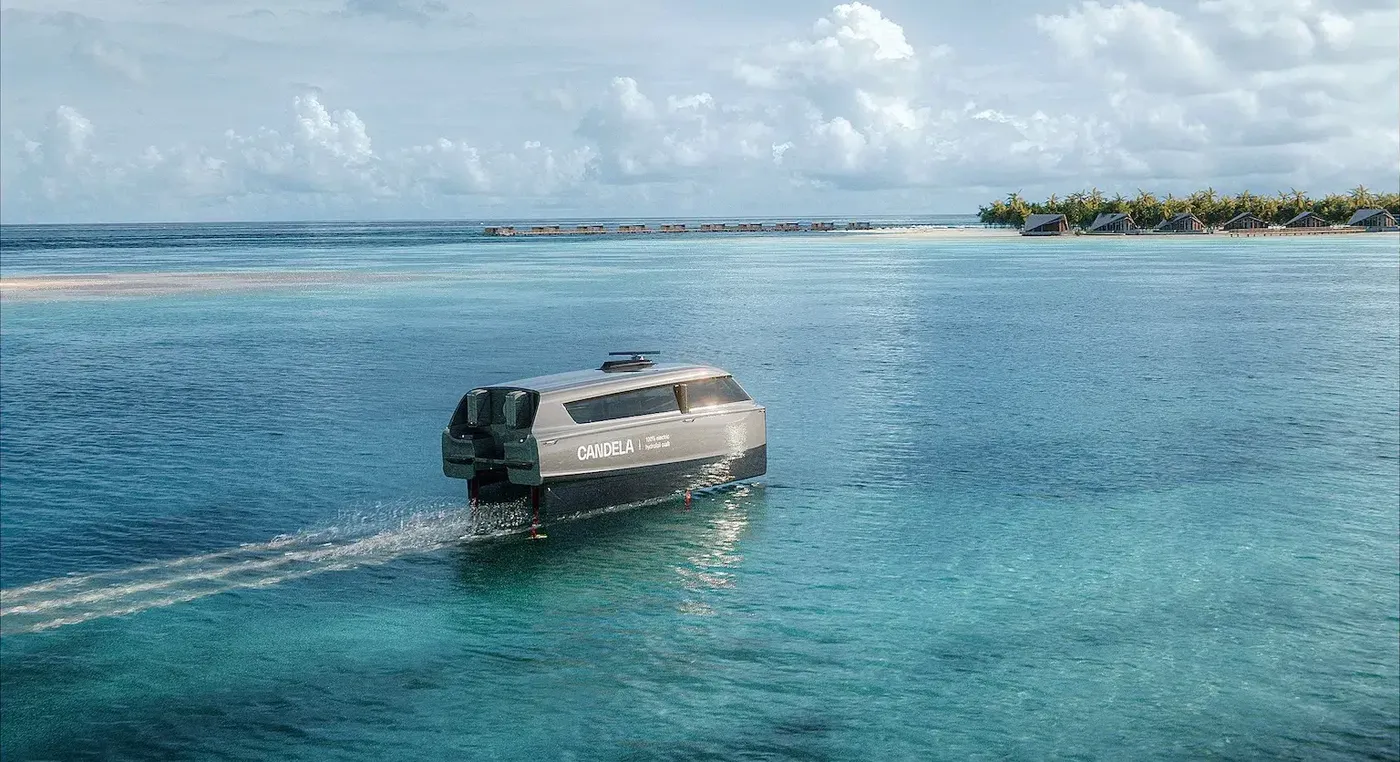
The P 12 Shuttle rises onto a pair of computer stabilised underwater wings once it reaches cruising speed, lifting its 12 metre hull clear of the surface. Candela own testing says this cuts power consumption by roughly four fifths compared with a diesel fast boat of similar size.
In Shuttle configuration, it carries 30 passengers and a skipper, with a cruising speed of 25 knots and a range of 40 nautical miles per charge. The MoU does not detail which stops within the Mamanuca and Yasawa groups fall inside that range. Nor does it say where charging or a change of vessel might be needed farther out.
The 378kWh battery recharges from 10 to 85 percent in under an hour using a standard DC fast charger. This avoids some of the heavier marine charging infrastructure that has slowed electric ferry projects elsewhere. A hinged bow ramp adjusts to wharves between 0.3 and 1.9 metres high, allowing the boat to use existing island jetties.
The ride is markedly different from a conventional transfer boat. Hydrofoiling sharply reduces wake, while the electric drivetrain removes the diesel noise and fumes familiar to passengers on existing services.
Why now
Fiji’s tourism economy runs on inter island transport, and the fuel powering those boats is imported. That leaves the sector exposed to changing international fuel prices, a point Candela raises directly in its commentary on Fiji’s fuel situation.
Between three and five P 12s would initially operate from Nadi and Denarau to the islands, replacing diesel boats on selected services. The MoU leaves room for a larger fleet if the first stage goes to plan.
Who does what
The service will operate under a new local brand, VukaWaqa.
Green Pacific Shipping will own the vessels and finance the operation. Sea Fiji, an established local operator, will run the service, employ local crews and look after passengers.
Candela will supply the vessels and train crews and technicians. It will also help establish local maintenance capability, so routine work can be handled in Fiji.
Charging plans still to be worked out
The MoU commits both parties to investigating renewable charging options, with floating solar identified as one possibility. More work is needed to establish whether that will be practical. It is not yet a confirmed part of the rollout.
This project establishes an interesting case study for the Pacific Islands. Whether the Fiji deployment delivers the savings projected in Candela’s case study will depend on the routes chosen, the charging arrangements and how the boats perform in Mamanuca and Yasawa water.
Candela’s foiling ferries already carry public transport passengers in Stockholm. Further projects have been announced in the Maldives, Mumbai and Norway.