When James Murray took Callisto to the start line of the Sydney to Hobart, winning line honours was never part of the conversation. His goal was simpler and, ultimately, more rewarding: sail the race the boat was designed for, make sound decisions, and protect the platform throughout. That measured philosophy returned an eighth-place finish across the line and first place in IRC Division One on corrected time against a fleet packed with TP52s.
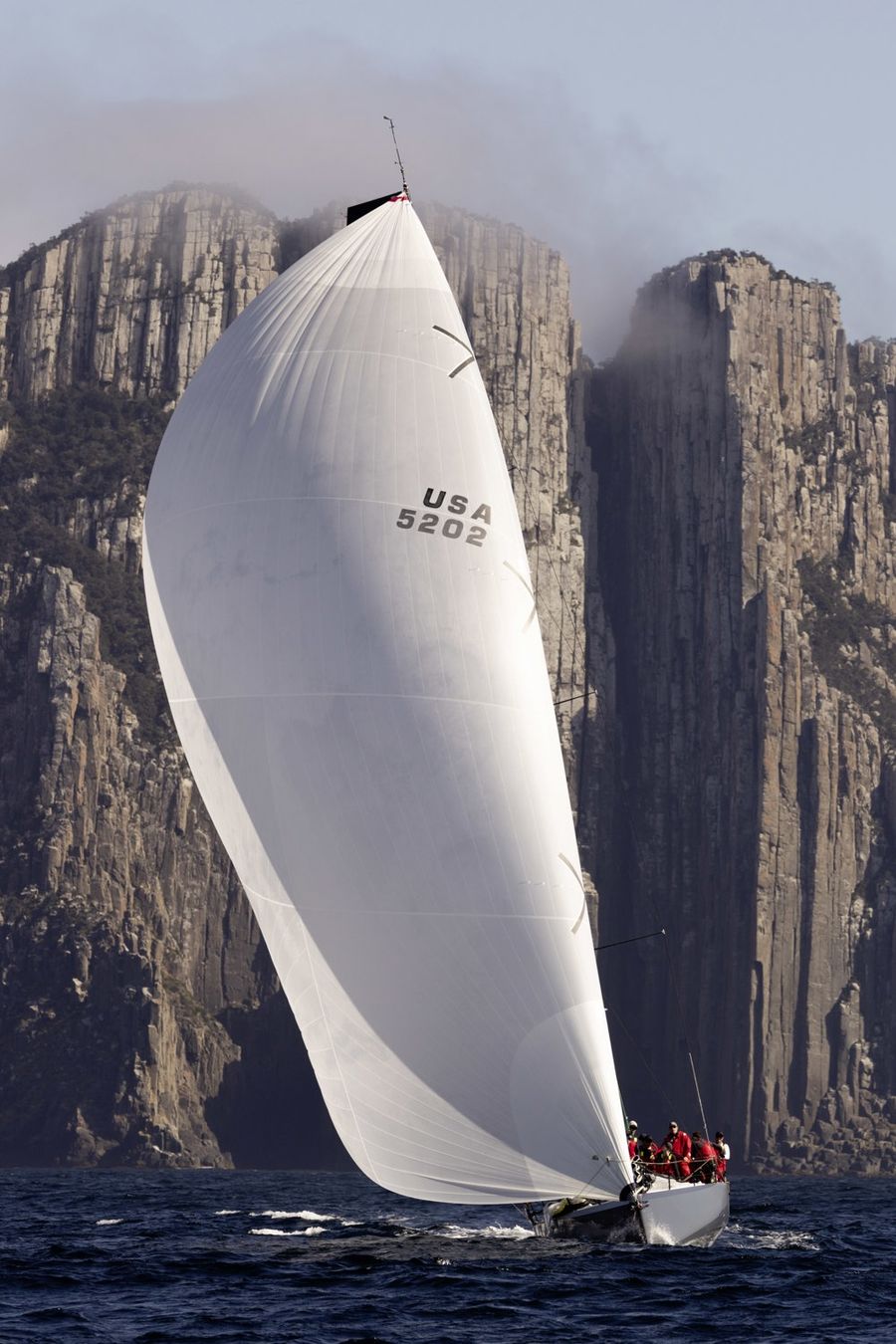
Murray describes the passage south not as a series of discrete challenges but as sustained, unrelenting pressure from the moment the fleet turned down the coast.
"There really weren't any easy phases," he said. "Once we turned south, it stayed physical. That's when preparation and discipline matter more than anything else."
In a race that saw roughly a quarter of the fleet retire, most through boat damage or crew illness and injury, Callisto crossed the finish line with crew, sails, and structure all intact. Water ingress below was negligible, amounting by Murray's estimation to one or two buckets per six-hourly watch cycle, cleared routinely from the bilges and pockets below. By the standards of his previous offshore campaigns, it was a notably dry passage.
"The boat lived exactly as we expected," he said. "That's a credit to the design, the preparation, and the way the crew sailed her."
“We walked a very fine line between performance and preservation,” Murray said. “The goal was to sail hard, but never past the point where you start trading safety or the boat itself for a few extra miles.”
A recurring theme throughout Murray's account of the race is a healthy scepticism toward weather routing. He is direct about the limits of modern forecasting models when applied to offshore racing, where conditions can diverge sharply from what the screens suggest.
"There's a belief that forecasts are precise and authoritative," he said. "They're not. Once you get beyond real time, confidence drops quickly. A day out is uncertain. Three days out, it's basically guesswork."
Rather than treating modelled routing as instruction, the crew established clear risk thresholds before leaving Sydney. When conditions pushed toward those boundaries, they pulled back rather than pressing on into rougher water offshore.
"We got to about eighty-five or ninety percent of our comfort level, then tacked back toward flatter water," Murray said. "Could we have pushed harder offshore? Probably. But what are you gaining for that risk?"
In a handicap contest decided on corrected time, that conservative discipline proved to be the winning call.
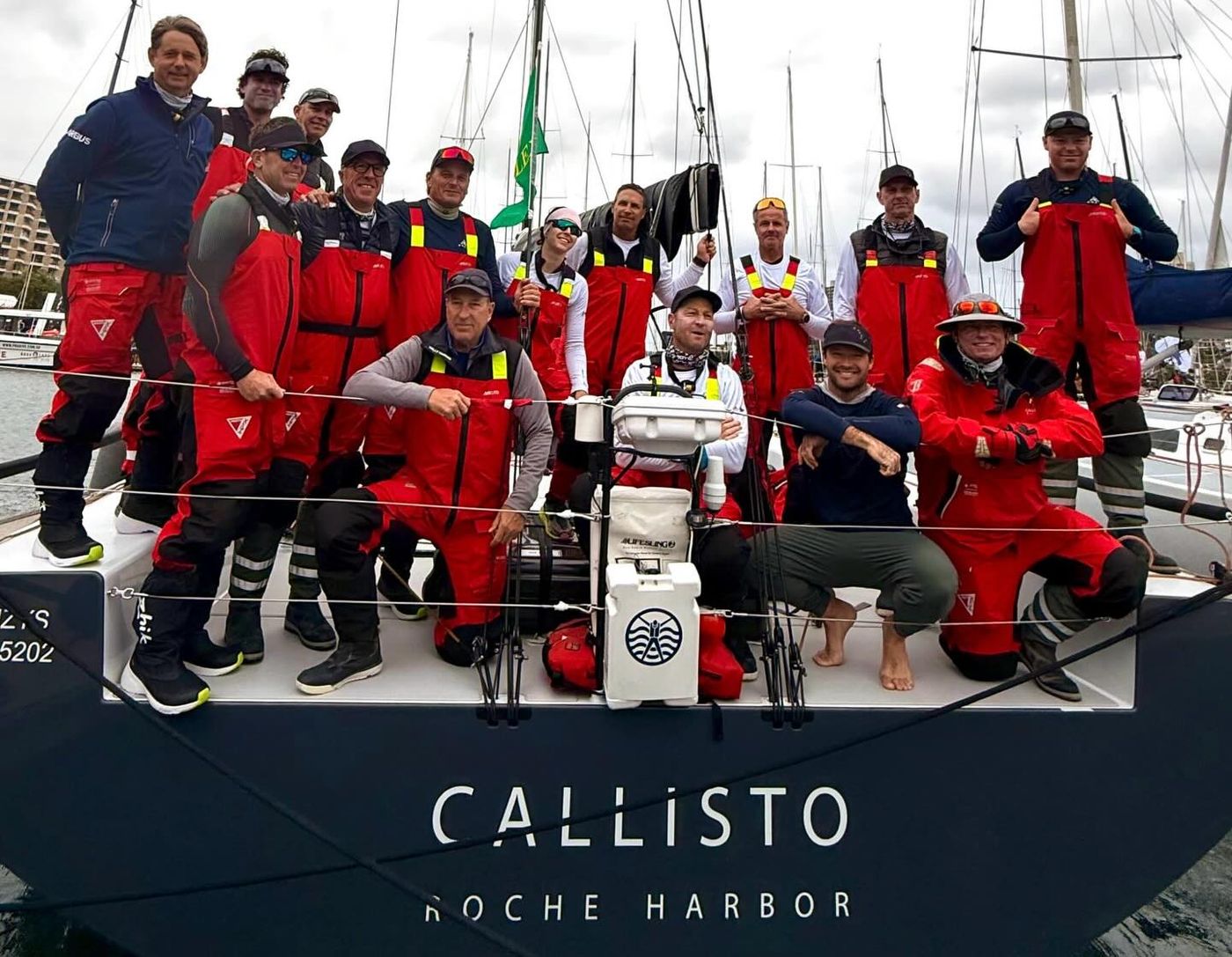
The crew Murray assembled drew heavily on New Zealand offshore and America's Cup experience. Dean Barker served as tactician, Stu Bannatyne as strategist, and Jared Henderson managed the pit. Justin Ferris, who both designed and built the Doyle Sails inventory carried aboard, rounded out the core group.
Murray places particular weight on Henderson's contribution in the pit role.
“If your job is preventing chaos, that’s the position,” he said. “Jared helps us execute the hardest manoeuvres cleanly, and under pressure.”
Ferris's involvement went well beyond sail trimming. Having personally constructed every sail in the inventory, his knowledge gave Callisto an advantage that is difficult to replicate.
"Justin didn't just design the sails, he built them," Murray said. "He knows them inside out, and he's constantly refining. That depth of knowledge matters offshore."
Together, the group brought decades of accumulated experience, allowing the boat to be sailed close to its potential without ever being pushed beyond what the conditions warranted.
Murray is candid about the nature of success in offshore handicap racing.
"We were never going to win line honours," he said. "That was never the goal. In offshore handicap racing, the best you can do is win your division. Everything else depends on the wind mix."
By that measure, Callisto delivered precisely what was asked of it. Eighth across the line, fastest finisher under 60 feet, and first in IRC Division One, it was a result earned through sound strategy and consistency.
With Hobart behind them, the delivery back across the Tasman to Auckland will be handled by a mixed crew that includes Murray's niece, Isabel Dixon, a college sailor at Maine Maritime Academy for whom it will be a first Tasman crossing. Murray admits to a degree of envy at missing it.
Once Callisto arrives home, the boat will be hauled out and given what Murray affectionately calls a "spa treatment".
"She needs to be stripped down, inspected, and reset properly," he said. "No rushing. That's how you keep a programme healthy."
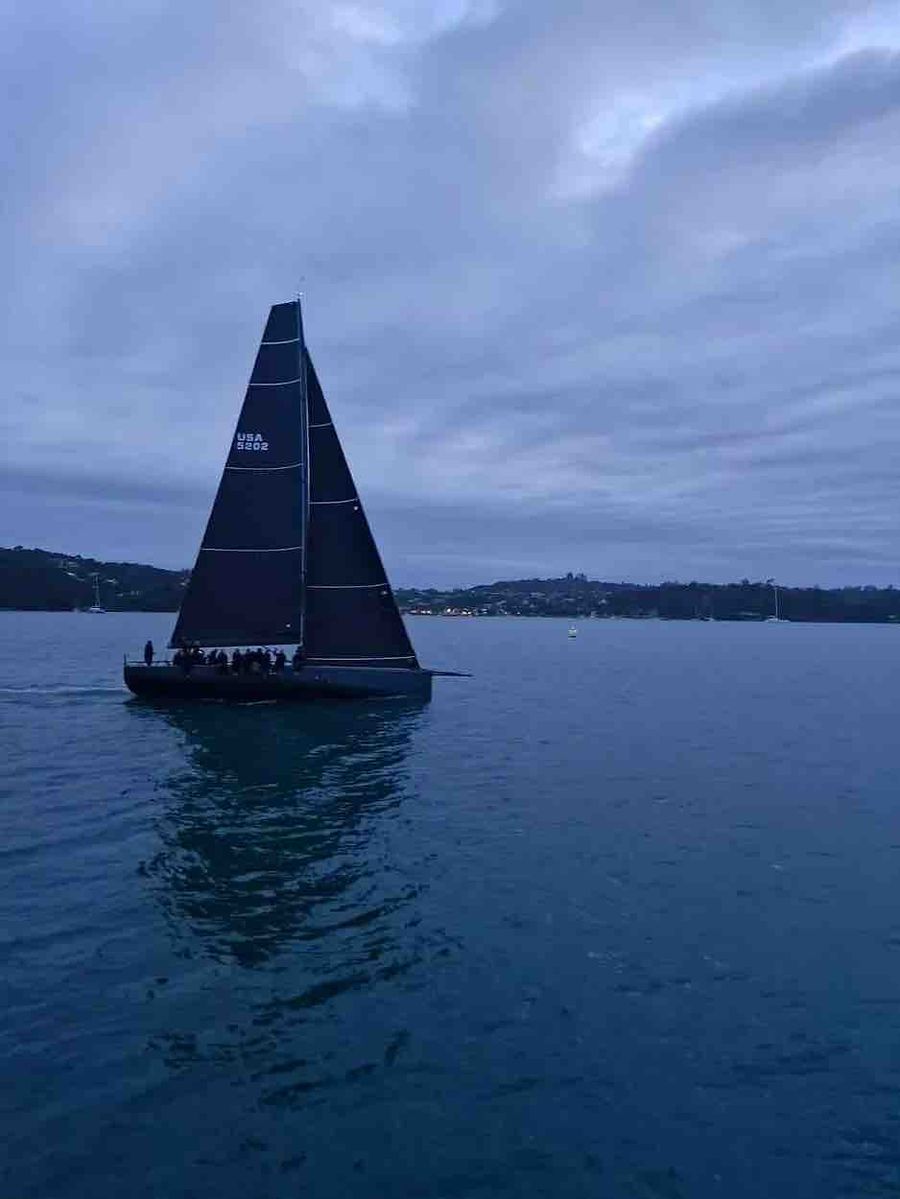
The plan is to lay the boat up in Auckland through winter before bringing her back to the water ahead of the 2026 New Zealand season, with a confirmed return to the PIC Coastal Classic already in the calendar.
While Callisto rests up, Murray will head back to the United States to begin a J70 Worlds campaign, working through the Bacardi Series in Florida before the programme moves to Europe later in the year. It is the kind of multi-layered schedule that reflects his broader view of what competitive sailing requires.
"You're building teams, systems, and judgement over time," he said. "That's what lasts."
The Sydney to Hobart was hard on boats and crews alike. Callisto's campaign showed that restraint, preparation, and clear-eyed decision-making can carry a programme further than raw aggression, and that in offshore racing, the quiet approach often ends up having the final say.