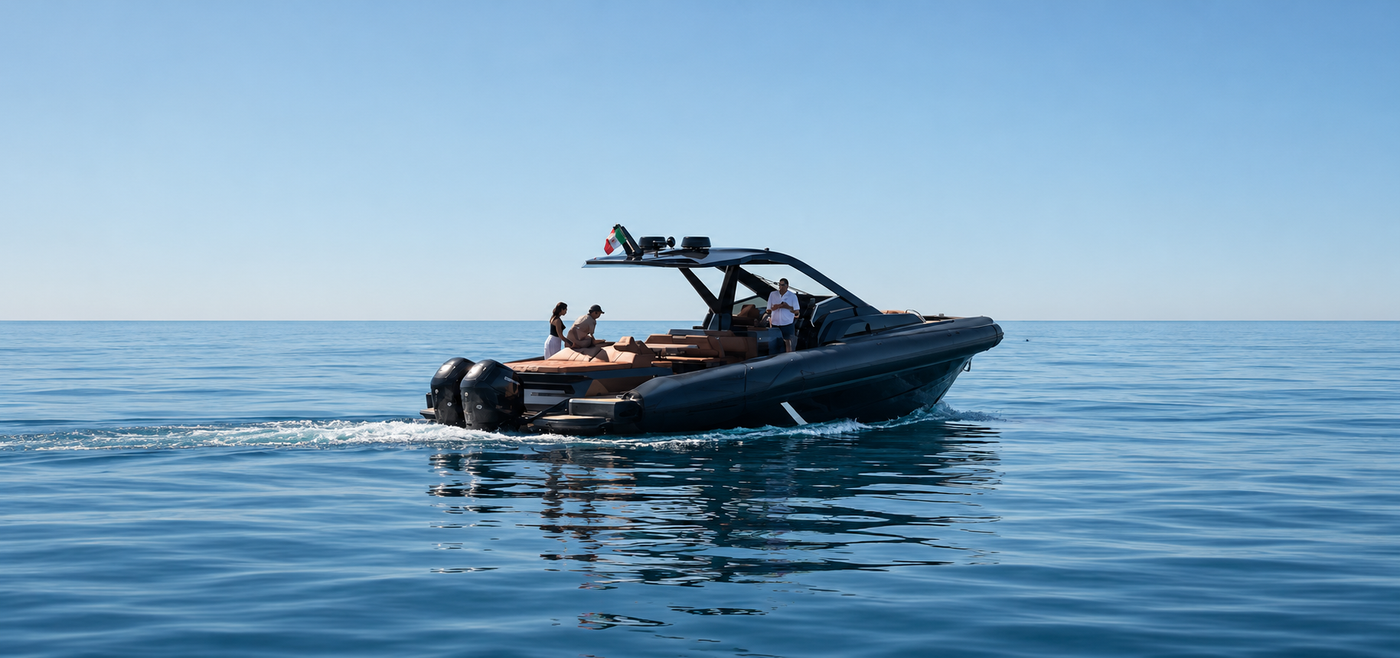
Italian boatbuilder Callegari is back with a 14.94 metre carbon fibre maxi RIB, drawing on aerospace manufacturing experience for its construction.
Italian boatbuilder Callegari has returned to the water with the Callegari 48, a carbon fibre maxi RIB built with technology borrowed from the aerospace industry. Behind the relaunch is the Recchia group, which also owns Aviorec, an Italian specialist in aerospace composite components.
That connection has given Callegari access to manufacturing techniques more commonly associated with aircraft components. The company is applying them to a substantial luxury RIB, designed for private cruising and superyacht support duties.
The 48 was first presented in Rome in June 2026, before making appearances at Cannes and Monaco. By the time it reached the Monaco Yacht Show, Callegari was talking about broader production ambitions and a range of smaller RIBs to follow.
Aerospace manufacturing meets boat building
Carbon fibre is nothing new in high-performance boatbuilding, but Callegari is taking a particularly thorough approach to how its structures are manufactured, bonded and inspected. The company says it infuses the hull and structural reinforcements together, rather than producing them separately and joining them later. The composite structures then undergo controlled post curing, where heat helps the resin achieve its intended properties.
The attention to detail continues throughout construction. CNC manufactured moulds and aerospace adhesives form part of the process, while load cells allow the team to monitor weight as the boat takes shape. Callegari also uses ultrasound and thermographic inspections to check for potential defects within the composite structures without cutting into them.
The aim is greater consistency in construction, with tighter control over structural quality and weight. Whether that translates into a measurable advantage over comparable RIBs remains to be established, as independent comparative figures have yet to be published.
Sales manager Giampaolo Capponi told Press Mare in October that the hull, deck and hardtop together weigh approximately 3,500kg. That figure covers the main composite structures, rather than the complete boat, and provides some context for Callegari's emphasis on weight control during construction.
The Callegari 48 is built for more than a day out
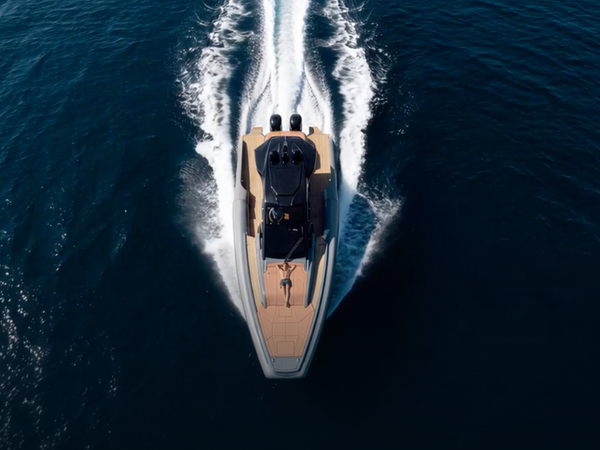
At 14.94 metres long and with a beam of 4.80 metres, the Callegari 48 offers plenty of room for both entertaining and extended cruising. Exterior designer Lorenzo Guadagnucci has made good use of the space, with generous lounging areas, a sheltered helm and an open cockpit where guests can spread out comfortably.
The accommodation is equally important to the boat's intended role. Interior architect Francesca Rubbi has designed a layout with two cabins, four berths and a bathroom with a separate shower, giving owners the option of spending weekends aboard without relying on shore facilities.
That same layout also suits the superyacht market, where chase boats are often expected to do considerably more than ferry guests ashore. They might be used for exploring bays, carrying passengers between anchorages or supporting watersports, while the cabins provide accommodation for a captain and crew when required.
It's this flexibility that Callegari is hoping will appeal to both private owners looking for a comfortable, fast cruiser and superyacht operators needing a versatile support boat.
Twin engines and some serious speed
Buyers have a choice of twin Mercury Verado 600 outboards, producing a combined 1,200hp, or twin Volvo Penta D6 480 diesel inboards. With the outboards fitted, Callegari quotes a maximum speed of 50 knots and a cruising speed of 30 to 34 knots, giving the 48 plenty of pace for coastal cruising or superyacht chase boat duties.
The manufacturer lists a dry weight, including standard engines, of 10.5 tonnes for the outboard version and 11.2 tonnes for the inboard model. Those figures give some idea of the finished boat's weight, although fuel, water, passengers and equipment will add to the displacement when underway.
For owners weighing up the two propulsion options, fuel consumption and cruising range will be important considerations, particularly if the boat is intended for longer passages or regular support duties. Detailed sea trial figures would also help establish whether Callegari's carbon fibre construction delivers a measurable efficiency advantage on the water.
An Italian comeback with bigger plans
Production is centred on Anagni, in central Italy, where Callegari has been developing a former automotive industrial facility. Earlier reporting described a site exceeding 10,000 square metres, intended to support the company's new composite manufacturing operation.
The 48 is the first substantial result of that investment, with smaller RIBs also planned as the range develops.
Capponi expects four Callegari 48s to be sold and afloat during 2027. It's a modest initial target for a company rebuilding its position in the market, particularly with a boat that requires specialised construction and sits firmly in the luxury category.
For now, the 48 offers an interesting combination of Italian design, substantial accommodation and manufacturing experience from outside the marine industry. The appeal of a fast, comfortable maxi RIB is easy enough to understand. What remains to be seen is how much difference those aerospace construction methods make once the boats begin accumulating hours at sea.
More information is available on the official Callegari 48 model page.