
Summer meals in the cockpit and the pleasure of something good cooking below decks are central to New Zealand boating. Gas makes that possible, and on most boats it is simply part of daily life at anchor or underway. That ease comes with a responsibility, though, that deserves more attention than it often receives.
LPG behaves differently from gases lighter than air. Because it is heavier, any leak sends it downward, where it collects in bilges and low spaces and can sit undetected for a dangerously long time. The risk is real, but it is manageable with the right systems and the right habits.
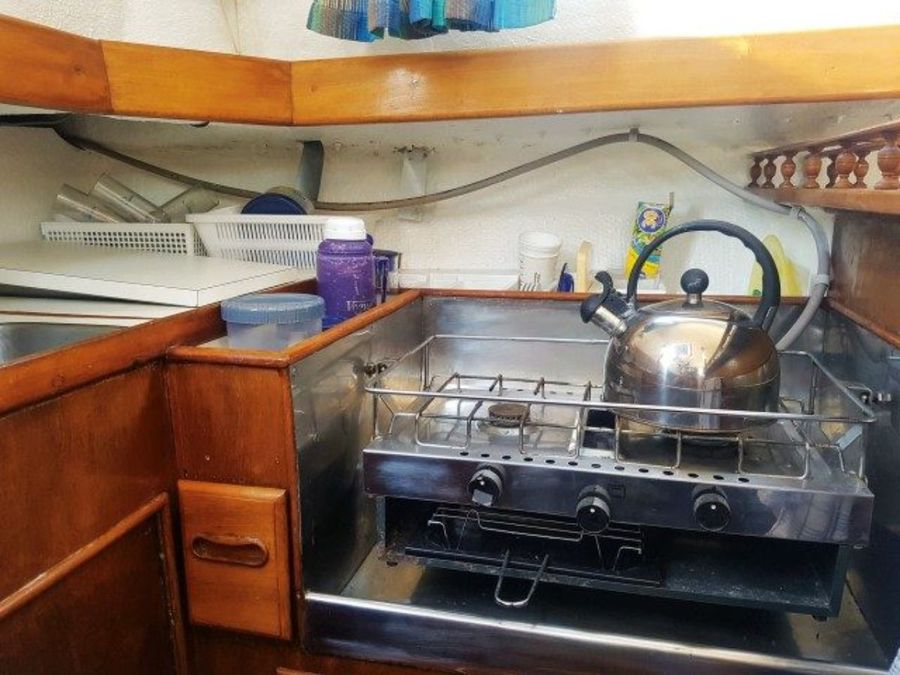
Serious gas incidents rarely begin with a dramatic component failure. Most trace back to something quieter: a hose that has aged past its safe life, a regulator slowly corroding around its fittings, a locker drain that became blocked without anyone noticing, or small habits that slipped over successive seasons. Treating gas safety as basic seamanship, something a competent skipper keeps on top of in the same way they tend to the engine or the electrical system, is the right approach.
Safe storage is where everything begins. Gas bottles must be stored upright inside a dedicated locker that is fully sealed from the rest of the boat and drains directly overboard. That drain must sit above the waterline and must be kept clear. A simple hose test at the start of each season confirms it is doing its job. Spare cylinders need to be treated identically to the one in use: secured upright, protected from impact, and never stowed below deck.
Where a boat has no purpose-built gas locker, deck storage can be acceptable provided it is done properly. Bottles need to be held in purpose-made holders, shielded from impact, and positioned so that any escaping gas cannot find its way into the cabin through vents or other openings. Adjustable and fixed gas bottle holders are available to suit common cylinder sizes including 2 kg, 4 kg, 5 kg, and 9 kg LPG bottles. Good holders restrain the cylinder firmly, allow airflow around the bottle and its base, and help prevent both corrosion and gas pooling.
A gas locker is only as effective as its condition. It must remain airtight from the boat's interior so that leaking gas has no path inward, only outward through the drain. A blocked or kinked drain hose undermines the entire arrangement and can allow gas to migrate unseen into the hull. Lockers should be kept free of unrelated gear such as ropes, tools, and spare parts, all of which trap moisture and obstruct drains. Locker bases, particularly in steel or alloy installations, should be inspected for corrosion and dealt with before the problem deepens.
Gas cylinders must be within their test date and compliant with New Zealand testing requirements. Beyond the bottles themselves, hoses and regulators deserve close attention. Marine LPG hoses operate in a punishing environment: heat, salt air, and constant movement all accelerate deterioration, and much of that deterioration happens internally where it cannot be seen from the outside. Regulators are similarly vulnerable, especially around vents and fittings where corrosion takes hold. Marine-approved hose assemblies and regulators designed for LPG systems and compatible with standard marine bottle fittings are the appropriate choice. Flexible hoses should be replaced on a set schedule regardless of appearance, routed carefully to avoid chafe and tight bends. When there is any doubt about a hose, replacement is quicker, cheaper, and safer than attempting to diagnose the problem later.
Gas alarms are one of the most practical safety upgrades available for a boat. Because LPG sinks, the sensor needs to be positioned low in the vessel where gas will accumulate first. An audible alarm provides warning well before any dangerous concentration builds up. Many skippers pair alarms with a solenoid shut-off system, which allows gas to be isolated immediately either by a switch near the galley or automatically when the alarm triggers. This is particularly worthwhile on boats where the gas locker is difficult to reach when underway. Solenoid valves and control panels suited to 12-volt marine systems are available, as are combined regulator and solenoid kits for new installations or refits.
Beyond the equipment, gas safety depends on consistent routine. Clear labelling of shut-off valves, straightforward reminders near the galley, and repeatable skipper procedures all matter, especially when guests or family are aboard and assumptions cannot be made about what anyone else knows. The aim is not to add more rules but to remove the conditions in which assumptions get made.
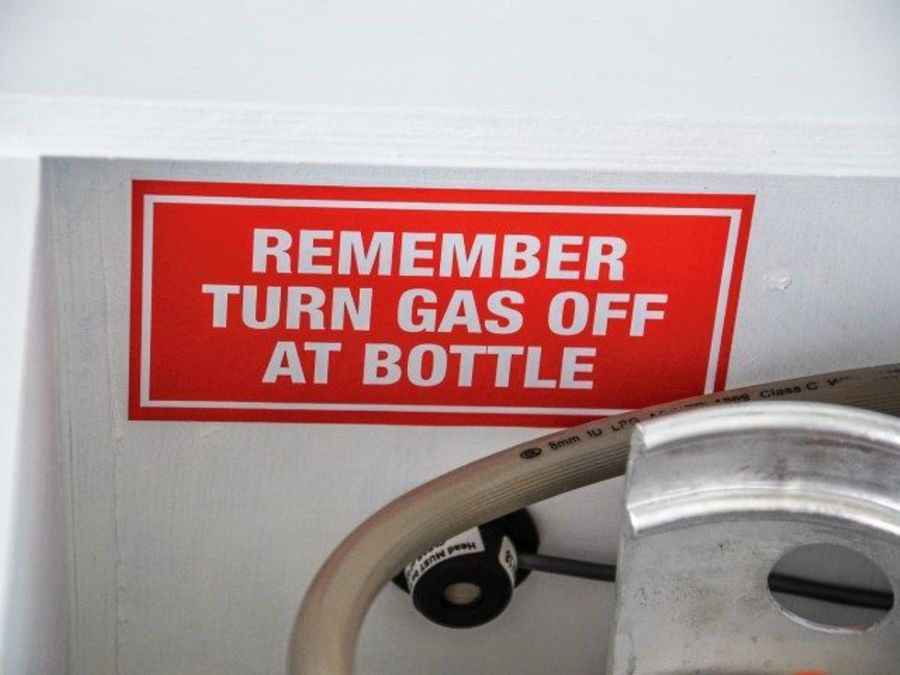
Gas systems should receive the same scheduled attention as engines and electrical equipment. Many installations on New Zealand boats have drifted behind current standards simply because no one has examined them closely in years. Permanent gas installations on boats constitute high-risk work in New Zealand. Any installation or modification must comply with AS/NZS 5601.2 and be carried out by a licensed gasfitter. That certification matters for both safety and insurance cover. Even fully certified systems benefit from periodic professional inspection, particularly following refits or changes to the boat's layout.
Before each season begins, a focused gas check should cover the following: the test date and physical condition of the bottle; secure upright mounting of all cylinders including any spares; confirmation that the locker drain is clear and above the waterline; the condition, routing, and age of all hoses; the condition of the regulator and any signs of corrosion; correct operation of the gas alarm and appropriate sensor placement; and that all shut-off valves are clearly labelled and easy to reach. None of this takes long, and working through it consistently prevents the majority of gas-related incidents before they have a chance to develop.