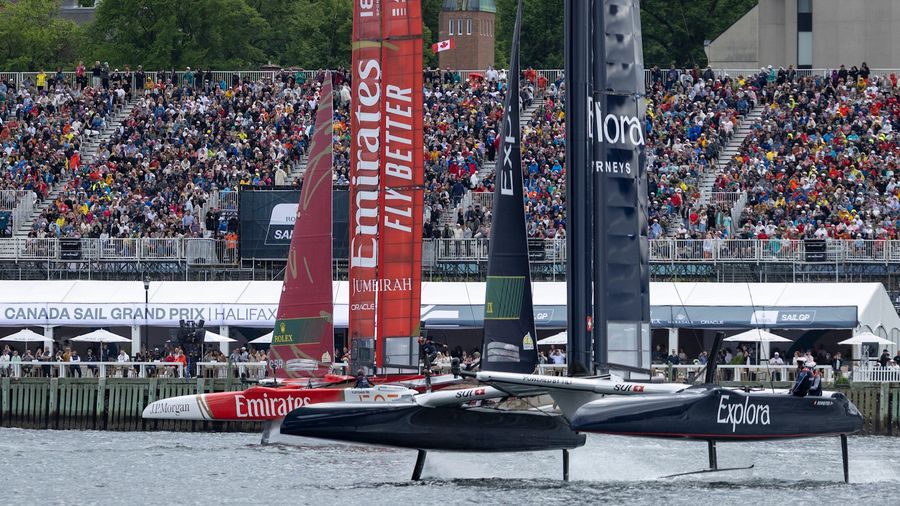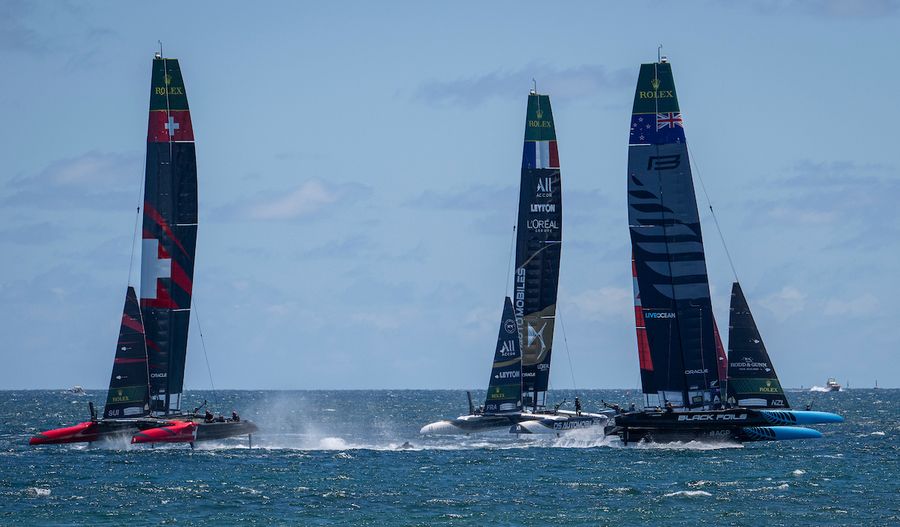
Perth's Swan River has a way of exposing hesitation. The Fremantle Doctor comes in strong and steady, but the water beneath stays choppy and unsettled, and that combination makes gate approaches feel far more compressed than any tracker screen suggests. Boats arrive fast, angles converge quickly, and the margin for error narrows well before drivers would prefer it to.
Race 1 was already running hot before anything went wrong. Australia had pulled clear at the front, the chasing pack was bunched, and the first real sorting of the fleet was underway. Gate 2 was where it happened, boats arriving at speed on crossing angles, with drivers weighing distance, leverage, and the uncomfortable third option of simply staying out of trouble.
New Zealand and Switzerland ran out of room at the same moment.
The collision itself was sharp and immediate. Switzerland were on starboard, New Zealand on port, and the closing speeds left no time for correction. Both F50s came to an abrupt stop, debris settled on the water, and both crews turned their attention to stabilising the boats and making sure everyone around them was accounted for.
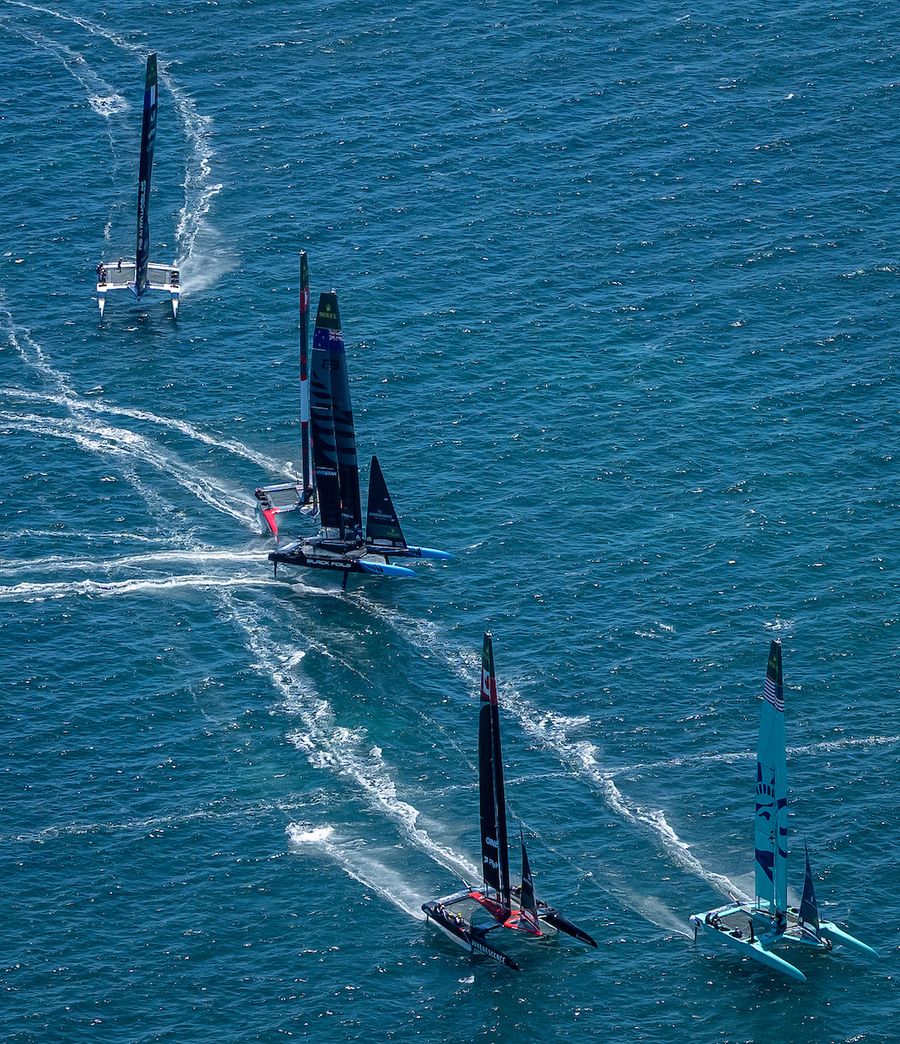
Pete Burling was thrown hard inside the cockpit, and footage of that moment cut through in a way that pure speed rarely does. It was not dramatic in the theatrical sense. It was real, the kind of sudden, unannounced load that a foiling platform transfers when it contacts something solid, and that reality is what made it land.
The umpires did not deliberate long. Switzerland held right-of-way on starboard, New Zealand on port failed to keep clear, and the result was a disqualification for the Black Foils. Switzerland, despite being the stand-on vessel, had sustained enough damage to retire as well, which meant both teams left Race 1 without a point between them. The rules side of this was straightforward. The consequences for both campaigns were anything but.
For New Zealand, the opening race of the year had been designed to do what opening races are supposed to do, establish a baseline, find a rhythm, and put something on the board. A zero does none of that. It simply adds pressure to everything that follows.
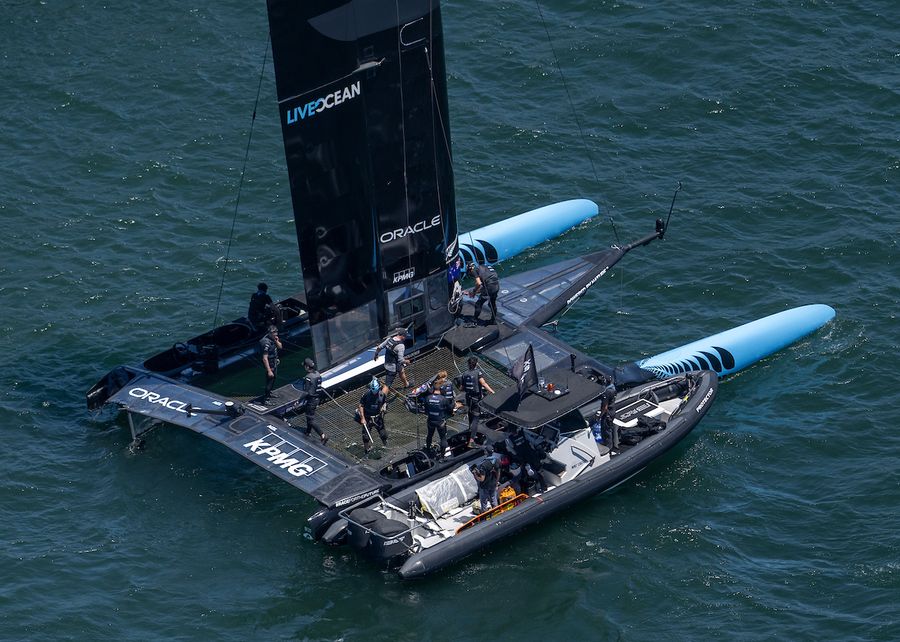
The collision also shifted the mood across the fleet for the remainder of the day. SailGP functions best when teams trust each other to push the boundaries without breaching them, and once that trust is interrupted, the collective risk appetite tends to recalibrate. Gate approaches after Race 1 were noticeably more measured. Crossings were given wider margins. Drivers allowed more space in the areas of the course where chop, opposing traffic, and boundary pressure combine into the most demanding environment the circuit offers, particularly the bottom gates. The racing stayed fast, but the willingness to test the thinnest margins pulled back, because the fleet had just been reminded that an F50 does not require a major impact to end a race, or a weekend.
For the Black Foils, the immediate concerns were physical, damage assessment, repairs, and whatever racing time was lost in the process. The deeper concern is mathematical. SailGP's points structure rewards consistency across a full event, and a zero at race one forces the arithmetic into uncomfortable territory. Reaching the Sunday final requires cumulative results, not individual performances that almost came together. That pressure, the kind that demands results quickly, is also the kind that tends to generate errors, particularly in a venue where the breeze is reliable but the course stays tight and unforgiving.
[video width="960" height="540" mp4="
New Zealand finished third overall last season, which is genuine evidence of where the Black Foils sit in the competitive order. The speed is there. The systems are there. Perth, though, has opened their year by posing a harder question than results alone can answer. Whether the team can absorb an early, costly setback and rebuild composure and points across the rest of the event is now the story the weekend is telling about them.
Nobody arrives at a SailGP event hoping to watch boats collide. Even so, incidents like the Gate 2 crash at Race 1 sit inside the honest reality of what this sport involves. These machines travel at speeds that make contact extremely consequential, sailed in close quarters, generating loads that are difficult to fully appreciate until something stops without warning. What mattered in the aftermath was that safety systems held, crews were accounted for, and the response from officials and teams alike was immediate and thorough.
Perth's opening day will be defined, in the wider telling, by Australia's win. For those following New Zealand, it will be defined by a decision at Gate 2 that arrived just a moment too late to be undone.