The third leg of The Ocean Race Europe had barely found its rhythm before the first real contest broke out up front. By midday, Biotherm (FRA) and Holcim-PRB (SUI) were separated by little more than a mile north of Ibiza, trading tacks in the unpredictable Mediterranean conditions as both crews fought to assert control.
Paul Meilhat's Biotherm has been the benchmark of the fleet so far, and the team added to their unblemished record at the Cabo de Palos gate the previous evening, picking up two more points. Co-skipper Amélie Grassi made no secret of the crew's satisfaction. "We had some good speed, so yes, two more points at the scoring gate. We are really happy with that," she said.
[gallery td_select_gallery_slide="slide" ids="152896,152897"]
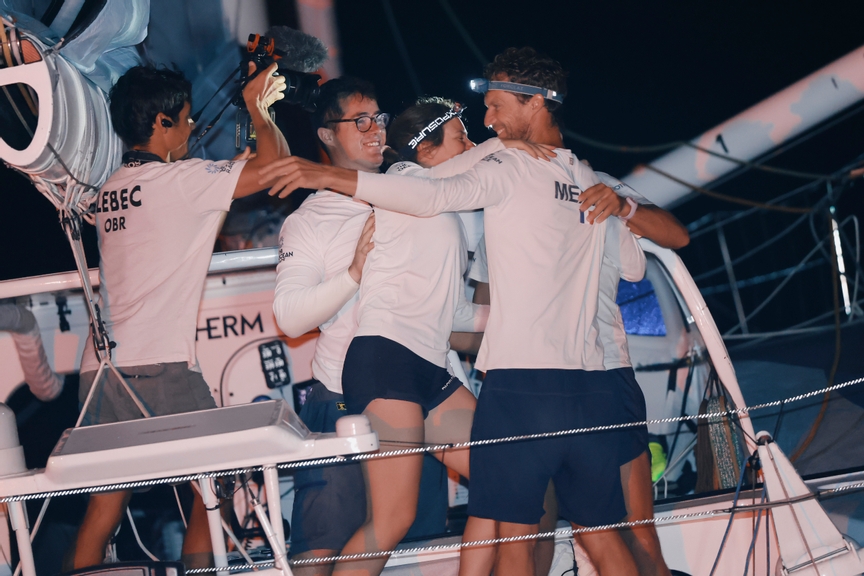
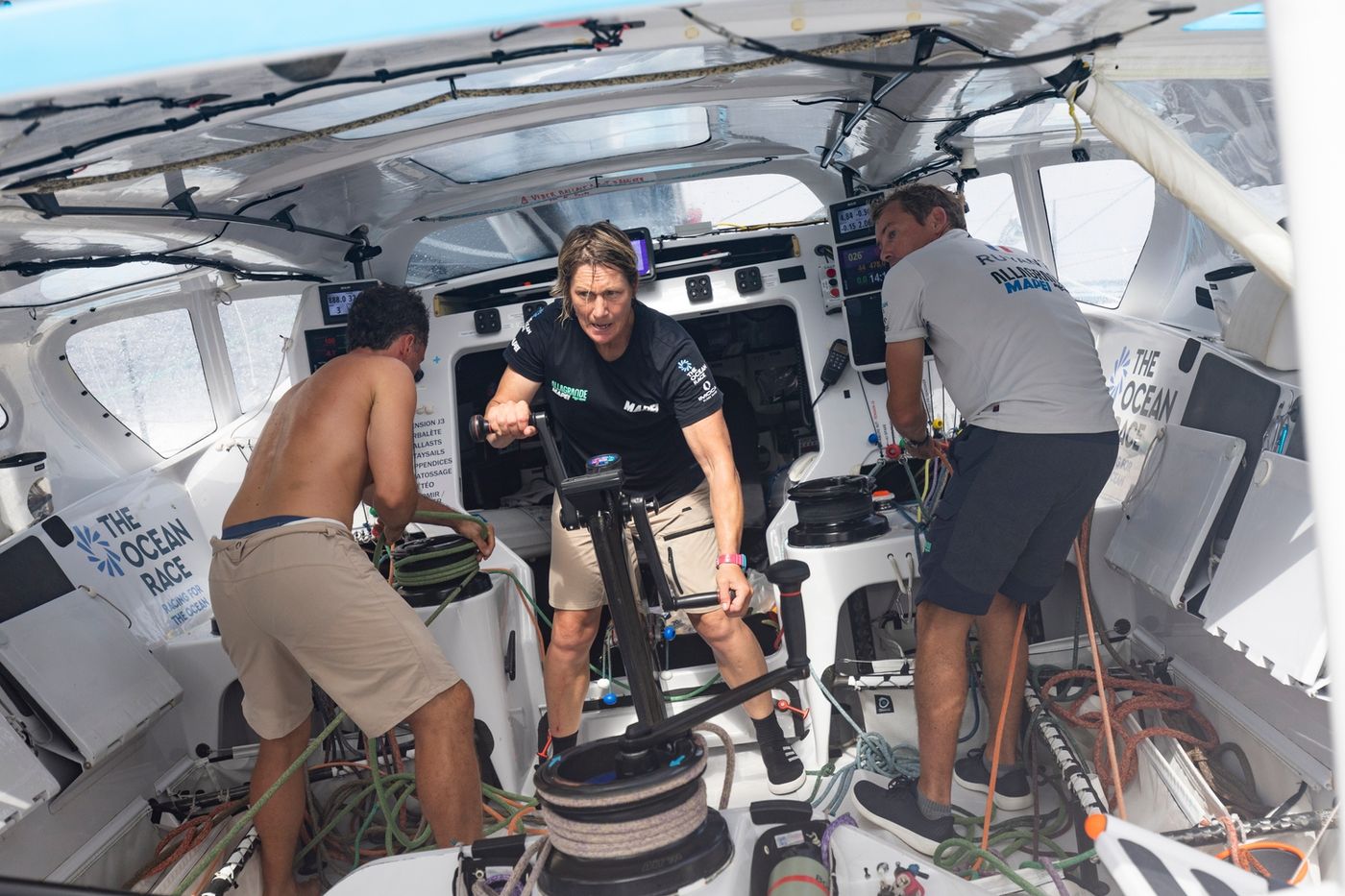
The opening night gave no one an easy run. Across the fleet, the wind swung erratically between 8 and 25 knots, forcing constant sail adjustments through the dark hours. Inside the carbon IMOCA hulls, summer heat made conditions below deck miserable, and sleep was effectively impossible. Every sailor was needed on deck, every shift demanded attention.
Team Malizia's Cole Brauer described what the night had asked of the crews. "It's been breeze versus angle pretty much the whole night. Tons and tons of trimming, moving things, trying things… It's mainly about organising ourselves so that, when we get the shift we want, we can tack and it will be advantageous for us."
The central strategic question throughout the night was whether to stay close to the coastline for better angles or push offshore in search of more pressure. Neither option offered certainty, and every team read the situation differently. As dawn came, the two leading boats had picked their way through the exclusion zone off Cap de la Nau and begun pulling clear of the rest of the fleet as they headed towards the Balearic Islands.
Few sailors carry as much experience in close-quarters tacking duels as Holcim-PRB's Franck Cammas, and he was candid about how demanding the early hours had been. "We tacked many times right from the start. The beginning of the leg was hard because there were a lot of manoeuvres. For me it's easy because I helm. But for the crew it is not easy at all. They had a good fitness session right from the start," he said.
By late morning Holcim-PRB had closed to within a mile of Biotherm, the two boats now in visual range of one another, each crew watching the other's sail trim and angle choices as they set up for the approach to Dragonera headland at the western tip of Mallorca.
[gallery td_select_gallery_slide="slide" ids="152901,152900"]
Twelve miles astern, the rest of the fleet remained tightly compressed. Team Paprec Arkéa held third place at the head of that chasing group, though their margin was threadbare. Allagrande Mapei Racing, Malizia, Canada Ocean Racing, and AMAALA were all clustered within a mile of each other, meaning a single mistimed tack or an ill-judged response to a wind shift could reshuffle the entire order well before nightfall.
With the fleet working its way along the northern coast of Mallorca, the next 24 hours carry real weight. Routing decisions around the low-pressure system, crew endurance, and the perpetual gamble of choosing north or south through the islands will all bear on the race to Corsica and the eventual finish in Nice.
Menorca represents the next significant turning point, with the leaders expected to pass well to the north of it before laying a course towards the Côte d'Azur. Given how little daylight there is between Biotherm and Holcim-PRB, and how quickly the chasing group could close the gap in a single favourable squall, Leg 3 is shaping up as the most tactically demanding and physically punishing of the race to date.
Brauer put the fleet's collective challenge plainly: "We need to stay in as much breeze as we possibly can." In the Mediterranean, that particular goal rarely comes without a fight.