Among the ocean's least visible processes, some of the most consequential are unfolding. New research has found that copepods, tiny crustaceans that rank among the most abundant animals in the sea, are acting as living pumps for microplastics, drawing plastic particles down from surface waters into the deeper ocean through the simple act of eating and excreting.
Copepods dominate zooplankton communities throughout the global ocean and, despite their diminutive size, they are central to how marine ecosystems function. They sit at the base of the food web and drive what scientists call the biological pump, a process by which carbon is packaged into sinking faecal pellets and carried to depth. New research now shows the same mechanism is doing the same for microplastics.
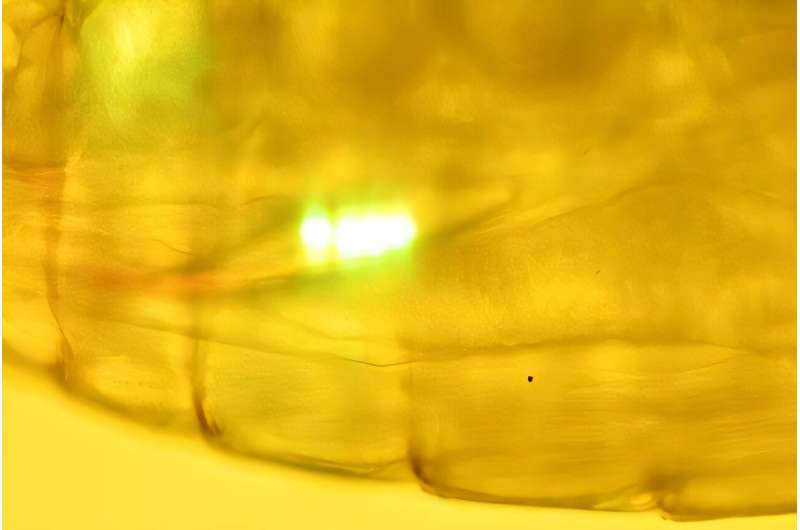
The study was led by Dr Valentina Fagiano of the Oceanographic Centre of the Balearic Islands, with co-authors from Plymouth Marine Laboratory. The team focused on the copepod Calanus helgolandicus, tracking individual microplastic particles in real time as they passed through the animal's gut. By using fluorescent plastics and live imaging techniques, the researchers were able to measure precisely how long particles remained inside the copepod and how often new particles were taken in.
One of the study's more striking findings was the consistency of the results. Across all experimental conditions, microplastics spent approximately 40 minutes passing through the copepod gut. It made no difference whether the particles were beads, fibres, or fragments, and food availability had little influence on the rate. That consistency gave the researchers a reliable foundation from which to scale their findings upward.
Drawing on gut passage rates alongside well-established copepod abundance data from the western English Channel, the team calculated that copepods in that region alone could be transporting around 270 microplastic particles per cubic metre of seawater to depth every single day. Senior ecotoxicologist Dr Matthew Cole noted that copepod faecal pellets sink naturally, carrying whatever contents they hold. Microplastics ingested at the surface are effectively repackaged and exported downward, working their way into deeper waters and ultimately into sediments.
The implications extend beyond the question of where plastics end up. Copepods are themselves eaten by fish larvae, small pelagic fish, seabirds, and marine mammals, which means that ingested plastics can travel upward through the food chain at the same time as they are being driven down through the water column. The research pushes back against the assumption that microplastic pollution is primarily a surface ocean problem.
Published in the Journal of Hazardous Materials, the paper by Fagiano, V., Cole, M., Coppock, R., and Lindeque, P. represents the first real-time quantification of gut passage and ingestion rates of microplastics in copepods. It provides a quantitative framework that can be incorporated into broader ocean plastic transport models, giving scientists better tools to predict where microplastics accumulate over time and which ecosystems face the greatest long-term exposure.