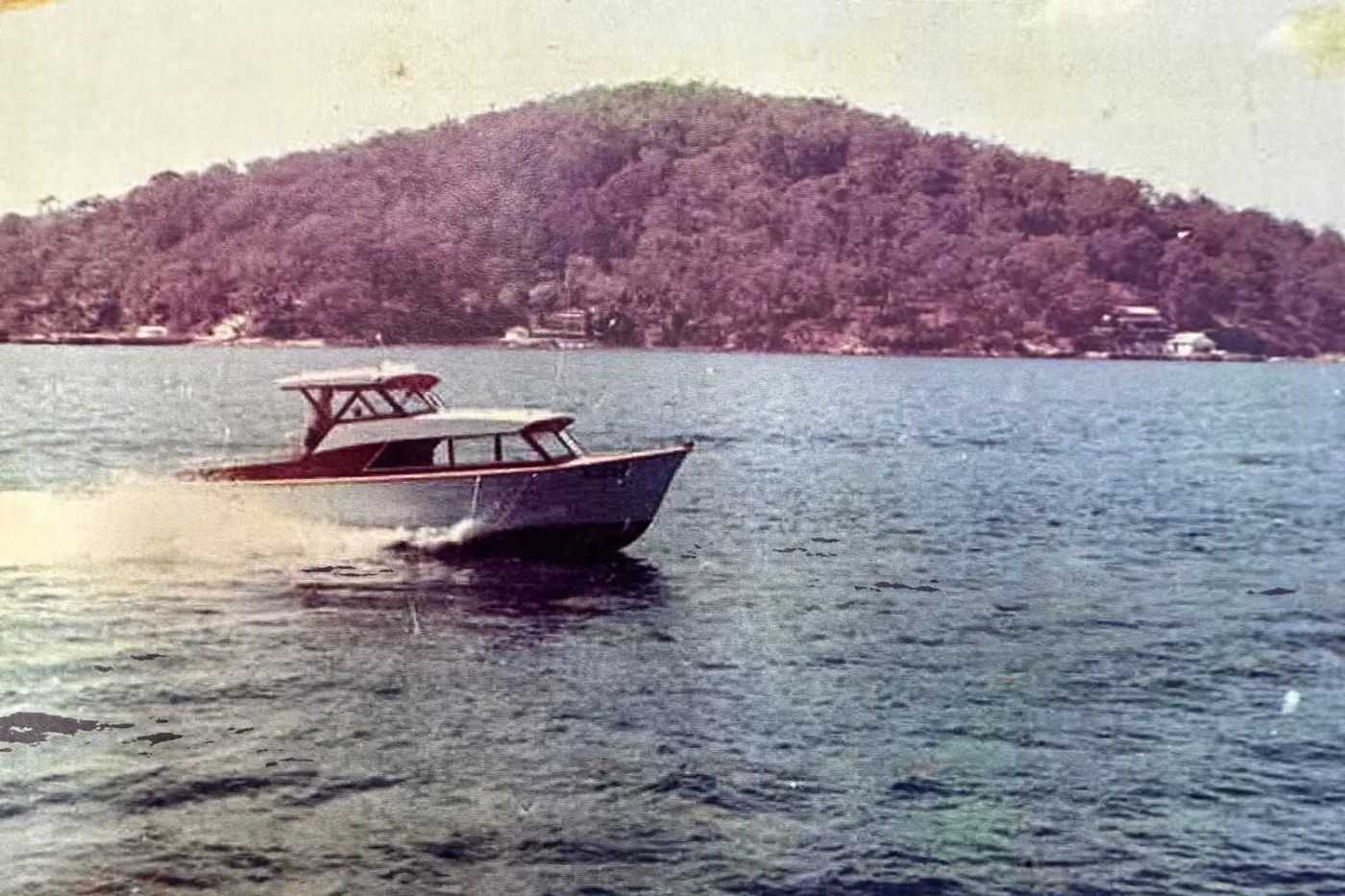
Bill Barry-Cotter has spent more than half a century building boats, building businesses, and building a reputation as one of the most tenacious figures in Australian marine manufacturing. The man who shaped timber hulls by hand in the 1960s, who gambled on fibreglass before the rest of the industry was ready, and who launched Maritimo on the Gold Coast twenty-two years ago is showing no signs of easing off.
"It's been an interesting journey," he says, with a quiet smile that suggests the word "interesting" is doing considerable work.
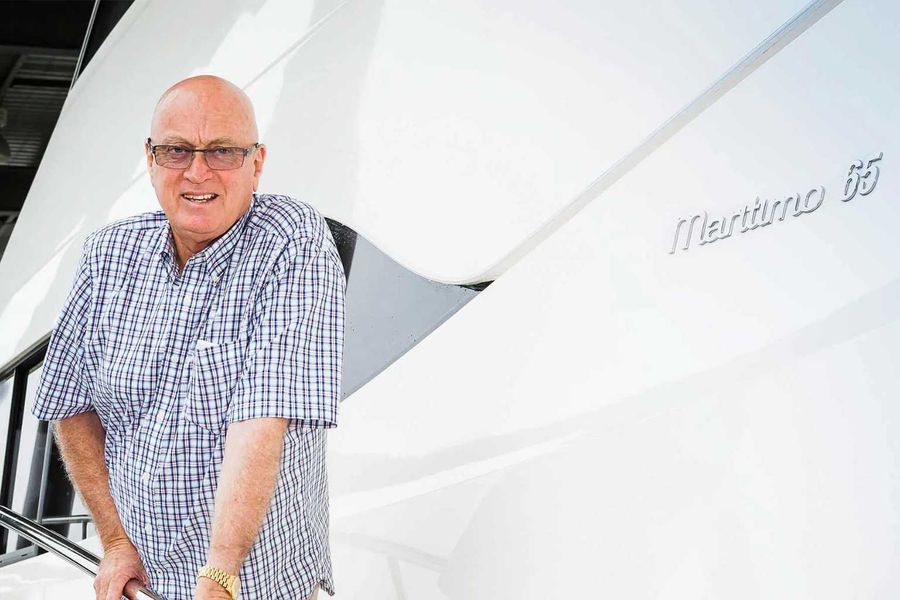
A young apprentice in the 1960s, Barry-Cotter became a fibreglass pioneer in the 1970s, then built Mariner into Australia's largest boatbuilding operation before starting again on the Gold Coast. Maritimo grew from a single conviction: that long-range luxury cruising should be driven by engineering rather than decoration. That principle has defined the brand ever since, and the same principle is now being applied to something entirely unexpected.
Caribbean reborn
The announcement that Maritimo had acquired Caribbean caught many in the industry off guard, though perhaps it shouldn't have. For generations of Australians, the Caribbean name is inseparable from a particular kind of memory: early mornings on the water, fishing lines over the side, family holidays in modest cabins that smelt faintly of salt and sunscreen. The brand carried genuine affection, the kind that no marketing budget can manufacture.
"They were strong, reliable, simple, and built to last," says Maritimo's long-time director of distribution, Sean Savage. "But they needed a birthday. And that's exactly what we're giving them."
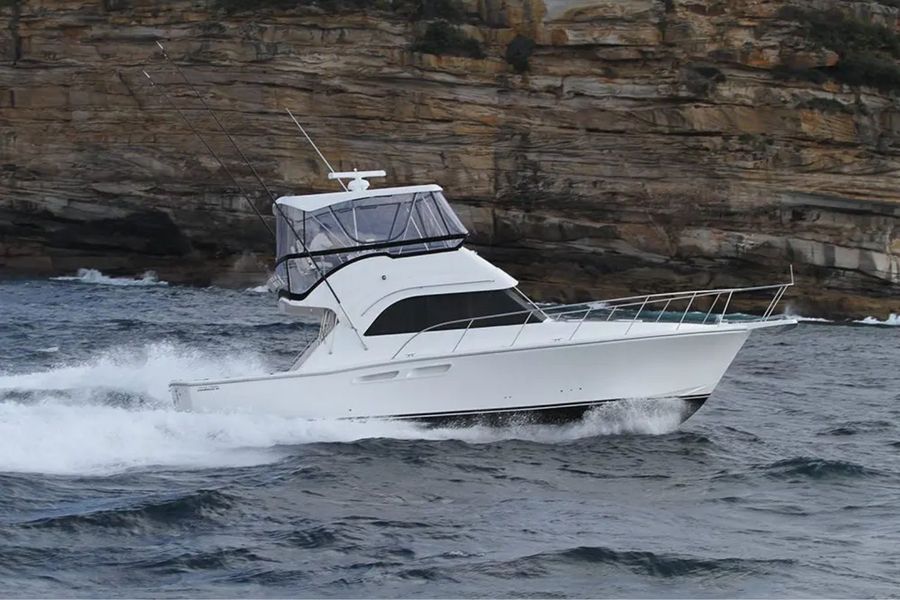
Under Maritimo's stewardship the hulls that earned Caribbean its reputation remain, but virtually everything above the gunwale is being reimagined. New decks, superstructure, accommodation and systems bring the range squarely into the present, while separate game-fishing and family cruising variants introduce a flexibility the original marque never offered.
Before any meaningful marketing campaign had begun, buyers were placing deposits. The demand was already there, waiting for someone to treat the brand with the respect it deserved.
Barry-Cotter sees Caribbean less as an acquisition and more as a natural continuation. Reinvention has been the connecting thread of every decade of his working life, and this is simply another chapter in that same story.
Always building the next chapter
The Caribbean revival runs in parallel with the ongoing development of Maritimo's own range, and nowhere is Barry-Cotter's instinct for creative problem-solving more evident than in the story of the M50.
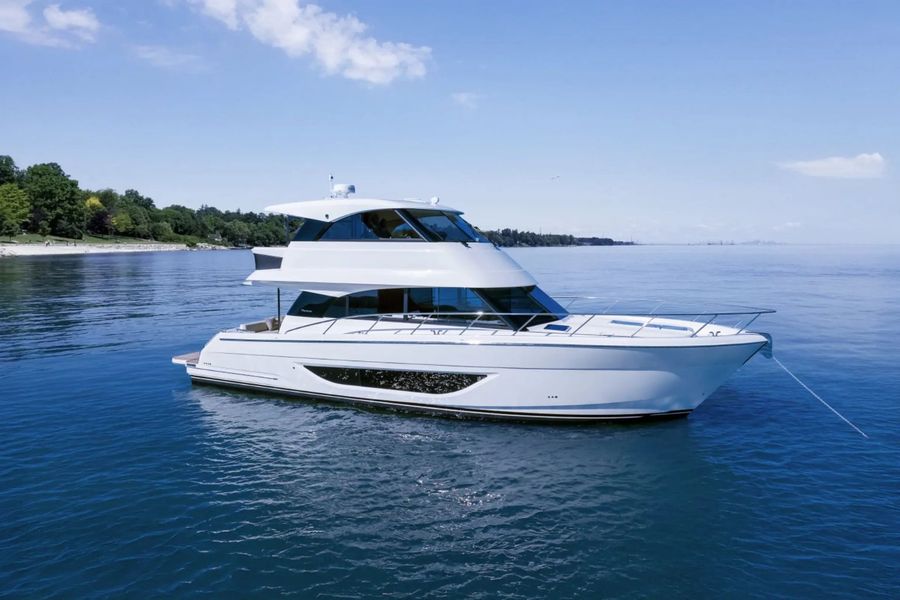
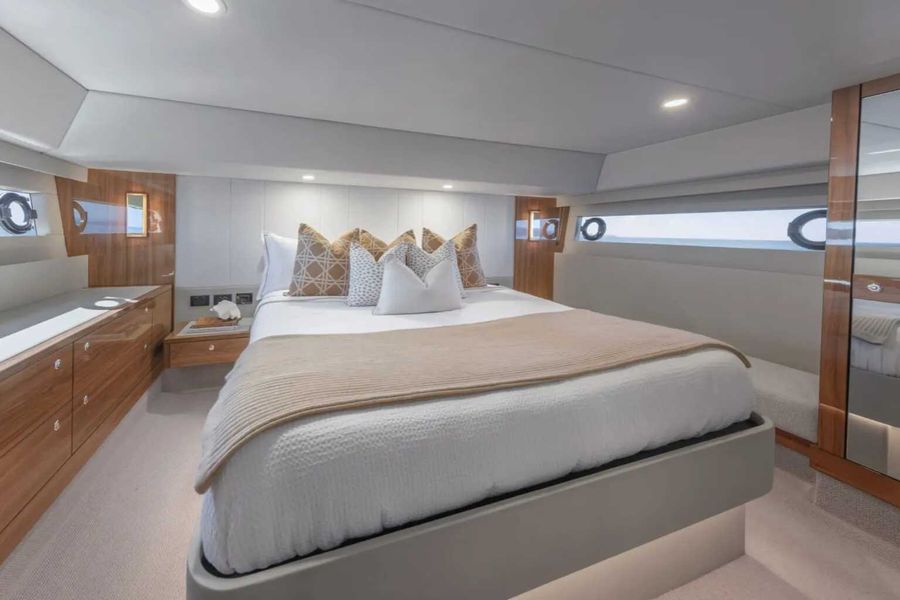
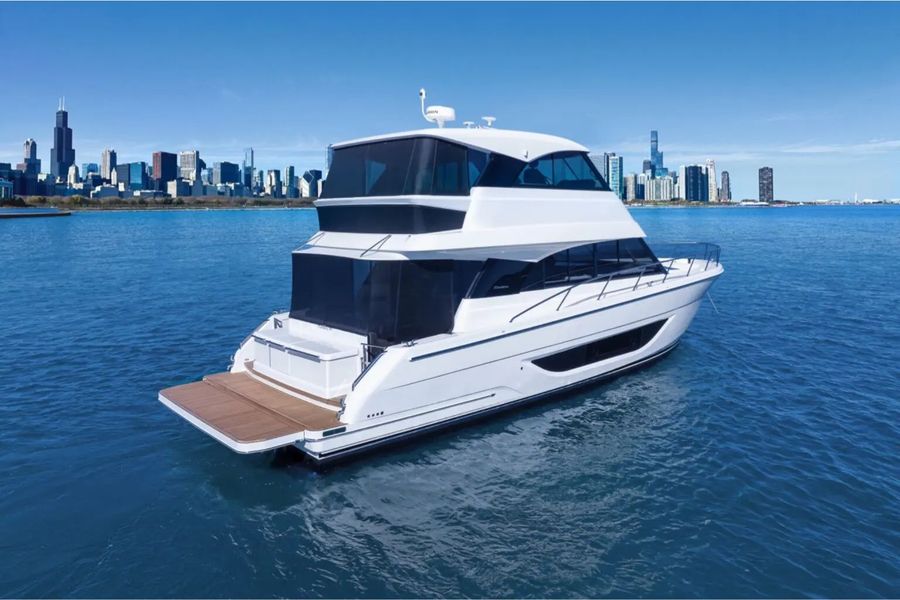
The brief arrived from an unexpected direction. A US dealer flagged that berthing fees increase sharply once a vessel exceeds 55 feet. The challenge was to build a boat with the presence and comfort of something considerably larger while keeping its official measurement below that threshold. The M50 is the answer: a generous main stateroom, a substantial VIP cabin, and a saloon that can be configured to provide additional sleeping accommodation when needed. Space has been found in places where none appeared to exist.
"We engineered the anchor through the deck where normally you'd find a bowsprit," Barry-Cotter explains. "And we hinged the swim platform so that it can rise vertically, then come back a full metre for use. It's about giving owners more without making the boat bigger."
The swim platform alone shows the depth of his perfectionism. At the outset of development he estimated the team might work through fifty or sixty prototypes before arriving at the right solution. Others thought two or three would do it. They are currently nudging twenty.
"Despite all the CAD drawings, you've just got to keep doing it," he says. "It gives you a buzz when you're winning, but when you do it three in a row and it fails every time, you think, what am I doing this for?"
He cannot help himself, of course. That refusal to accept a compromise solution runs through everything Maritimo builds.
A factory built on people, not just process
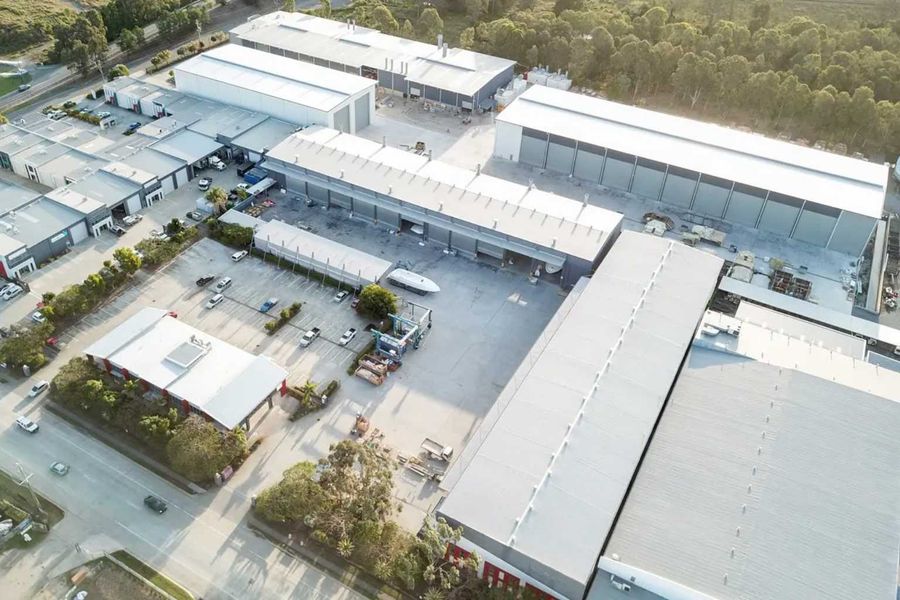
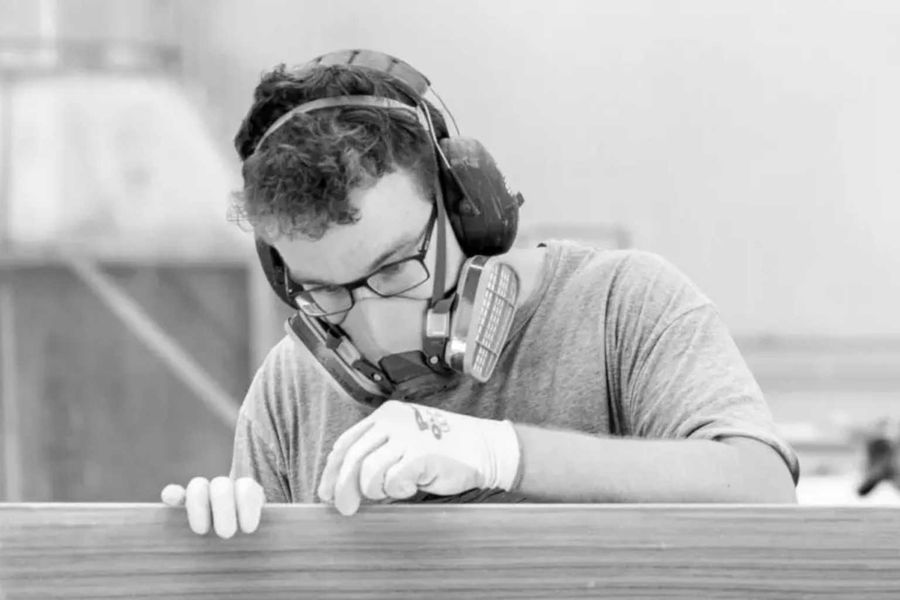
Walk into the Coomera facility early in the morning and what strikes you first is the atmosphere. Apprentices working over brightwork, designers moving from pencil sketches to laptops, seasoned tradespeople passing knowledge quietly across a mould. There is a clear sense of purpose without the brittle tension that often accompanies high-output manufacturing.
"I'm proud that our people love coming to work," Barry-Cotter says. "That's what gives you productivity. It takes away the negative side of going to work."
At a time when automation and offshoring have reshaped manufacturing across many sectors, this craft-first culture is genuinely uncommon. It is also, in a practical sense, the reason Caribbean has a real future rather than simply a sentimental one. Maritimo already has the trades, the systems and the floor space to build 40-footers economically, a capability that would overwhelm most smaller operators before a single plug left the mould. Caribbean gains access to that scale without surrendering its identity.
"When you see a Maritimo 50 or 75 you know it's a Maritimo," Savage says. "The Caribbeans will have their own identity with a similar stance and profile. What matters is that it's still going to be a Caribbean."
The wider tides: industry, politics and determination
Barry-Cotter speaks plainly about the difficulties facing Australian manufacturing, and his perspective carries the weight of someone who has been fighting those battles for decades. He recalls a time when a phone call to Queensland Premier Joh Bjelke-Petersen could clear a shipping problem in a matter of minutes. That kind of direct government engagement, he says, is essentially gone.
Free-trade arrangements have left Australian boat exporters at a structural disadvantage. Tariffs on imported utes fell to zero while duties on Australian exports remained largely unchanged. "Totally prohibitive," is his assessment. The predictable result has been the steady migration of production offshore across multiple industries.
His response is to look inward: invest locally, manufacture locally, employ locally. The Caribbean project is the most tangible expression of that belief, a commitment to an entire industry as much as to a single brand, and a demonstration that Australian boatbuilding remains viable when heritage and genuine innovation are combined with the right intent.
Innovation between the lines
That appetite for finding better solutions extends well beyond the production floor. Barry-Cotter's 100-foot sailing yacht, a familiar participant in the Sydney Hobart fleet, now serves as a live research platform. A recent repower with a Scania engine reduced fuel consumption from nearly six litres per nautical mile to two.
"That's a 30 to 40 per cent saving," he says. "A big environmental gain, and a better solution than dragging batteries around with you."
It is a characteristically pragmatic position on sustainability, rooted in engineering outcomes rather than ideology, and entirely consistent with the way he has approached every challenge in his career.
A legacy still being written
The pipeline ahead is full. Caribbean models are planned across a range stretching from 21 feet to the mid-50s, and Maritimo has set its sights on unveiling the new C2700 and C40 at the 2026 Sanctuary Cove Boat Show. The R&D department is active, staff are working late, and the sheds at Coomera are lit long after most people have gone home.
At the centre of it all is Barry-Cotter, still at the workbench in the way that matters most: sketching, questioning, pushing for the next improvement, and refusing to accept that good enough is ever quite good enough.
He returns to his opening line near the end of the conversation. "It's been an interesting journey." The second time around it lands differently. Not a reflection on what has passed, but a signal that what comes next is already underway, taking shape mould by mould and prototype by prototype in the hands of a man who has never worked out how to slow down.