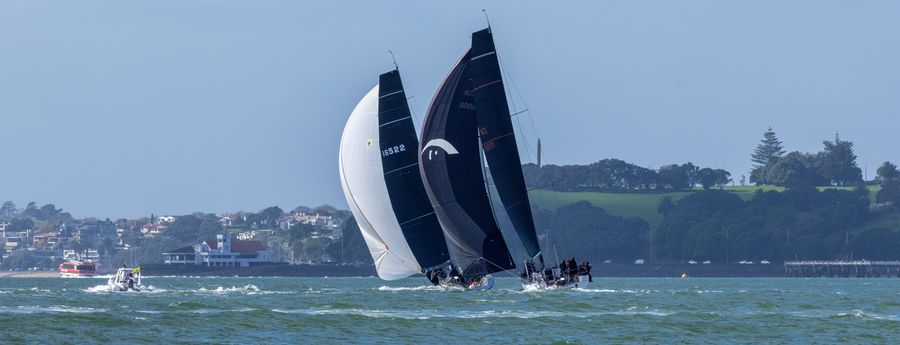
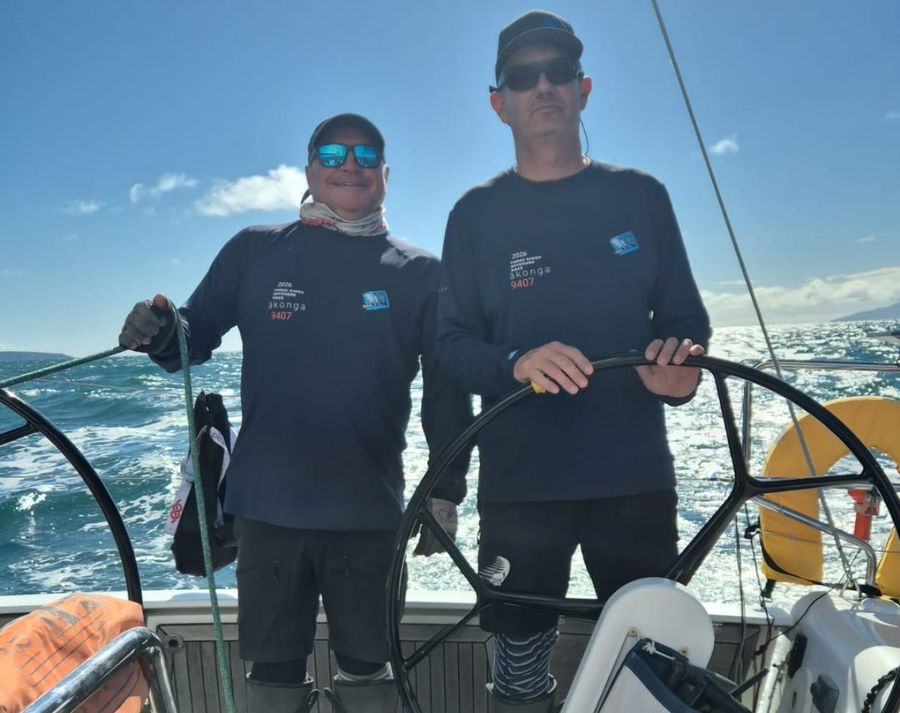
Nick Roberts was somewhere north of Kawau Island when he rang in from the water, one eye on a friendly rival closing from behind. The spinnaker was drawing well, slow-cooked beef pies were warming below decks, and his voice carried the easy confidence of someone who had come through a very long night and lived to enjoy the morning. Twelve hours earlier, the mood aboard the Dehler 41 Ākonga had been considerably less settled.
The problems started before the fleet had even made it to the Three Kings. A shackle on the roller furler swivel broke, and the number one jib began sliding toward the water. The crew lashed it down and rigged the storm jib, the only headsail for which a spare halyard was available. That fix held, but it left the number one's halyard stranded aloft, and without it, their upwind options were sharply reduced. They noted the issue and pressed on.
What greeted them offshore that night was extreme by any reckoning. As Ākonga pushed north past the Whangarei coastline, the breeze hardened to 35 knots and seas built to around three metres. A gennaker they pressed into service came back torn. Then the lightning arrived, fork lightning strobing across the sky, followed by thunder and rain that seemed to fall with physical force. For a period the wind abandoned any consistent direction and simply did as it pleased.
Navigator Andrew Hall had a way of putting it. "Mate, there was fork lightning, knife lightning and spoon lightning," he said. "We had the full set of cutlery."
Through all of this, the stranded halyard still needed recovering. The remedy was simple enough to describe: send someone up the rig to bring it down. In 30 knots of breeze, with the boat pitching and rolling beneath him, that description stops being simple almost immediately. The task went to bowman Ryan Mills, who is campaigning with Roberts as part of a Sydney to Hobart build and for whom this race represented his first major offshore event.
Mills went up, retrieved the halyard, and got back down. With it back in hand, the crew rehoisted with the number three jib and later, once conditions eased, were able to fly the number one as well. The failure that had begun with a broken shackle was finally, fully resolved.
Mills was not done. Later that same night, with the repaired gennaker back up and driving the boat through the dark, new tears opened in the sail. Mills and Hall patched it while the sail remained flying, still up in the air, in the middle of the night.
By the time Roberts called in, the crew had settled the matter unanimously: Mills was Man of the Match.
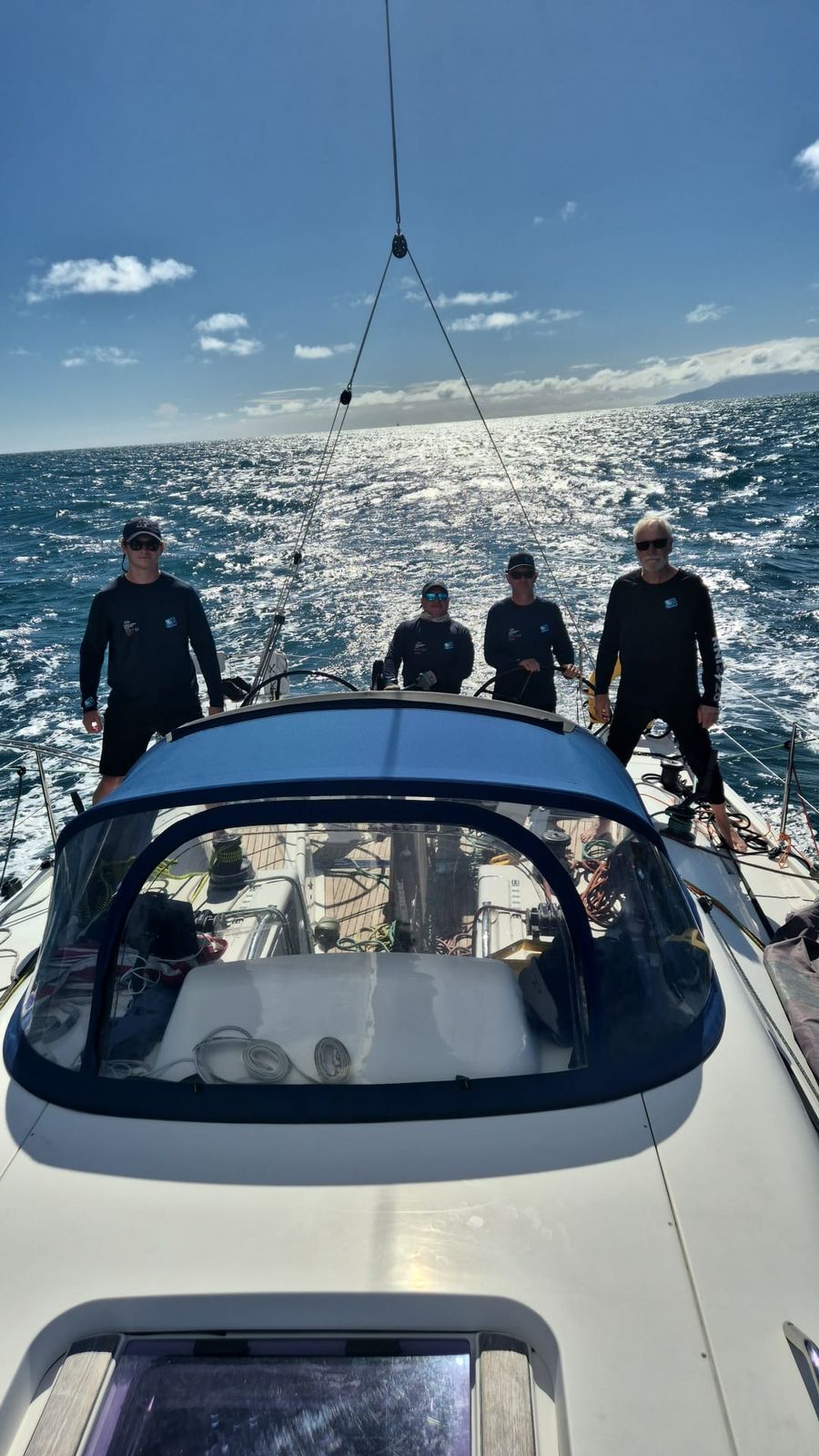
For four of the five aboard, the Three Kings Race is a qualifying event for the 2026 Rolex Sydney to Hobart. The requirement is a 250-mile offshore passage completed together as a crew. By the time Ākonga crosses the finish line, 80 percent of the team will have logged more than 500 miles. Whatever their final placing, that particular box has been thoroughly ticked.
Placing, though, was still very much in play. Carpe Diem, skippered by Rowan, a rival Roberts knows well from the 2026 Doyle Sails Round North Island Two Handed Yacht Race, had been reeling Ākonga in through the small hours while fatigue nudged the crew slightly off their optimal routing. By mid-morning the two boats were close enough to see each other north of Kawau Island, both pushing hard toward the finish.
"They're following us at the moment," Roberts said, with the particular brand of careful optimism that offshore racers develop after enough miles in difficult conditions, knowing that nothing is decided before the line is crossed.
What had already been decided was something else. Every failure the night produced was met with a solution. The storm jib went up when the furler shackle let go. The halyard came down from the mast. The gennaker was patched and sent back up. Each problem, however unwelcome, found an answer before the next one arrived.
Somewhere north of the Hauraki Gulf at 3am, in the middle of a lightning storm with torn sails, a stranded halyard, and the full cutlery drawer of weather, Ākonga's crew found out what they were made of. The answer, by any measure, was plenty.