B&G unveiled the Zeus SRX chartplotter at the Miami Boat Show, positioning it at the premium end of sailing electronics. The company's pitch leans into luxury, but the more practical case is straightforward: faster responses, sharper clarity, and a calmer helm when things get busy on the water.
New Zealand sailors won't have to wait long to see it for themselves. B&G will be at the Auckland Boat Show from 5 to 8 March, with local availability through Advance Trident. Whether you're planning a new build, a serious refit, or tidying up your helm station, this is the kind of unit that deserves to be seen in person rather than assessed from a spec sheet online.
“Zeus SRX was designed for those who demand nothing less than perfection at sea.”“Whether you’re racing or cruising, this chartplotter delivers uncompromising speed, clarity, and control.”
That's the press release framing. The question that matters on the water is more direct: does it help you make better decisions, more quickly, with fewer errors?
The headline development inside the Zeus SRX is its operating system. The unit runs B&G's NEON platform, which the company says has been purpose-built for large screens and engineered to feel immediate. That emphasis on immediacy matters, because lag creates workload. It breaks your rhythm, forces you to look twice, touch twice, and second-guess yourself at moments when you can least afford it.
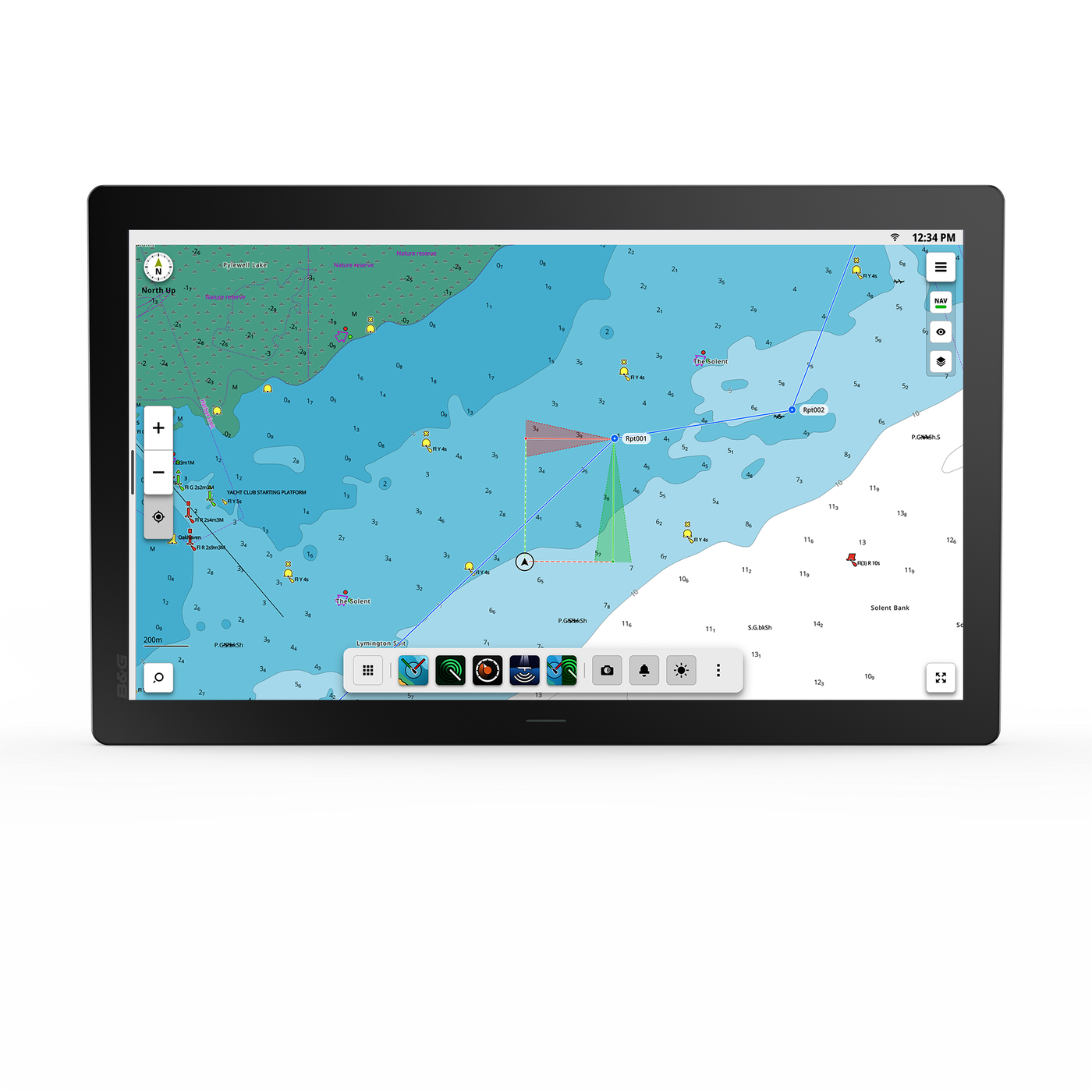
Central to the NEON interface is an activity bar that keeps essential tools within reach before stepping back when you don't need it. Quick-access buttons are designed to bring layers and overlays to the surface without the usual menu-diving. Modern chartplotters win or lose not on what the specification sheet promises, but on how many steps stand between a thought and an action. For a short-handed crew or in the final moments before a race start, that gap has to be small.
B&G's claims for the Zeus SRX focus on faster boot times, instant chart redraw, and fluid transitions between functions. If the unit delivers on those fronts, you'll feel the difference in exactly the moments that count: closing on a headland at dusk, working a layline with traffic in the way, or threading a harbour entrance against tide and wind.
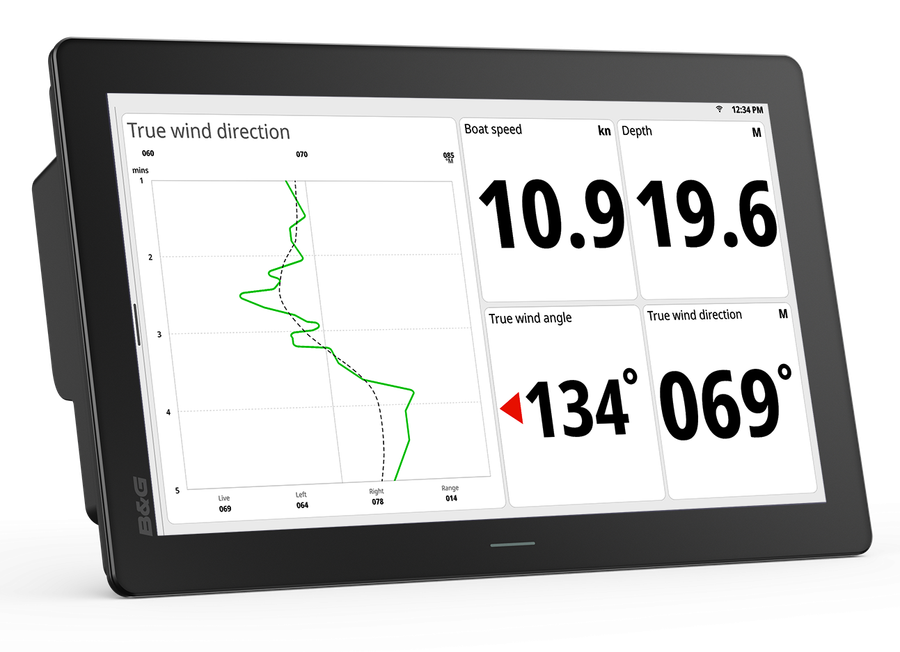
B&G has built dedicated operating modes for cruising, racing, and anchoring into the Zeus SRX. When executed well, mode-switching reduces both clutter and mistakes, presenting only the information that suits the task. For racing, the familiar B&G toolkit sits front and centre: SailSteer, LayLines, Routes, and StartLine all feature, alongside integration with B&G processors, autopilots, Triton 2, Nemesis instruments, wind sensors, and HALO radar.
For cruising, the value lies less in any single feature and more in overall visibility and confidence. A layout that reads cleanly at a glance, a screen that makes sense from a couple of steps back while you're also watching the sail shape and sea state. That's what separates a good cruising chartplotter from a great one.
The anchoring mode isn't detailed extensively in the announcement, but it's worth exploring when you visit the Auckland Boat Show. Ask to see how quickly it switches context, what information it surfaces, and what it tidies away. Those details reveal a lot about how carefully a mode has been thought through.
On the charting side, the Zeus SRX supports C MAP Discover X and Reveal X through the newer X Gen chart system. The promise is a combination of detail, speed, and the ability to update charts directly from the unit using X Chart Manager, including custom area downloads.
For New Zealand sailors, that last capability carries real weight. Very few of us need an entire ocean on screen. We need our own coastline, our regular cruising grounds, and whatever the next passage demands. The ability to tailor and update coverage from the helm is a practical step forward.
B&G also highlights C MAP Safety Alerts, which can flag hazards along your intended track, from shallow water to buoys. Any alert system should be treated as a backstop rather than a substitute for judgement, but as an additional layer of awareness it earns its place, particularly at night or when fatigue is building on a long passage. There is also a B&G app connection noted, with a 12-month premium subscription offered when registering a C MAP X chart. As always with bundled offers, the value is in the detail, so it pays to confirm exactly what's included.
The Zeus SRX is positioned as the central hub of the onboard system, drawing data and control into a single interface. CZone integration is specifically called out, extending to lighting, power, entertainment, and navigation. That will appeal to modern yachts where the nav station and helm have effectively merged into one environment. You want a single place to see everything that matters, and you need it to stay stable under pressure.
On the hardware side, the unit features a SolarMAX IPS touchscreen with wide-angle visibility, readable through polarised sunglasses. Active cooling is included to maintain performance in high ambient temperatures, and that's worth noting. Heat is one of the primary enemies of marine electronics, and any system that addresses thermal management properly is more likely to stay reliable over the long term. Connectivity covers WiFi 5, Gigabit Ethernet, and NMEA 2000, plus support for up to four IP video cameras. If you've ever tried to manoeuvre a larger yacht with a compromised sightline, you'll understand why camera integration is shifting from a bonus feature into something closer to a baseline expectation.
When you get to the Auckland Boat Show, it's worth going beyond the demo and asking a few pointed questions. How quickly can you move between the chart, instrument pages, and radar overlay? How are custom dashboards built, and how easily can you return to a default layout? How does the touchscreen behave with gloves on, wet hands, or direct glare across the screen? What are the installation requirements for Ethernet, NMEA 2000, and power? How does the cooling system fit into a tight helm pod? And what does local support look like through Advance Trident?
B&G has confirmed the Zeus SRX will be available in 16-inch and 22-inch screen sizes, starting from $6,999 USD. That pricing places it in premium territory, aimed at larger yachts and owners building or upgrading a properly integrated helm.
For New Zealand sailors, the most useful next step is also the simplest: go and look at it. Put your hands on it. Try to complete ordinary tasks quickly. Check whether the screen presents information the way you actually need it to. If the NEON platform delivers on its promise of speed and simplicity, the Zeus SRX has every chance of becoming a strong choice for high-end refits and new builds across the seasons ahead.