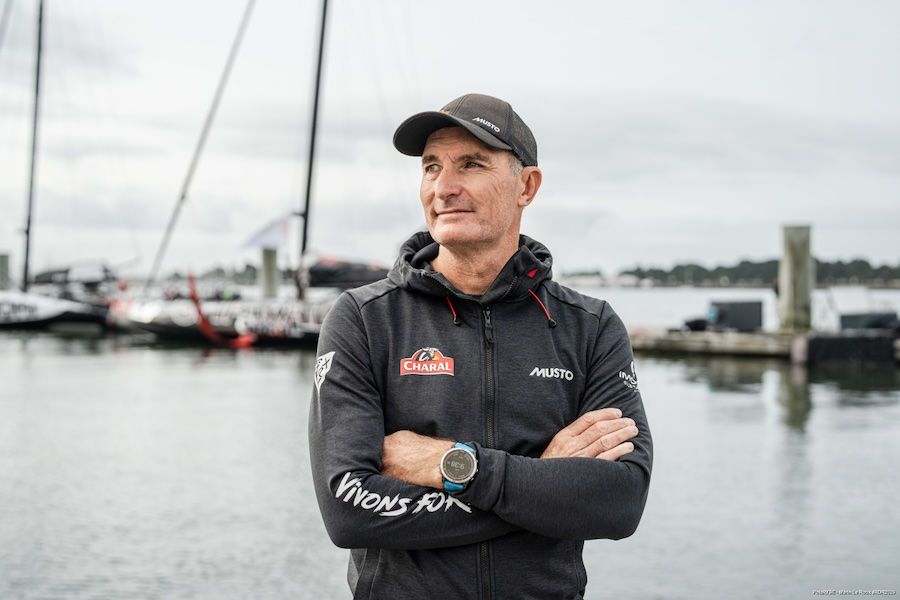
At 50, Jérémie Beyou is preparing for his last Route du Rhum under the Charal colours, aboard a boat he has rebuilt almost from the keel up.
A new hull was grafted onto the existing platform, a major undertaking aimed purely at finding more speed. Beyou is now being talked about as one of the favourites, given the depth of the IMOCA fleet heading to Guadeloupe.
His record at this race is remarkable for its consistency. Beyou has lined up at every Route du Rhum since 2006, through two abandonments, in 2006 and 2018, and two podiums, second in 2014 and third in 2022. Last time out he was part of an intense three-way battle with Thomas Ruyant, who won, and Charlie Dalin, who finished second.
"It's a particular context, for sure," Beyou said of racing his final campaign with Charal, his title sponsor for the past decade. "When you're on land, you sometimes feel like people are only focused on the outside stuff. You have to stay concentrated, but it's like at sea, where you learn to switch, to focus only on sailing the boat well."
He grew up in northern Finistère watching the start as a child, then listening on the radio for news of the fleet passing offshore on Sunday nights. Those memories, he says, resurface every time he lines up for the race.
On the new hull, the gains are tangible. "From the very first sails, the feeling was really good. Looking at the numbers, they're clearly better than last year, especially upwind. We've gained performance in certain conditions, that's for sure!"
Beyou didn't relaunch the boat until June, later than most rivals, but he isn't worried. He slotted in some Figaro racing earlier in the year to keep his solo reflexes sharp. "The challenge is to be 100 percent focused on the start of the Route du Rhum, on myself, on my boat, to be in the match from the very first moment."
Asked whether Sam Goodchild aboard Macif is the standout favourite in IMOCA, Beyou doesn't fully concede the point. "He might be a notch above. But the Route du Rhum is also an open course. It's hard to know who's going to win among the five or six skippers who can claim victory."
Solo racing, he reckons, opens things up compared with doublehanded sailing. "Two-handed racing levels things out: a good weather router pairs with a great trimmer. But solo, everyone has to manage their own strengths and weaknesses. It demands a broader range of skills, and that can make all the difference in a close finish."
He still enjoys the build-up in Saint-Malo, the village, the walled town, the lock passages, the overnight anchorage at Dinard. "It's convivial, and pretty impressive to see the old town, the ramparts and this huge village. You can also slip away quickly, go for a walk on the Sillon beach to catch your breath. It takes energy, sometimes you have to know when to step away from it. But it's important to enjoy it too."