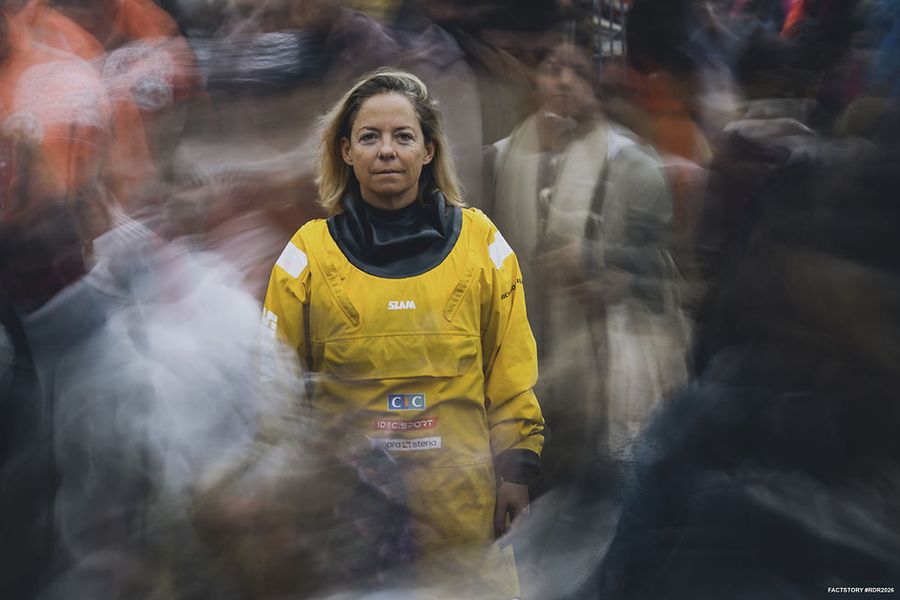
Behind the barriers at the Route du Rhum village, crowds wait patiently for a glimpse of their favourite skipper, hoping for a selfie. But look past the sailors posing for photos and there's another story unfolding on the pontoons: quiet, methodical work as the fleet counts down to Sunday's start from Saint-Malo.
The boat checks are largely done now. Monohulls and multihulls alike have been through ten days of inspections, and attention has shifted to final preparations.
Technical teams have spent the week hauling heavy bags along the pontoons, packed with freeze-dried shepherd's pie and raspberry mousse, supplemented by fresh fruit for the first days at sea. This is the provisioning stage. Each day at sea gets its own ration pack, often with sweet treats or small surprises tucked in by the shore team while the skipper is busy facing the cameras.

Even a boat that's ready still needs fiddling with. "There are always little jobs to do," one technician said. Electronics get checked and rechecked, systems tested again, all while everyone waits for the most anticipated visitor of the fortnight: the man in the red coat.
Less visible, but just as crucial, are the race officials. Referees from the French Sailing Federation (FFV) have been spotted clambering over boats, checking every corner, discreet and thorough. Their job is to guarantee fairness across the fleet. Samuel Cartier, president of the FFV's technical committee, compares it to a car's warrant of fitness. "We check everything from the quantity of water carried on board to the compliance of the survival raft," he said. Between 120 and 150 checkpoints are examined on most boats, rising to 157 for the IMOCAs.
One key item is the engine. Using it during the Atlantic crossing is strictly forbidden, but it remains essential for manoeuvring in port, particularly through the lock. To prevent cheating, each competitor receives three seals. Before crossing the start line, they must fix one seal to the engine and send a photo with a personal reference number to the race committee before 6pm on Sunday. Mid-race, in a genuine emergency such as outside assistance or a technical stopover, the first seal can be broken with permission, leaving two more in reserve.

At 1.02pm on Sunday, 115 boats will cross the same start line together. Pulling that off takes a logistical mountain of work: months of coordination with port authorities, prefectural orders to mark out zones on the water, and briefings for both professional crews and recreational boaties.
The skippers themselves have felt the tempo pick up too. "We had a safety briefing with them yesterday," said Pierre Hays of the race direction team. "It was a chance to go over the start procedures and penalties, but also to talk through the arrival in Guadeloupe and detail the safety and medical setup, with doctors available 24 hours a day."
With safety squared away, race organisers are already looking past the start itself. Early routing options and strategy for the run down to the Azores are being studied closely. In a race defined by solitude and distance, the real work, it seems, is already underway, long before the gun.