A bit of a shift appears to be coming to New Zealand waters this summer. After an extended run of wet weather, climate scientists have suggested a powerful El Niño is establishing itself, bringing the potential for some notably sharp temperature spikes. Senior health officials remind us that these sudden summer heatwaves can catch people off guard. For anyone heading out on an open boat, these warmer days might bring more than just standard summer glare; they could play a role in triggering a subtle, easily missed condition known as boater’s fatigue.
The marine microclimate threat
On an open deck, we are naturally a bit more exposed to the elements without the insulation of a cabin or the large freshwater systems found on bigger yachts. When the day really heats up, the marine environment can become surprisingly dehydrating. Brisk coastal breezes and the movement of the boat can evaporate sweat almost instantly, meaning you might feel completely dry even while your body is steadily losing fluid. At the same time, keeping your balance through summer chop engages your muscles in constant, microscopic adjustments. Combined with hours of bright sun bouncing off the water, it is easy for the brain to get tired, quietly taking the edge off your peripheral vision and depth perception.
Brain fog at the helm
The tricky part about boater's fatigue is that it often sets in while the boat itself is running beautifully. Because it develops so gradually, an operator might not notice their reaction times and spatial judgment slowing down a fraction. On a hot day, this subtle mental tiredness can become a bit of a safety consideration. A slightly fatigued skipper might find it just a bit harder to judge distances accurately when navigating a busy boat ramp or reading a shifting coastal bar at the end of a long day.
Spotting the fatigue in your crew
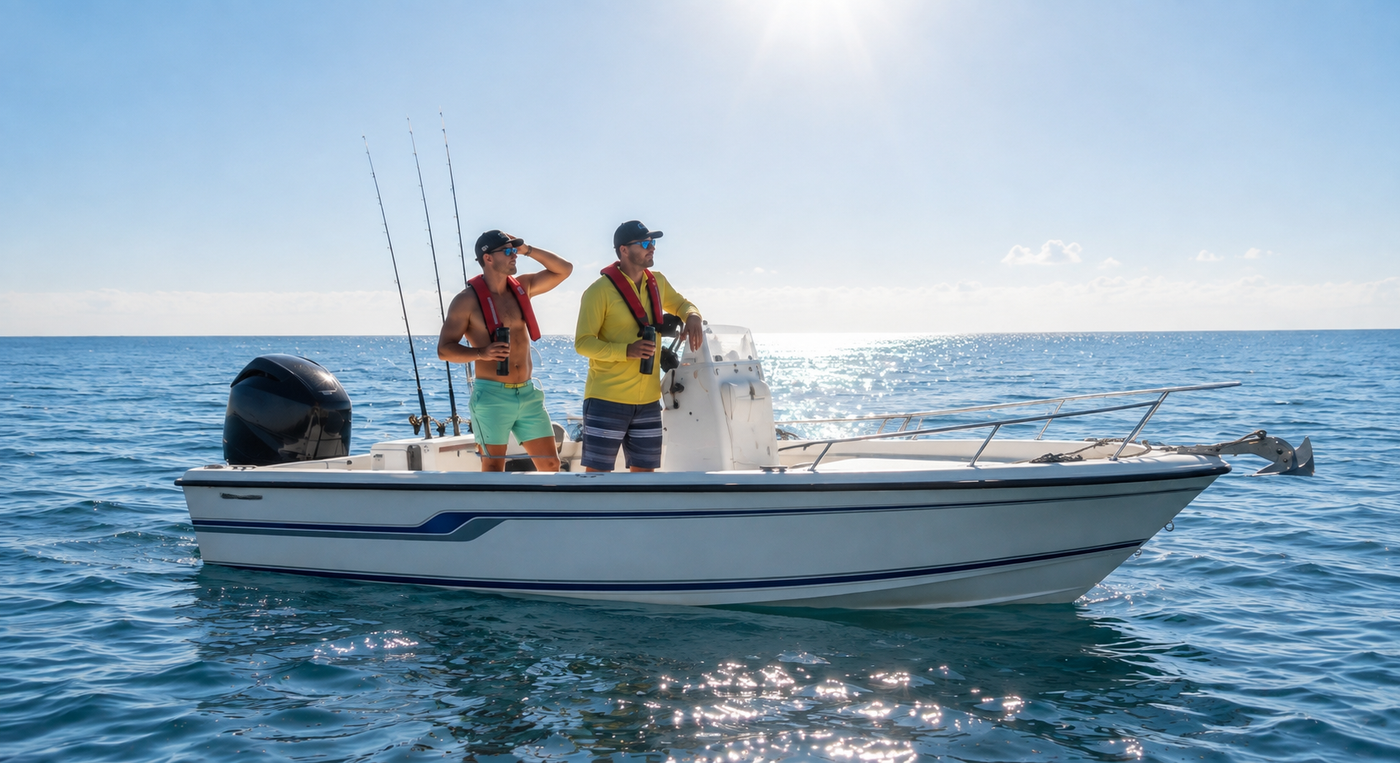
It is also worth remembering that our mates rarely tell us when they are starting to feel the heat. A bit of stubbornness, or simply the fog of being tired, means a dehydrated angler will usually keep fishing through it. As the skipper, keeping a gentle eye out for small changes in behavior can make a big difference. It often shows up in simple, clumsy moments—perhaps someone who is usually great with their hands struggles slightly with a standard knot, or loses their footing just a bit against the gunwale. Reactions can seem a fraction delayed, or you might notice a brief pause before they answer a question.
Sometimes, the shift is just a change in mood. A mate who is normally full of chat might go unusually quiet, or someone might get a little more frustrated than usual over a minor line tangle. We often imagine boating mishaps as sudden storms, but they can just as easily happen on a beautiful, calm afternoon simply because everyone has relaxed and boater's fatigue has caused situational awareness to drift. Catching these signs early helps keep things safe before a good day out turns into a stressful medical situation.
Your water blueprint
Enjoying a full summer day offshore during a heatwave is mostly about making water a natural part of your safety routine. A helpful baseline is carrying around four litres of fresh water per person for the day, along with an extra litre tucked away just in case. Alternating pure water with a low-sugar, high-sodium electrolyte mix can also be a great way to help prevent cramps and exhaustion.
A handy trick to save space is freezing a third of your water supply in large plastic containers before you leave the ramp; they act as ice blocks to keep the lunch cooler cold, then melt down into perfectly chilled drinking water by the afternoon. Finally, storing those heavy water jugs low and central in the boat helps keep your hull tracking straight and stable, while keeping them tucked away safely out of the direct glare of the sun.
Medical Disclaimer: This article provides general educational information only. If you or your crew experience symptoms of severe heat exhaustion, confusion, or heatstroke, seek immediate medical assistance or contact Coastguard on VHF marine radio.