Summer on New Zealand's coastal and inland waterways remains busy well beyond the New Year, but the conditions that make these weeks so appealing can shift without warning, and the consequences of being caught unprepared are real.
The Christmas and New Year holiday period may be winding down, but the boats are still out in force. From the Far North to the Sounds, people are fishing, cruising, and exploring, with boat ramps and jetties every bit as congested as a city motorway at rush hour. That activity is good news for coastal communities, which rely on the summer boating season to drive visitor spending and local economic life.
The weather cannot be taken for granted. Settled spells in early summer can be deceptive, and forecasters are tracking fronts and areas of low pressure expected to move across the country as the weeks progress. These systems bring wind changes, building swell, and a rapid deterioration in on-water comfort and safety. Even on calm mornings, local effects along exposed coastlines can produce conditions that bear little resemblance to the overnight forecast. Light winds at dawn can give way to a strong seabreeze by midday and squally conditions by late afternoon, all within a single day.
One reader, Gareth Bailey, put the unpredictability of New Zealand coastal conditions in blunt terms following a recent article about a nine-party kayaker rescue carried out by Coastguard Kaikōura:
"I have only been boating in Kaikōura for a few days. In that time, I saw it go from a 5 knot forecast to 25 knots and 1.5 metres of chop in minutes during mid summer. Anyone can get caught here. Great job Coastguard."
That account will resonate with experienced boaties across the country, and it underlines why checking the forecast is only part of the picture.
Coastguard New Zealand has shared exclusive data that puts the scale of summer demand on rescue services into sharp relief. The week of 29 December through to 4 January recorded 179 calls for assistance, a rise of 38.7 percent on the week prior, with the northern regions of Northland and Auckland accounting for the majority. Looking at January figures year on year, the contrast is striking. Coastguard responded to 488 calls across the entire month of January 2025. In just the first four days of January 2026, that number had already reached 143. If that pace holds, the monthly total would exceed 1,100 calls, more than double the figure recorded twelve months earlier.
The busiest single day of summer 2024/25 was 8 January 2025, when Coastguard received 42 calls for assistance. That record was surpassed on 3 January 2026, when 55 calls came in across the day. Trip reports filed with Coastguard for the week of 29 December to 4 January further illustrate how many people are on the water: 5,432 from the Northern region, 3,517 from the Eastern, 628 from the Central, and 343 from the Southern, totalling 9,920 reports nationally. Trip reports in the Northern region climbed 25.1 percent compared to the previous week, while the Central region recorded a 104.5 percent increase.
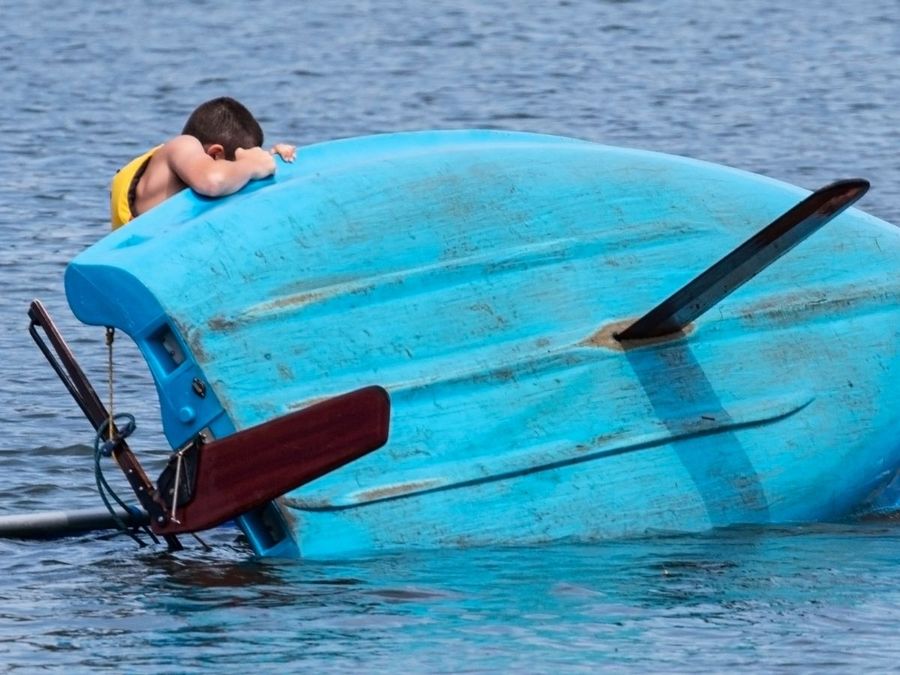
Against that backdrop of high activity, an incident at Lake Rotoiti serves as a sobering reminder of how quickly a routine day on the water can turn life-threatening. Two experienced boaties were assisting with the tow of a vessel taking on water when their own boat was pulled under. The whole sequence unfolded in seconds, leaving them in the cold lake for more than an hour with no lifejackets, kept afloat only by a seat cushion and some bags.
One of the two reflected on the experience with candour: "It happened in seconds. You won't have time to think; you won't have time to grab anything. The only thing that will save you is wearing a lifejacket. We've learned a lesson, and I have to say it was a lesson we were extremely lucky to survive."
Their account reinforces something Coastguard and safety advocates repeat every season. When an incident unfolds, there is frequently no opportunity to reach for safety gear. A lifejacket worn on the body is the only one that can actually do its job.
That principle extends to every vessel type, from large launches and trailer boats to tinnies and kayaks. The fundamentals of preparation do not change with the size of the boat: plan conservatively, build margin into your day, carry appropriate safety equipment for the number of people on board, wear your lifejacket, and ensure you have at least two methods of communicating with the shore if something goes wrong.
Coastguard CEO Carl McOnie summed it up clearly: "Accidents can happen even when you've got the right gear and done the right planning. By always wearing a lifejacket, carrying two forms of waterproof communication, and making a trip report, especially when crossing a bar, you give our volunteers the best chance to reach you quickly and bring you home safely."