Perched at the junction of Italy, Austria, and Slovenia, Trieste is a port city shaped by centuries of cultural collision. Its coffee houses, its karst hinterland, and its Adriatic horizon all bear the imprint of the Austro-Hungarian Empire that once claimed it as its maritime jewel. The sea has always been central to Trieste's identity, and nothing makes that clearer than the race that consumes the city every second Sunday in October.
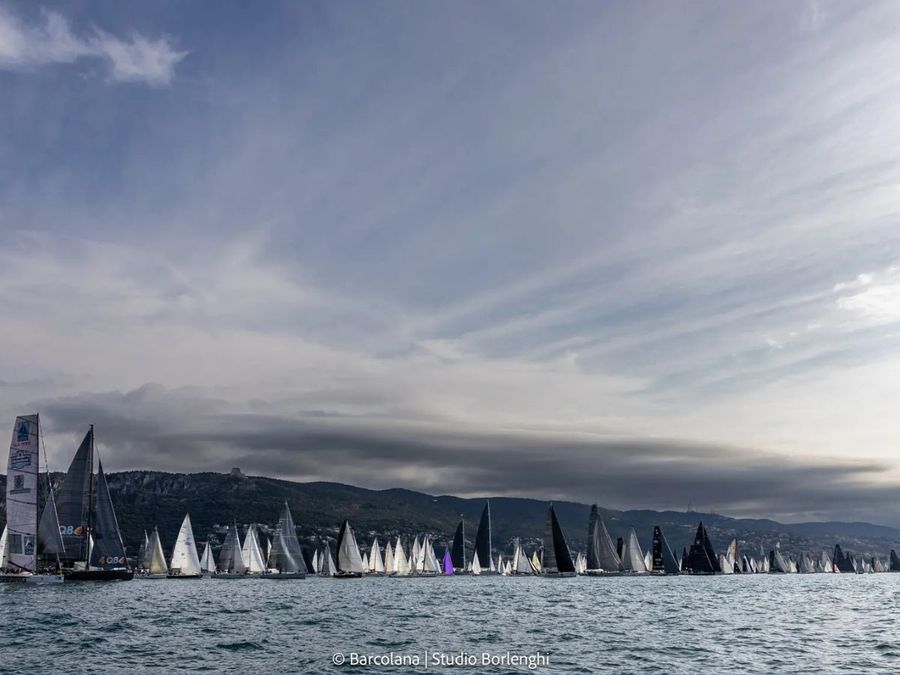
The Barcolana Cup 2025, the 57th running of the Autumn Cup, transforms the Gulf of Trieste into one of the most extraordinary spectacles in world sailing. At first light on 12 October, the water looks deceptively still. Then a cannon fires, and the gulf erupts. Maxis, cruisers, family yachts, and weekend sailors all heel into the morning breeze together, the skyline above Trieste suddenly white with sail.
Where it all began
The race's origins are refreshingly unpretentious. In 1969, members of the Società Velica di Barcola e Grignano organised an end-of-season event before winter haul-out. Fifty-one boats lined up for the Coppa d'Autunno. Commander Pietro Napp, at the helm of Betelgeuse, took that first victory, with no way of knowing he was setting a tradition in motion that would one day resonate on the other side of the world.
The Bora, the fierce wind that tears down from the karst hills above the city, has been shaping Trieste's sailors for generations. By the 1980s, it was also shaping an increasingly serious field at the Barcolana, as Olympians and offshore racers began mixing with the local fleet. The race's reputation for inclusivity never diminished as its stature grew. In 2018, that reputation was confirmed in the most spectacular fashion, when 2,689 boats crossed the start line together, earning the Barcolana a Guinness World Record as the world's largest sailing race.
The numbers are staggering, but they are not really the point. What defines the Barcolana is the way Trieste receives it. Balconies fly flags, cafés overflow with conversation, music rolls across the waterfront, and the city gives itself over entirely to the sea for the better part of a fortnight.
Ten days on the water and ashore
The Barcolana Cup 2025 is far more than a single race. The festival runs from 1 to 12 October 2025, filling Trieste with sailing in every imaginable form. Along the Rive, the city's waterfront promenade, food stalls, art installations, and concerts sustain a carnival atmosphere throughout. On the water, the programme builds steadily toward the main event.
Adaptive athletes from across Europe compete in the Para Sailing EUROSAF Inclusive Championship. The next generation of racers takes the helm in Barcolana Young, with the Optimist class at the fore. Paddlers fill the gulf for the SUP Experience. Lovingly preserved vessels parade in the Classic SIAD Trophy, while the Maxi Portopiccolo Trophy and Solaris Adriatic Cup put offshore performance front and centre. After dark, the By Night Regattas bring monotype racing to the Grand Canal, with crews duelling under spotlights to the noise of crowds on the banks.
Each of these events shares the same underlying conviction: that the sea belongs to everyone. Professionals line up beside family crews, and Slovenian and Croatian teams share the same start as Italian grand prix boats. On the water, rivalries give way to seamanship, and the joy of belonging to a fleet matters as much as the result. That combination of spectacle, community, and openness is what makes the Barcolana Cup 2025 unlike anything else in European sailing.
From Trieste to the Waitematā
The philosophy behind the Barcolana has not stayed confined to the Adriatic. In Auckland, a festival built on strikingly similar values has taken shape around the harbour.
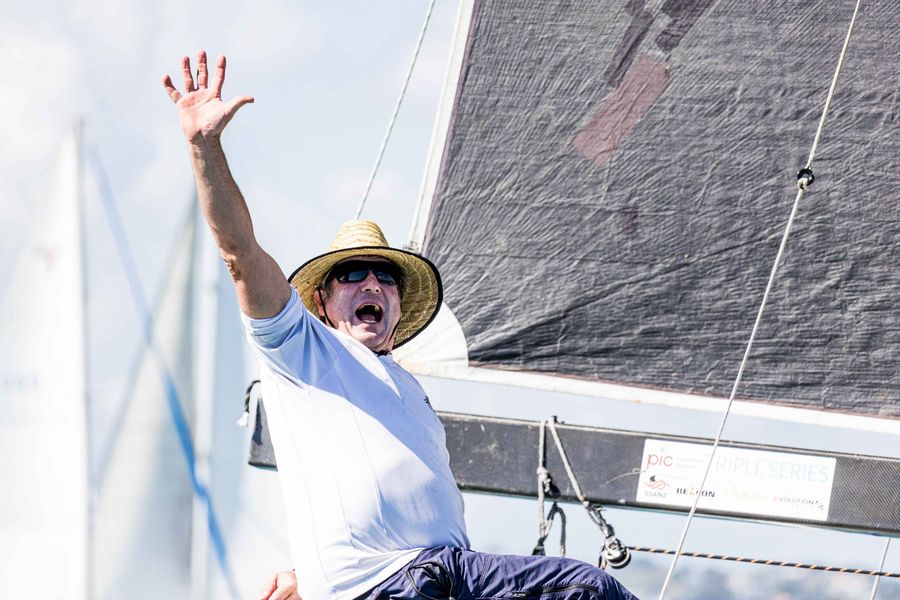
Moana Auckland, New Zealand's Ocean Festival, is a summer celebration of New Zealand's culture and relationship with the sea. One of its centrepiece on-water events is the PIC Harbour Classic, a race consciously modelled on the Barcolana's Coppa d'Autunno and organised by the New Zealand Multihull Yacht Club. Multihulls and monohulls race together on the Waitematā Harbour in the same spirit of inclusivity, affordability, and community that has defined the Italian original for more than half a century.
The Classic has quickly established itself as a highlight of Moana Auckland, which runs from late February to mid-March 2026. Together with the Auckland On-Water Boat Show, the Auckland Wooden Boat Festival, and further events to be announced, it anchors a festival that speaks directly to New Zealand's deep and abiding connection with the ocean.
Nick Hill of Tātaki Auckland Unlimited describes the festival as "a celebration of our ocean taonga and everything it offers." The scene carries an unmistakable echo of Trieste: harbour walls packed with spectators, crews gathering for prizegivings and music, and the shared sense that sailing is not a private pleasure but a common inheritance.
The idea that Pietro Napp could not have imagined when Betelgeuse crossed the finish line in 1969, that a local end-of-season race might one day inspire festivals on the far side of the world, has quietly come true. The Barcolana Cup 2025 will fill the Gulf of Trieste with white sails on 12 October. Its legacy, though, travels much further, carried by anyone who has ever raced not purely for the trophy, but for the simple reward of belonging to the sea.