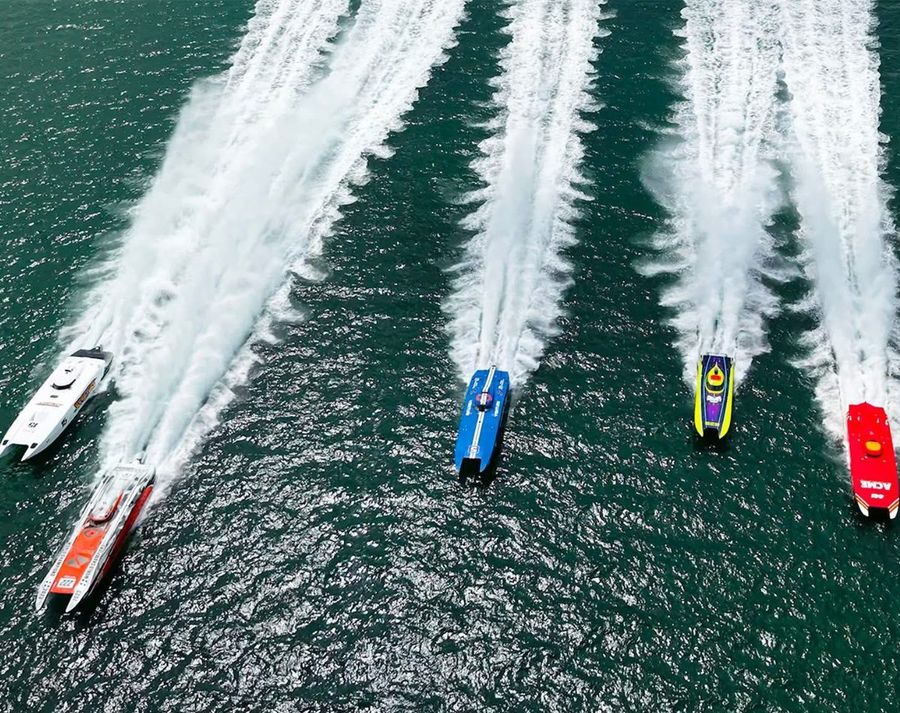
Australia's love affair with offshore powerboat racing has roots stretching back more than a hundred years. Long before formal championships existed, adventurous owners were pushing their machines to the limit around harbours and bays, and by the mid-20th century informal offshore events had become a regular fixture on the racing calendar. The Australian Offshore Powerboating Club was established in 1969, but it was 2007 that marked the beginning of the modern era, when the Australian Offshore Superboat Championship was officially launched. Andrew and Steve Searle took out that inaugural Class 1 title, and the series has since grown into the country's premier stage for high-horsepower competition.
The passion for offshore powerboat racing extends across the Tasman as well. New Zealand's first offshore powerboat race took place in 1964, a 100-mile test of endurance on Auckland Harbour, and the NZ Offshore Powerboat Association now runs a multi-round national championship that carries on that tradition. The 2025/2026 NZOPA season includes Auckland among its race venues, a nod to the shared heritage of ocean-borne horsepower both nations hold.
The Australian 2025/26 season gets underway in October and takes in four major venues spread across New South Wales, Victoria, and South Australia. Each stop brings its own character, from the water conditions to the onshore atmosphere, and the schedule is packed from the opening weekend through to the May finale.
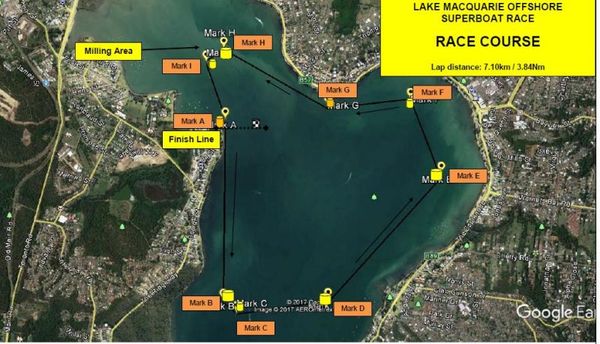
The first round is set for Marmong Point on Lake Macquarie from 18 to 19 October 2025, forming part of the popular Lake Mac Action Fest. Empire Marina will serve as the pit base, and six offshore championship races are scheduled across the two days. Saturday's programme features back-to-back Sport 65 & 85 and Superboat races, followed by a street parade in which boats are towed under police escort to Toronto for a 90-minute public display. Racing resumes on Sunday with three further races, two of which count toward the Offshore Superboat Championship.
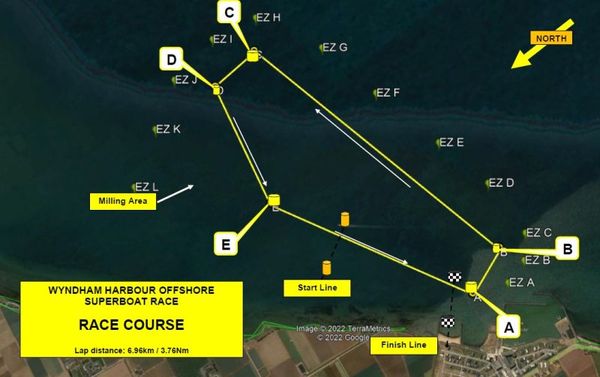
Round 2 moves south to Wyndham Harbour in Victoria from 21 to 22 February 2026, run in partnership with the Australian Offshore Powerboat Club. Based at Wyndham Harbour Marina, the event again delivers six offshore championship races, shared equally between the Offshore Superboat and Sport 65/85 categories. Races run from midday through the afternoon on both days, with Sunday's schedule closing out with the third Offshore Superboat Championship race of the season.
Geelong follows a fortnight later, from 14 to 15 March 2026. Corio Bay provides a natural amphitheatre that suits the spectacle of offshore racing, and with pits located at Steampacket Gardens, spectators can get genuinely close to the boats and their crews between heats. The format mirrors other rounds, with Sport 65/85 and Offshore Superboats alternating across Saturday and Sunday's sessions.
The championship then concludes at North Haven in Adelaide, South Australia, on 9 and 10 May 2026. Only the second time this venue has hosted the Superboats, it adds a fresh element to the season decider. Final race formats are still to be confirmed, though organisers intend to maintain the familiar six-race structure, with each race running for 30 minutes and the programme divided between Offshore and Sport classes.
Four distinct racing categories make up the heart of the championship, each with its own character and following.
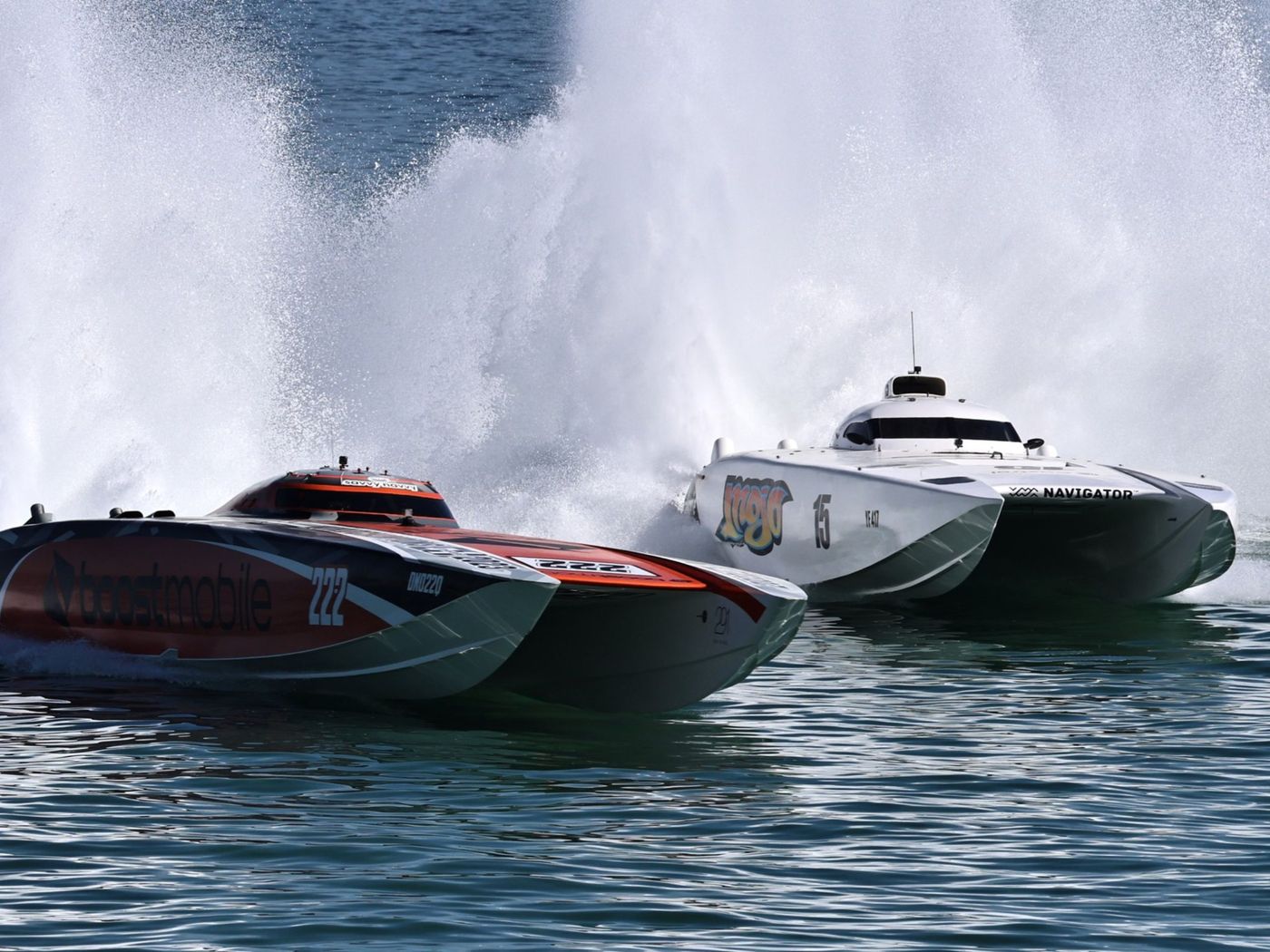
The premier division is Supercat Extreme, otherwise known as Class 1. These are the biggest and fastest boats in the series, twin-inboard machines capable of combining up to 2000 horsepower. Their pace and sheer physical presence make them the centrepiece of any race meeting.
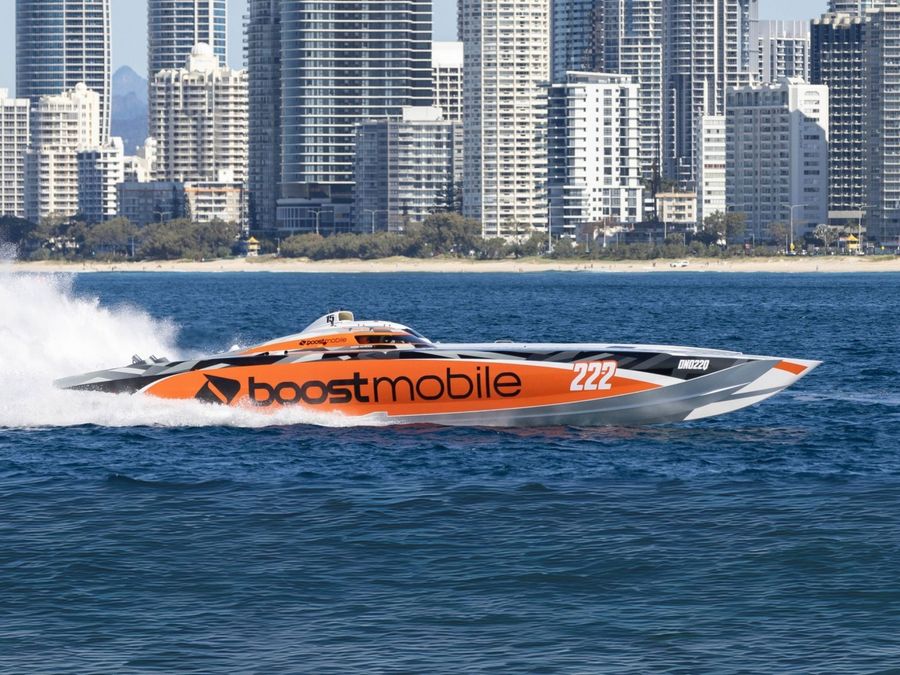
Supercat Outboard boats are somewhat smaller and lighter, driven by twin outboards rather than inboards. The class has a reputation for producing close, tactical racing, and the agility of these craft more than compensates for any difference in raw power compared to the Extreme cats.
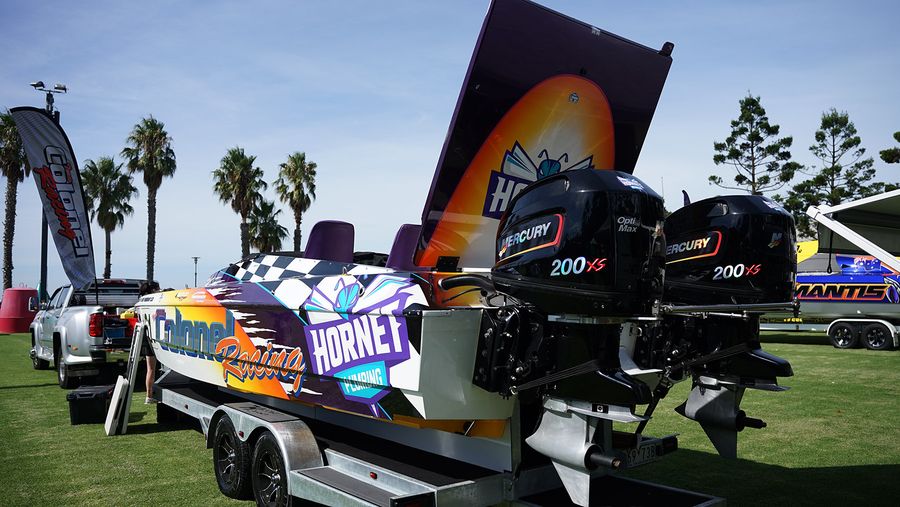
SuperSport 85 is restricted to 85mph and draws competitive family teams looking for a balance between genuine performance and manageable costs. It sits comfortably in the middle of the field both in terms of speed and budget.
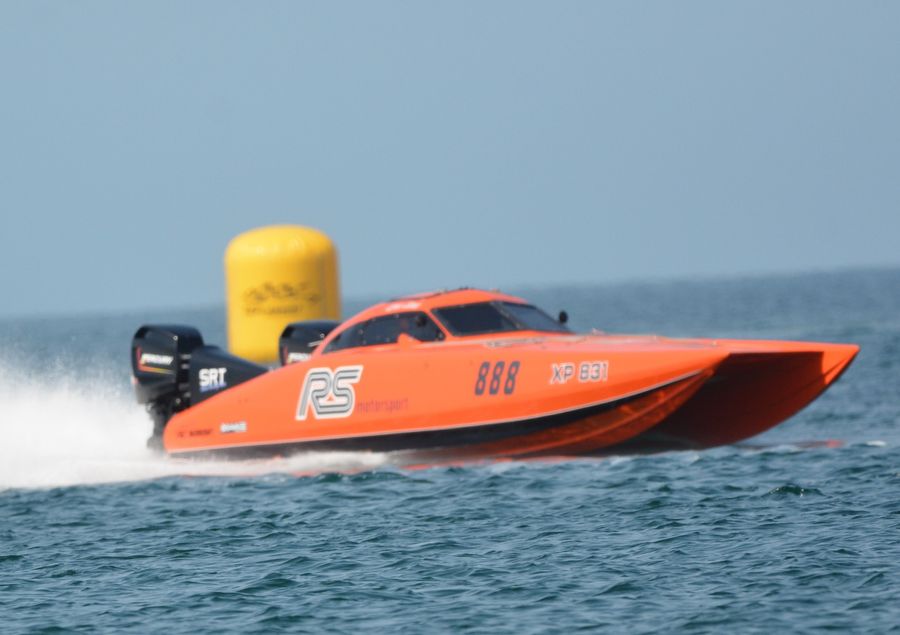
At the entry level, SuperSport 65 is capped at 65mph and serves as the proving ground for grassroots teams and newcomers to the sport. The boats are smaller, but the racing is anything but tame.
Together these four categories mean the championship genuinely caters to both well-funded professional outfits chasing outright pace and family-run teams working within tighter means.
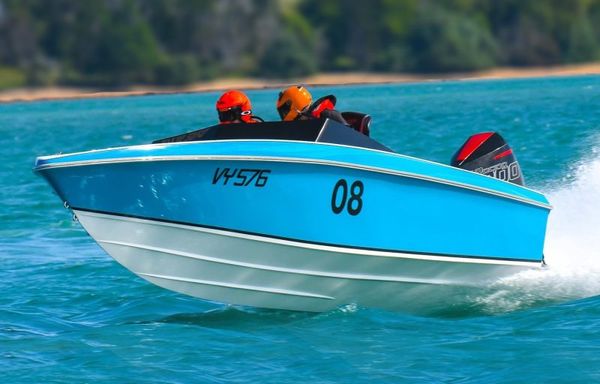
The championship has produced its share of dynasties and long-running rivalries. In Supercat Extreme, the Nicholson and McGrath partnership aboard 222 Offshore/Boost Mobile has been the dominant combination in recent years, accumulating multiple titles. Across the Sport classes, family names such as the Kellys, the Paczkowskis, and the Sutherlands have built legacies of their own over successive seasons.
The 2024/25 standings give a clear picture of who currently holds the upper hand. The Mantis leads Supercat Outboard on 440 points, Nut Case tops SuperSport 65 with 377 points, and The Colonel sits first in SuperSport 85 on 361 points. Across all categories combined, Boost Mobile holds the overall lead on 357 points, confirming that Nicholson and McGrath remain the pair every other team is chasing. With those crews all set to return, the new season shapes up as another fierce contest for the title.
No account of the Australian Offshore Superboat Championship would be complete without examining the record of Maritimo Racing. Founded by Bill Barry-Cotter and based on the Gold Coast, the team has claimed an extraordinary 16 national AUS1 championships, making them the most successful outfit in the history of the series. The racing programme feeds directly back into Maritimo's production yacht business, with performance insights from offshore competition informing hull design, propulsion systems, and durability testing.
One of the team's most instructive performances came in 2017, when Tom Barry-Cotter and Steve Jellick brought Maritimo 12 to the final round at Hervey Bay already leading the championship. Rather than chasing victory, they managed the situation with care. A trim issue required them to ease back in the first race, and they took a composed third in both heats. Those steady finishes proved sufficient to secure their 15th national title, a reminder that championships are won through strategy as much as outright speed.
The 2011 season finale at Williamstown on Port Phillip Bay told a similar story. Conditions were rough, but Mustang, driven by Tom Barry-Cotter and Pal Virik Nilsen, had banked enough points to wrap up the Class 1 title without needing to win on the day. Their willingness to manage risk when circumstances demanded it was characteristic of the team's approach. A second Maritimo-built entry, Mainlube Express, claimed a podium result at the same event, underlining the engineering depth within the organisation. The situation is not entirely unlike the one currently facing Kiwi Hydroplane racing legend Ken Lupton, who faces a comparable calculation this season: with a potential points cushion available, is it worth competing in the final race, or does protecting the result and reducing risk make more sense?
That same 2017 season saw Maritimo field two boats simultaneously. While Maritimo 12 carried Barry-Cotter and Jellick in title contention, Maritimo 11 was campaigned by Ross and Andrew Willaton as a development platform. Maritimo 11 encountered problems early in the campaign, but even so it generated useful data that fed into future design work, including the development of the R36 raceboat, a more affordable entry-level cat aimed at broadening participation in the sport.
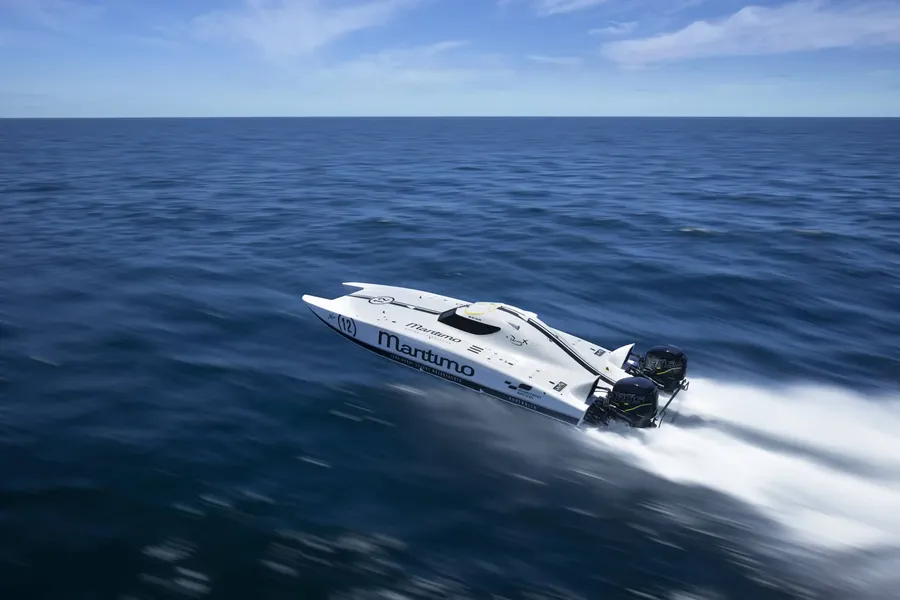
The team has also tested itself on the world stage. At the 2016 Key West World Championships, Maritimo were leading the race when a steering hose failure at speeds exceeding 120 mph caused the boat to spin violently, with the resulting damage extending to the tunnel tab. It was a dramatic and costly setback, but the team rebuilt and came back stronger, which has become something of a hallmark of the way they operate.
For spectators, offshore racing offers a kind of excitement that few other motorsport disciplines can match. The courses run close to shore, meaning crowds can see and hear the boats at full throttle without any compromise. Events such as the Lake Macquarie street parade take that accessibility further, bringing the machines directly into town, while foreshore pits at Geelong and Wyndham Harbour let fans interact with drivers and throttlemen between races. Typical fields run to 20 boats or more across the classes, with SuperSport 65 alone regularly attracting around nine entries. Whether it is the Extreme cats dicing for line honours or grassroots crews scrapping for every position in the Sport categories, there is rarely a quiet moment.
The Australian Offshore Superboat Championship 2025/26 carries forward a lineage that predates even the 2007 inaugural season, built through decades of racing culture and brought to its current form by teams and families who have committed years to the sport. Four confirmed rounds, established champions returning to defend their records, and a field spanning professional outfits to grassroots family teams: the ingredients are all in place for one of the most competitive seasons in the championship's history. From the noise and spectacle of the Lake Macquarie street parade to the foreshore crowds at Geelong, offshore racing in Australia remains one of the most visceral experiences in motorsport, and October cannot come soon enough for those who will be on the water and those watching from the shore.