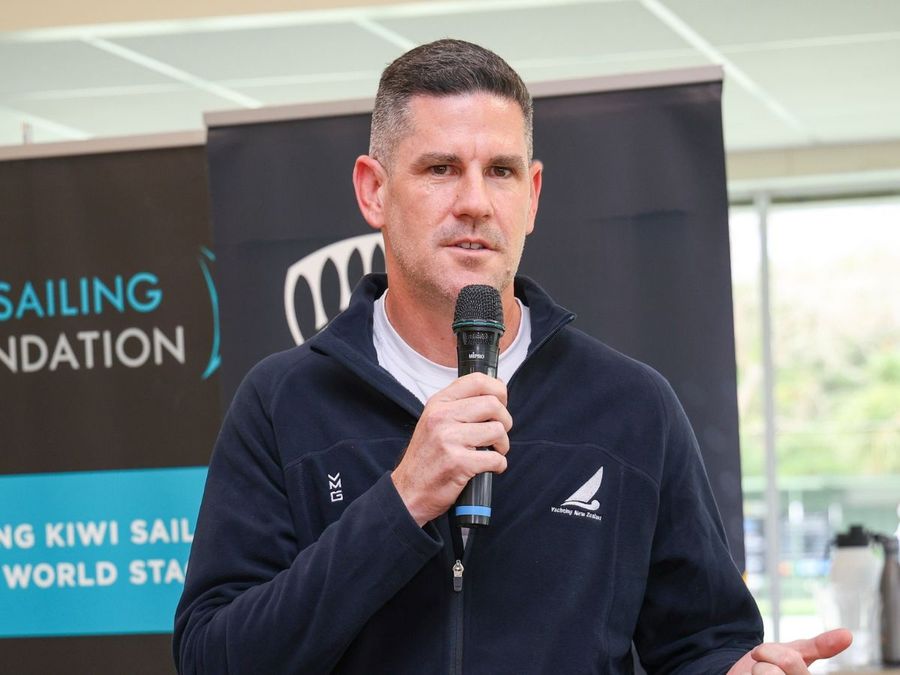
Steve Armitage arrives at Yachting New Zealand's chief executive role later this month carrying a career shaped well beyond the world of sailing. His background spans major international events, membership organisations, and high-level government advisory work, and that breadth of experience is precisely what the national sailing body is counting on as it looks ahead to the next decade.
He steps into a position vacated by David Abercrombie, who led Yachting NZ for more than fourteen years. It is a meaningful shift for a sport that holds its heritage as closely as it chases podiums. Armitage, of Ngāpuhi descent and raised with strong ties to Whangārei and the Far North, says his relationship with the coast is elemental rather than professional. "Being in or on the water is part of the fabric of our nation," he says. "It's an inheritance that connects us to our past while shaping our future."
His résumé reads like a tour through some of New Zealand's most demanding organisational challenges. He led Hospitality New Zealand, spent years building Auckland's major events portfolio, and helped deliver landmark occasions including the Cricket World Cup, the Rugby World Cup, and the 36th America's Cup. He has also advised government on tourism and chaired the Business Events Industry Aotearoa board. The picture that emerges is of a leader who understands how to manage complexity, bring stakeholders together, and keep large, diverse communities moving in the same direction.
Those skills may prove particularly well suited to sailing's current moment. Participation has wavered in recent years, clubs are feeling the strain, and younger New Zealanders have more competing demands on their time and attention than any previous generation. Armitage's opening message to the sailing community, published on Yachting NZ's website this past week, went straight to the point: it is time to reconnect.
He describes Yachting NZ as something deeper than an administrative body, calling it a community bound by "a love of the water and a belief in the power of sailing to enrich lives." His intention is to spend time listening to clubs, sailors, and sponsors before settling on priorities. "Our sport will only thrive if we build it together," he says, a line that sets the tone for what appears to be a genuinely consultative approach rather than a top-down agenda.
Growing participation sits near the top of his list. Armitage is candid about the obstacles, acknowledging that cost, time, and access continue to keep many families on the shore. His answer is to expand entry-level programmes through schools and community partnerships, with the aim of making sailing visible, affordable, and genuinely welcoming rather than aspirational and distant.
Lifting the sport's public profile is another priority, and not only when Olympic medals are on the line. "Outside of those peaks, it can often feel hidden from view," he notes. He wants to tell a much wider story, one that celebrates Olympic sailors and naval architects alongside volunteers, youth coaches, and weekend cruisers. He sees digital platforms and modern media as the tools that will carry those stories to new audiences and, in turn, bring new people to the water.
Clubs sit at the centre of his thinking. He calls them "the heart of everything we do" while acknowledging that many are wrestling with compliance demands, funding pressures, and ageing infrastructure. His intention is for Yachting NZ to advocate more forcefully on their behalf at local and national government level, and to provide practical resources that help clubs run efficiently and hold on to their members.
His approach to diversity and inclusion goes beyond the language of policy. Armitage talks about building stronger pathways for women and girls, honouring the voyaging traditions woven through New Zealand's identity, and ensuring that people of all abilities can find their way onto the water. The underlying argument is straightforward: sailing should look like the communities it belongs to.
Taken together, the vision Armitage has outlined is ambitious without being vague. He has tied together the sport's deep historical roots and its need for modern relevance into a single organising idea, captured in his stated commitment to "connect, grow, and inspire." Whether that commitment translates into measurable progress will depend on execution, but for a sport that runs on balance, timing, and collective effort, this particular changing of the watch carries a sense of genuine possibility.