
Keeping fouling at bay is one of those unglamorous jobs that quietly determines how well your boat performs across an entire season. Within weeks of launching, slime and weed begin colonising the hull, dragging on speed, loading the engine, and burning through fuel you didn't budget for. Leave it long enough and barnacles enter the picture, capable of blocking raw-water intakes and pitting propeller surfaces beyond easy repair.
Antifoul paint is the frontline defence against all of this, but the product itself is only part of the story. Preparation and product selection are what separate a job that lasts from one that peels away before Christmas.
Before any scraping or sanding begins, personal protection needs to come first. Antifoul dust and the solvents used during prep are genuinely toxic, and cutting corners on safety gear is not worth it. Disposable overalls, safety goggles, and nitrile gloves provide the basic coverage your skin and eyes need. Respiratory protection matters just as much. A Spraying Kit or the 3M Paint Respirator will handle both paint vapour and the fine dust generated by sanding. Cotton rags and drop sheets should be in plentiful supply before you start.
A thorough hull inspection sets the direction for the rest of the job. If existing paint is well bonded and reasonably smooth, a sand back and fresh coat may be all that is needed. Where paint is lifting, flaking, or has built up into thick uneven layers, stripping back to a clean substrate will save considerable trouble later in the season. For detail work and awkward corners, a Triangle Scraper or Heavy Duty Scraper gets into areas a power tool cannot reach easily. A cork sanding block or orbital sander fitted with marine sanding discs makes quick work of keying back larger surfaces. The respirator stays on throughout, because even light sanding releases particles you do not want in your lungs.
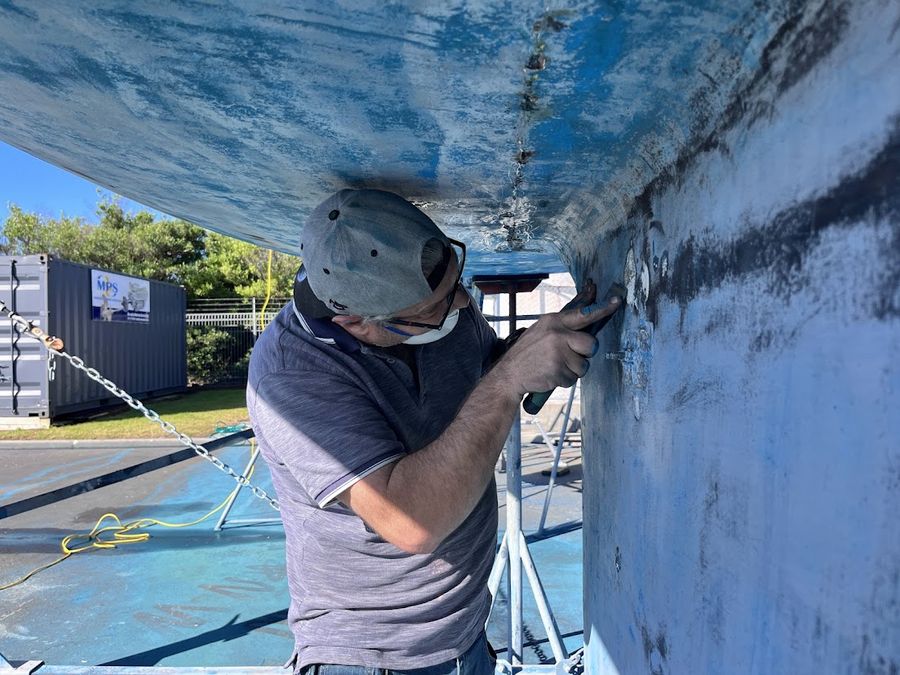
With the hull back to a sound surface, cleaning becomes the priority. A degreaser such as Chemtech Bilge & Engine Cleaner or Simple Green Concentrate cuts through oil and contamination, and a solvent wipe with clean cotton rags follows to leave the surface ready for paint. Masking is worth taking seriously at this stage. Marine-grade tape applied carefully along the waterline and around intakes makes for a sharp finish and far less clean-up once the paint goes on.
Choosing the right antifoul for your boat and how you use it makes a real difference to the outcome. Hard antifoul suits fast powerboats and racing yachts, offering strong abrasion resistance and the ability to be scrubbed clean during the season without damaging the coating. Ablative or self-polishing paints are a better fit for cruising boats, where the surface gradually wears away as the vessel moves through the water, continuously exposing fresh biocide. For environmentally sensitive anchorages or areas where copper-based products face restrictions, eco-friendly formulations are available. Geography plays a role in the decision too. A boat berthed in Whangārei will encounter heavier fouling pressure than one kept in Otago, and product choice should reflect that difference.
Application itself is not complicated, but attention to detail matters throughout. Copper in antifoul settles quickly, so thorough stirring before and during application is non-negotiable. A paint stirrer with disposable liners keeps solids properly suspended. Follow the manufacturer's guidance on film thickness and the number of coats required for your conditions. Timing the final coat carefully matters: the boat needs to go back in the water within the paint's specified launch window. Apply too early and the hull sits exposed while the biocide degrades; apply too late and it may not activate correctly once immersed.
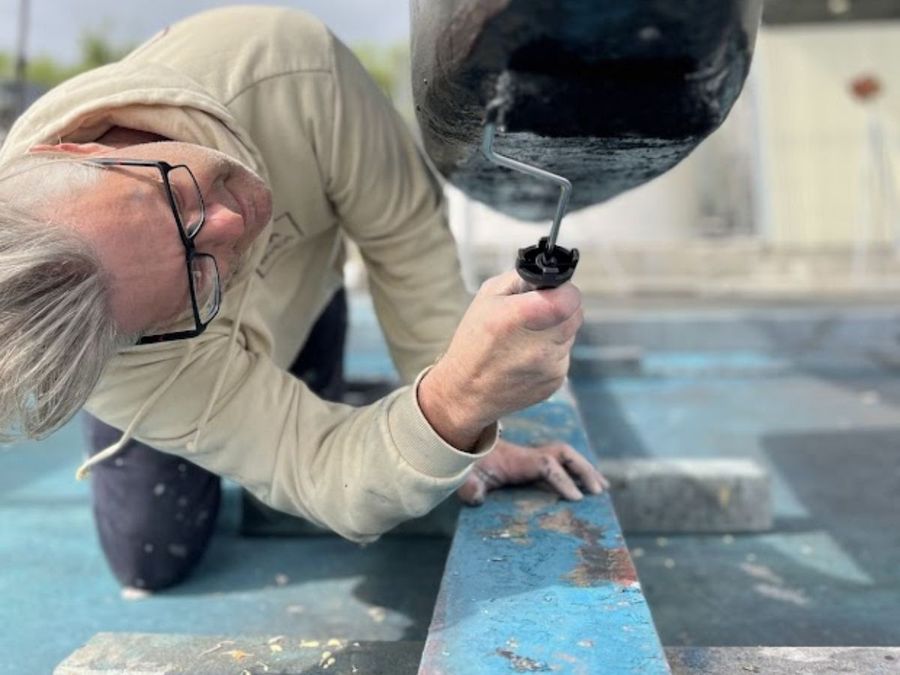
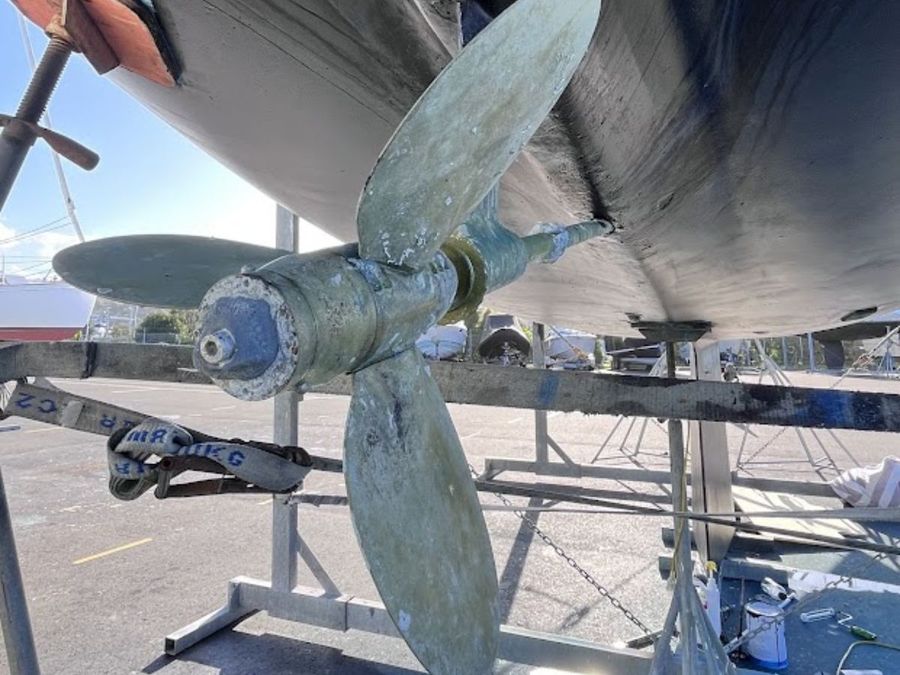
Hull antifoul does not extend its protection to propellers, shafts, or running gear, and these components need their own treatment. Propspeed kits are widely regarded as the benchmark for this application, creating a slick silicone surface that fouling finds difficult to grip. Outdrives, saildrives, and struts benefit from metal primers applied before any topcoat goes on.
Even the best antifoul system benefits from some attention during the season. A scour pad or plastic scraper is all that is needed to wipe away light slime when conditions allow. New Zealand biosecurity rules prohibit the scraping of hard marine growth in the water, but removing soft slime before heading out is actively encouraged and keeps the coating working as it should.
Once the job is complete, recording the product used, the number of coats applied, and the launch date in a maintenance logbook takes only a few minutes and proves its worth when planning future haulouts. Topsides finished with a hull polish or wax round off the work and keep the boat looking as good as it performs.
It may not be a glamorous weekend, but antifoul and hull preparation are fundamental to dependable boating. A clean hull is quicker through the water, easier on fuel, and kinder to the marine environment around it. Do the job properly and the season ahead takes care of itself.