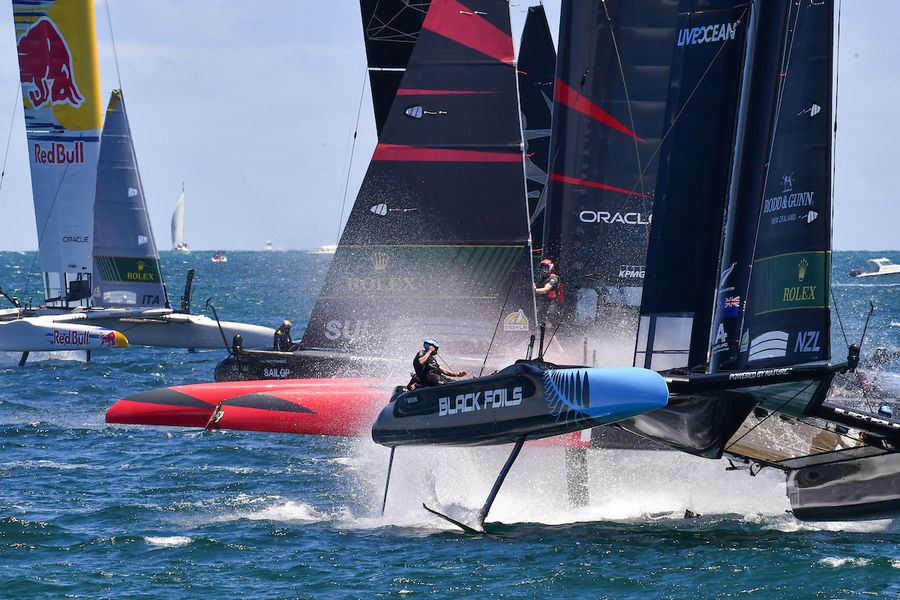
The Black Foils' hopes of racing at their home event are very much alive, with Amokura returning to SailGP's Auckland technical base today and entering the final, most demanding phase of preparation ahead of this weekend's ITM New Zealand Sail Grand Prix.
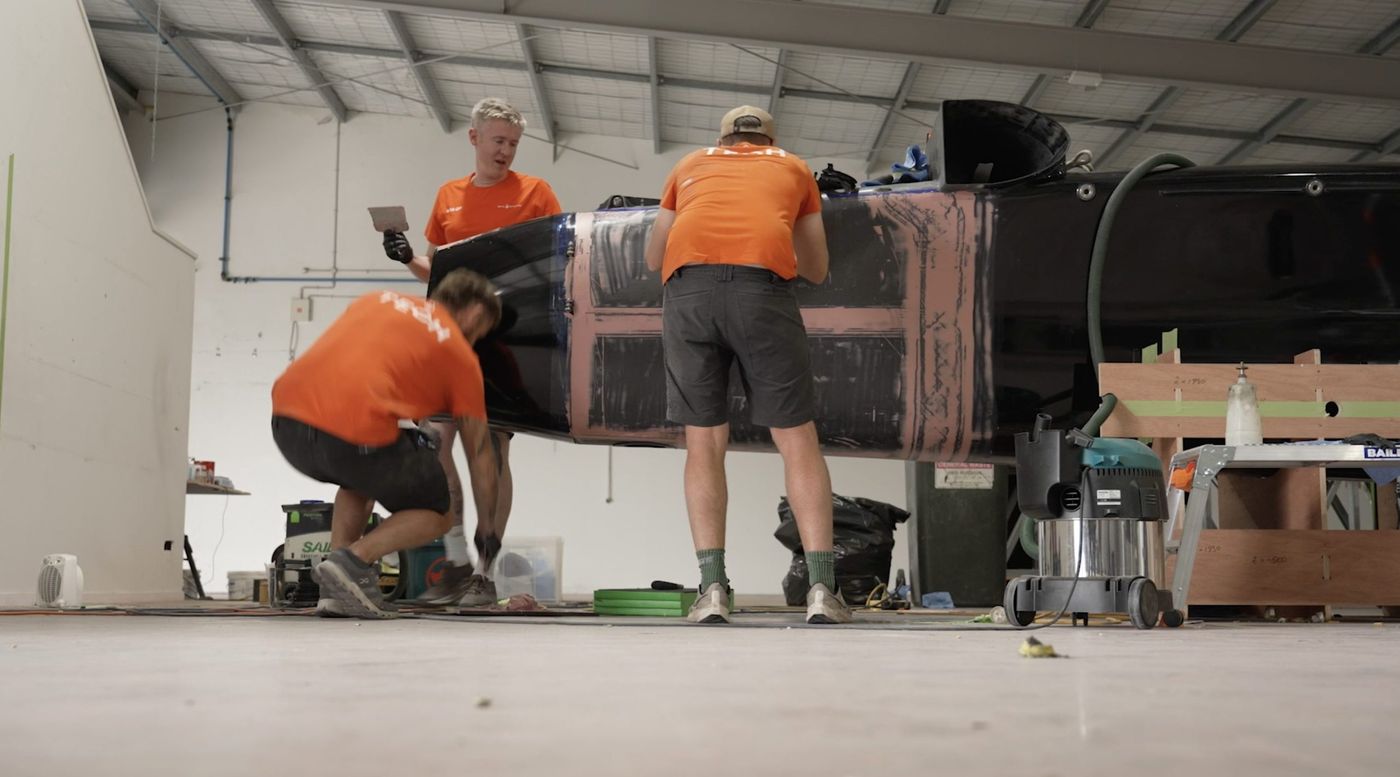
The road to this point has been anything but straightforward. Damage sustained at the opening round of the season in Perth left the F50's port hull needing to be split into two major sections. The forward portion made the journey by sea from Perth to Auckland, while the aft section, transom included, was purpose-built by SailGP Technologies in the UK before being flown to New Zealand. The two pieces were brought together at C-Tech in Avondale, where composite repair and structural blending work were carried out.
With that work now largely complete, Amokura made the short but meaningful truck journey from the Avondale repair facility to SailGP's technical area today. The baton has passed from composite specialists to the SailGP Technologies team, whose job is to transform a structurally sound hull back into a fully operational racing machine.
That task covers a lot of ground. Steering systems, hydraulics, electronics, rudder assemblies, and board assemblies all need to be reinstalled, aligned, powered up, calibrated, and independently verified before the boat can go anywhere near the water.
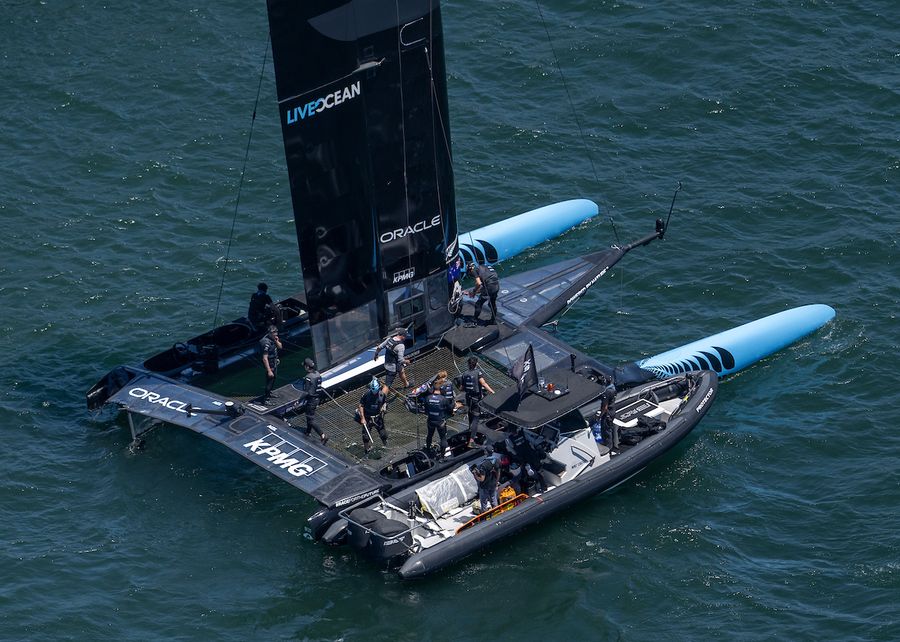
Luke Porter, SailGP Technical Manager, is clear-eyed about where things stand. Getting the hull back in one piece is a genuine milestone, but the hardest work is still ahead.
"We've got to turn it back into a boat. Steering, rudder, boards, hydraulics, electronics, alignment, calibration. There are a lot of systems that run right through the hull, and when you do a repair like this, everything comes out and has to be recommissioned," Porter said.
The schedule offers no buffer. Composite finishing work is being wrapped up today, with systems crews moving in directly behind them. The plan calls for Amokura to roll out of the shed on Friday morning and be sailing by lunchtime.
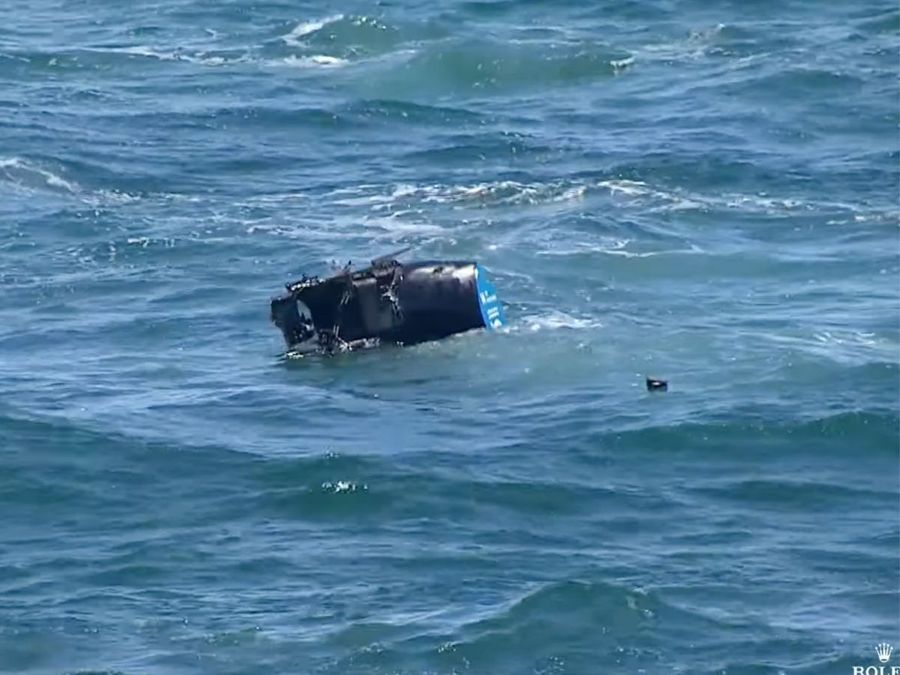
Wing department head Richard O'Farrell is under no illusions about how little margin exists.
"It's definitely a tight timeline, but we've got a plan. As long as things go to plan, we'll be okay and get there," O'Farrell said.
Porter is equally measured in his assessment. The physical reunion of the hull sections has exceeded expectations, but the precision demanded in the next stage is where the true challenge lies.
"The port hull has just arrived and it's looking really promising. The repair itself is one thing, but calibration will be a big step. There are thousands of data points that need to line up before everyone's confident," Porter said.
Co-CEO Blair Tuke and the Wing Trimmer both pointed to the scale of the international effort, with teams in Southampton and Auckland working around the clock in overlapping shifts to hold the timeline together.
"It's been non-stop, from Southampton through to Auckland. Structurally it's coming together now, and credit has to go to everyone involved to even make this possible," Mackay said.
For co-CEO and Driver Peter Burling, watching a brand-new stern section be manufactured, loaded onto a plane, and integrated into the boat in such a compressed window has been striking.
"Seeing how quickly the new stern was produced, flown here, and integrated has been incredible. There's still a lot to finish, but structurally it's there, and the job the tech team has done to get us back on the start line has been massive," Tuke said.
Across the camp there is a shared confidence that the plan is solid and the work is on track. Racing at the home event is still firmly within reach, but the margins are fine enough that a single unforeseen complication could change everything.
For now, Amokura is back where she needs to be. The next few days, and perhaps the final few hours before racing begins, will tell the rest of the story.