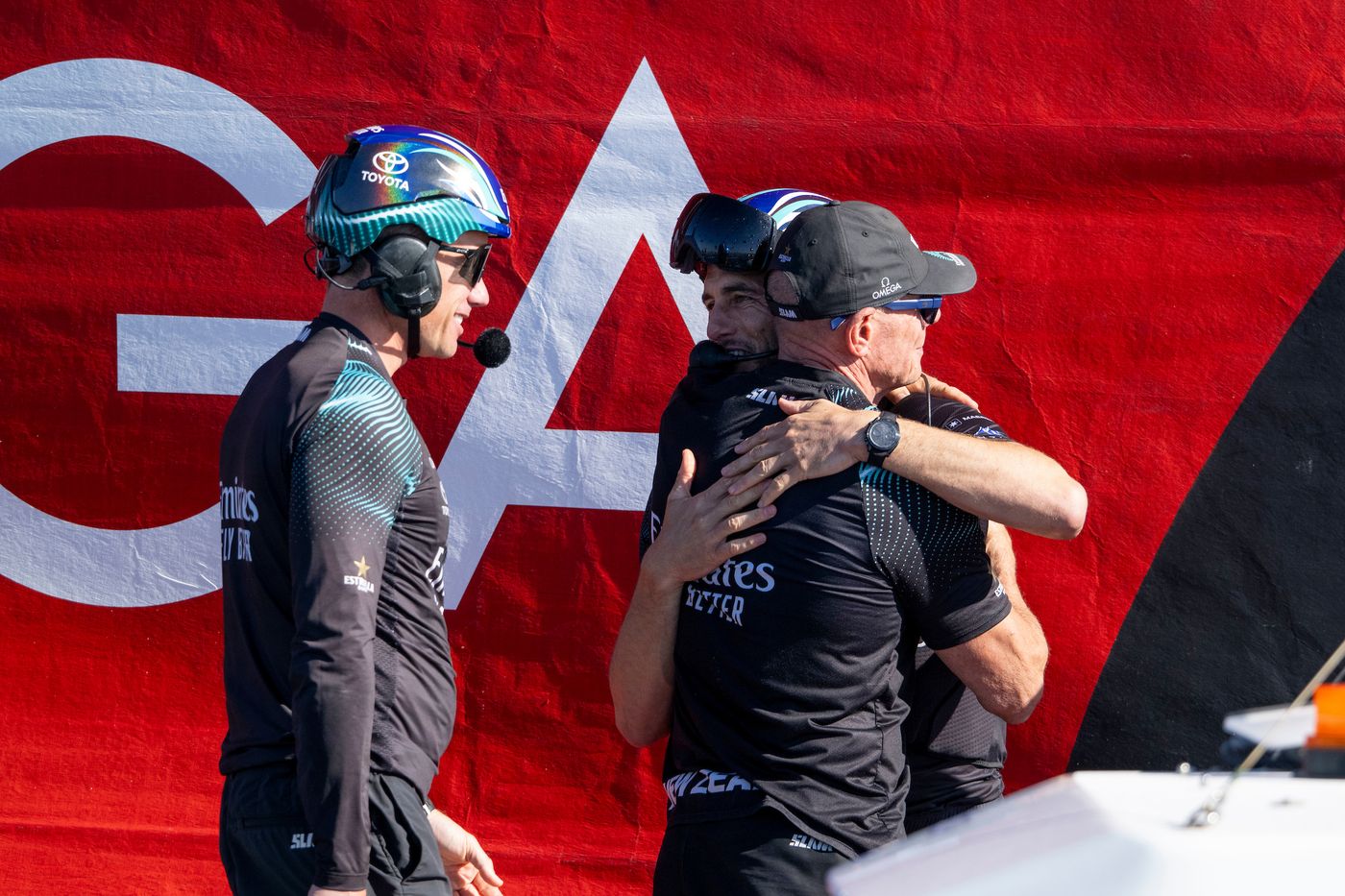
When the signatures went down, there were no cameras flashing and no podium. Just a room in Auckland, documents spread across a table, and a moment that quietly reshaped the oldest trophy in international sailing. The Royal New Zealand Yacht Squadron (RNZYS) and Emirates Team New Zealand joined the Royal Yacht Squadron Ltd and Britain's Athena Racing to sign the Protocol governing the Louis Vuitton 38th America's Cup. A rulebook on the surface, certainly, but read it carefully and something more ambitious emerges: a considered attempt to remake the event's governing structure, economics, and culture from the inside out.
At the centre of that attempt is the America's Cup Partnership (ACP), a joint body that gives every competing team equal authority over the event. In a contest that has run on Defender dominance since 1851, that is not a minor tweak. For decades, the Defender controlled the format, the schedule, and the commercial levers. Under this Protocol, those decisions become collective. The ACP will oversee both the racing programme and the business of the Cup, from how regattas are structured to how broadcast rights are managed.
Sir Ben Ainslie of Athena Racing has described the arrangement as "a unified commitment to the future of the sport." RNZYS Commodore David Blakey frames it as an opportunity to "promote pathways for young sailors and develop the sport in New Zealand." Equal governance carries its own risks. Disputes that once played out between Defender and Challenger could simply migrate to the boardroom. But if the structure holds, it may well establish a new benchmark for how major international yacht racing is run.
The financial architecture of the 38th Cup is among its more striking features. A spending cap set at €75 million, roughly NZ$146 million, is designed to narrow the gap between well-resourced campaigns and newer entrants. Smaller challengers, historically outgunned on budget alone, could find themselves far more competitive on the water. For the established heavyweights, it demands genuine discipline and creativity in how resources are deployed.
The AC75 class remains the pinnacle of the competition, but the version that will race in Naples will look and feel different from its predecessors. Crew numbers fall from eight to five, and the raw physical output of grinders and cyclors gives way to lithium battery systems. The design consequences flow through the entire boat: weight distribution changes, foil efficiency becomes even more critical, and precision in control systems is rewarded more than brute power. Hull regulations add a further constraint. Teams returning from the previous cycle must race their AC37 hull if one is available, while new entrants are limited to purchasing an existing boat or building to the AC37 design. The intent is to cool the design arms race that has defined previous campaigns, though it will test engineers to find fresh performance within tighter boundaries.
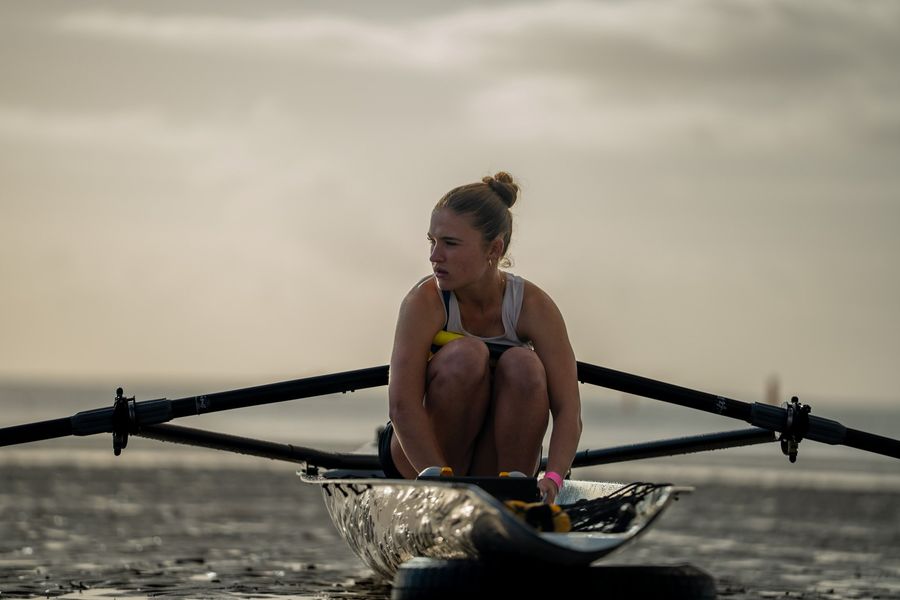
Nationality rules have been recalibrated to match the reduced crew size. Of the five sailors aboard, two plus a mandatory female sailor must hold national eligibility, while two non-nationals are permitted. For sailors currently active on the SailGP circuit, the arithmetic could become uncomfortable. Fewer available spots and tighter eligibility requirements may catch some hopefuls off guard, and others may face a direct choice between committing to the America's Cup or remaining focused on SailGP. The Women's and Youth America's Cup regattas will continue alongside the main event, and each team is required to field a women and youth AC40 crew throughout the preliminary circuit, reinforcing the sense that these pathways are now considered structural rather than supplementary.
Among the Protocol's more commercially inventive provisions is the guest racer programme, which will place a VIP, sponsor representative, media figure, or influencer aboard an AC75 during live racing. Very few elite sporting competitions offer anything remotely comparable, and for partners seeking authentic storytelling moments, the appeal is obvious. It also opens the door to something resembling the On Board Reporter role that has proved so compelling in The Ocean Race.
Alongside that, a confirmed bi-annual schedule gives broadcasters, host cities, and commercial partners something the Cup has rarely offered: reliable forward visibility. Sponsors and marine industries can plan across multiple editions rather than waiting to see whether the next event will happen at all. That predictability has been the competition's persistent commercial weakness, and resolving it could substantially expand the Cup's reach and appeal.
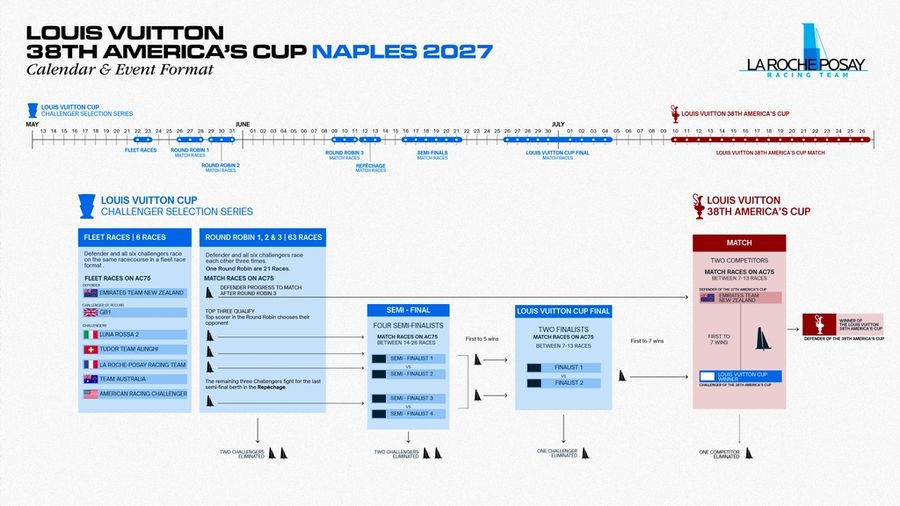
Naples provides the stage for 2027, and it arrives with atmosphere already built in. Grand piazzas, a volcanic backdrop, and a harbour capable of generating complicated sea states in short order make it a very different proposition from the controlled conditions of Barcelona. The Louis Vuitton Cup challenger series will combine fleet and match racing to keep teams engaged across more of the competition, before semi-finals on a first-to-five basis and finals on a first-to-seven basis determine who faces the Defender in July 2027. The racing environment, the city's energy, and the format changes together promise something vivid.
The longer ambition behind this Protocol extends well past Naples. If the ACP functions as intended, the America's Cup could finally sustain the kind of consistent two-year rhythm that its commercial and sporting potential has always suggested but rarely delivered. For New Zealand's marine industry, a predictable cycle of design, construction, and refit work translates into real economic benefit. Embedded pathways for women and youth sailors could gradually shift the Cup's culture in lasting ways. New nations, previously deterred by the cost and unpredictability of entry, might begin to see the competition as genuinely accessible.
The risks are real enough. A governance structure built on consensus can fracture when commercial pressures mount or disputes over cost-cap compliance arise. The lithium battery systems now central to the AC75's performance may demand engineering solutions that are not yet visible, and may reveal vulnerabilities when tested under race conditions.
This Protocol is both a significant departure and a careful evolution. It keeps the Auld Mug's essential character intact while attempting to build a more durable future around it. For New Zealand, with its sailors, designers, and shipyards woven into the Cup's fabric across generations, the stakes in Naples 2027 are considerable. Whether this new course holds will depend on the winds, the water, and whether a sport famous for its disputes can govern itself with the unity it has promised.